
Are you spending more on ads but getting less back?
You refresh dashboards all day, shift budgets, tweak audiences, and launch new creatives, yet the numbers still slide. It turns into wasted spend, frustrated stakeholders, and performance dips you can’t easily explain. And when results drop in front of leadership or clients, the pressure lands squarely on you.
So, if you’re also dealing with creatives that fatigue too fast, unclear signals across platforms, rising CPIs, and constant pressure to scale your mobile game, DTC, or subscription campaigns without burning budget, this guide is for you. Here, you’ll explore the most reliable ways to improve ROAS.
What Is ROAS?
ROAS (Return on Ad Spend) shows how much revenue you earn for every dollar you spend on ads. For UA teams, it’s one of the fastest ways to judge if a campaign is actually profitable or if you're wasting budget. When your ROAS is strong, it means your creatives, targeting, and funnel are working together to bring in valuable users or buyers. When it drops, something in your acquisition engine is slipping.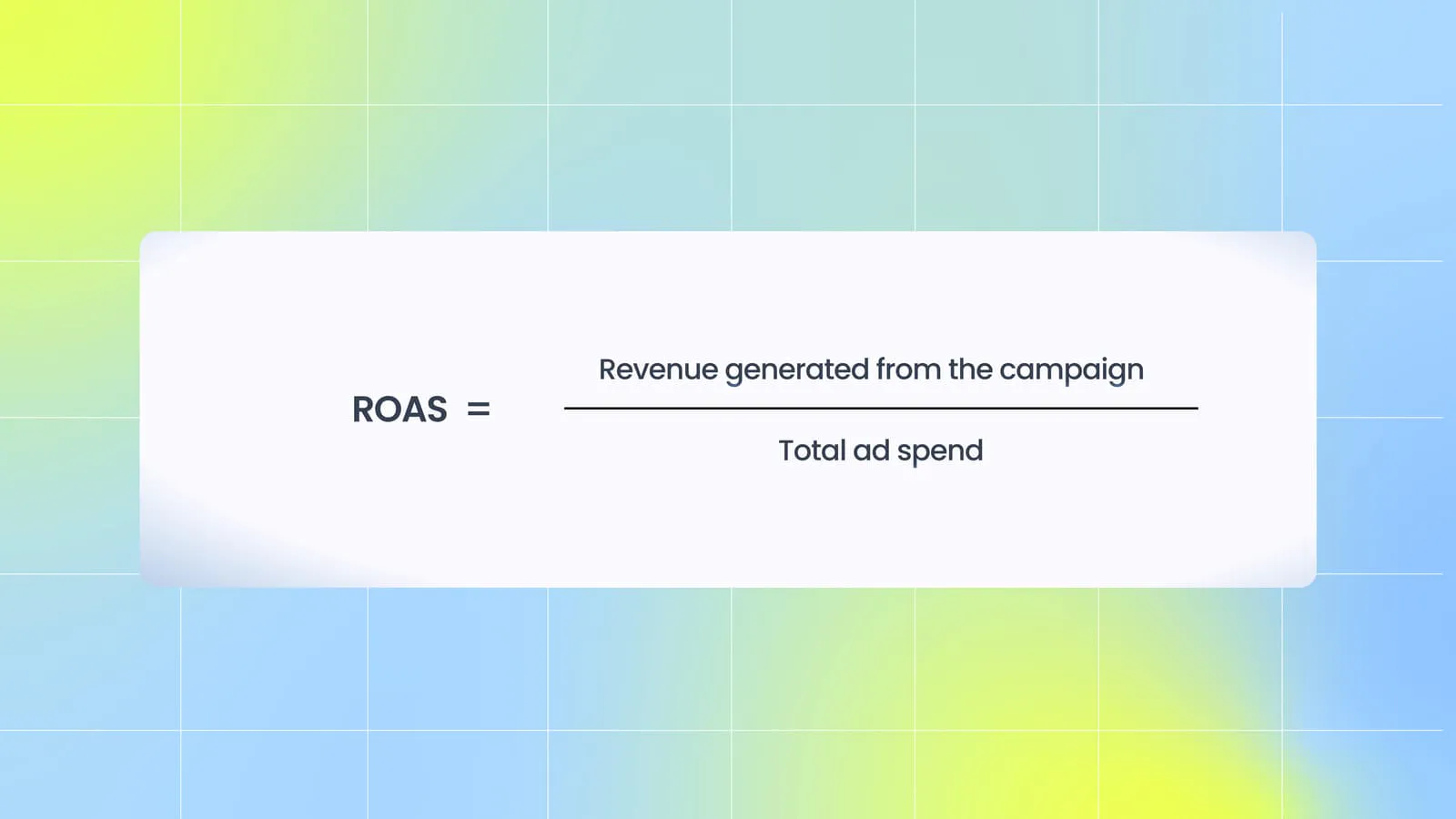
The formula is simple:
ROAS = Revenue generated from the campaign ÷ Total ad spend
For example, if you spend $1,000 on a campaign and it brings in $3,000 in revenue, your ROAS is 3.0 (or 300%).
But ROAS alone doesn’t tell the full story. You also need to know your break-even ROAS.
What Is Break-Even ROAS?

Break-even ROAS tells you the minimum ROAS you need just to cover your costs. If your campaign is below break-even, you're losing money even if installs, clicks, or add-to-carts look good on the surface.
Break-Even ROAS = 1 ÷ Profit margin
For example, if your profit margin is 25%, your break-even ROAS is 4.0.
For mobile game UA teams, DTC marketers, subscription app leads, and agencies managing multiple clients, knowing both ROAS and break-even ROAS helps you decide what to scale, what to pause, and which creatives deserve your next dollar.
Now that you understand what ROAS means, the next step is knowing why tracking it matters for your growth.
Why Do You Need to Measure ROAS?
If you’re running user acquisition campaigns, ROAS is the clearest signal of whether your spend is turning into revenue. Without tracking it, you might scale a creative that looks strong on the surface but quietly loses money.
ROAS helps you see which campaigns actually drive profitable growth and which ones drain your budget.
Here are the key reasons you need to measure ROAS:
It shows you which creatives bring high-value users, not just cheap clicks.
It helps you spot campaigns that look good in-platform but fail on revenue.
It prevents you from scaling ads that fall below break-even.
It helps you compare performance across networks like Meta, TikTok, and Google.
It supports smarter budget allocation when you’re under pressure to scale efficiently.
It gives you clear proof for leadership or clients on what’s truly performing.
Once you start measuring ROAS properly, the next question becomes: what’s actually causing it to decline?
Also Read: ROAS Benchmarks by Industry: 2026 App Marketing Guide
Why Your ROAS Drops (and Why Traditional Fixes No Longer Work)
A single issue doesn’t cause most ROAS drops. They happen because multiple minor problems build up fatigue, signal loss, mismatched messaging, slow iteration, or fragmented reporting. And the old fixes that used to work no longer address these deeper issues.
Here are the most common reasons your ROAS drops and why traditional approaches fail to recover it:
1. Creatives Burn Out Faster Than Before
Your best ads stop working because your audience sees them too often, too quickly. Once fatigue sets in, ROAS declines regardless of how many targeting tweaks you make. The issue isn’t the audience; it’s that the creative has lost its power. Old tactics like swapping interest groups or resetting learning don’t revive a tired ad.
2. Platform Signals Have Become Weaker and Less Consistent
Privacy changes and tracking limitations mean Meta, TikTok, and Google don’t always receive the full picture of user behavior. As a result, optimization swings wildly. Increasing budget or expanding audiences won’t fix this, because the problem lies in incomplete signals, not insufficient spend.
3. Creative Messaging Doesn’t Match User Intent Across Platforms
A hook that works for a DTC shopper might fail for a mobile gamer. A subscription user reacts differently from someone scrolling TikTok. When your creative doesn’t match platform behavior, ROAS drops even if your targeting is perfect. Tweaking bids won’t fix messaging that isn’t aligned with the user mindset.
4. You’re Testing Creatives Without Knowing Which Elements Work
Most teams create new variations blindly, new edit, new voiceover, new CTA, without understanding which specific elements actually drive high ROAS. This leads to slow, unpredictable iteration. Increasing the number of tests doesn’t help if you’re still guessing what matters.
With tag-level performance optimization, you can instantly see which creative elements, themes, and formats drive results across all your campaigns and apps.
5. You Can’t Clearly Compare Performance Across Networks
Meta may report one trend, TikTok another, and Google might tell a different story altogether. When you don’t have a unified view of creative performance, you end up scaling the wrong campaigns or pausing the wrong ones. Traditional manual reporting can’t keep up with this complexity.
With Segwise creative analytics, you get one place for all your creative data. This means you don't need to jump between Facebook Ads Manager, Google Ads, TikTok, and your MMP dashboard. Segwise gives you creative-level ROAS, CPA, LTV, and conversion rates from all sources in one unified view.
6. You’re Still Optimizing for Cheap Traffic Instead of High-Value Users
Low CPIs look great at first, but they often bring users who don’t purchase, don’t subscribe, and don’t return. Chasing the cheapest click worked years ago; today, it destroys ROAS. What matters now is acquiring users with long-term value, not just short-term volume.
Once you know what’s breaking your ROAS, the next step is focusing on the strategies that scale it.
How to Improve ROAS to Maximize Returns
Improving ROAS isn’t about chasing cheap traffic or endlessly tweaking bids. It’s about understanding what truly influences user behavior, your creative quality, your signals, your channel mix, and your funnel. When you control these levers, you scale profitably and protect your budget from unexpected drops.
Here are the strategies that help you improve ROAS across mobile games, DTC brands, subscription apps, and agencies:
1. Identify Your Top-Performing Creatives Using Data
Your creative drives more performance than any other lever. When you know exactly which hooks, visuals, messages, and formats attract high-value users, you stop guessing and start producing winners consistently. This gives you clarity on what’s worth scaling.
By focusing spending on
creatives that bring in paying users, your revenue per dollar spent increases. You avoid wasting budget on low-performing videos or images, create more high-performing ads faster, and push your ROAS upward.
What to do
Compare creative-level ROAS across Meta, TikTok, Google, and other networks.
Identify patterns in your top-performing creatives.
Build new variations using traits that consistently deliver high-value users.
Why it matters
Creative-level clarity ensures you're not scaling ads that “look good” but fail on revenue. You double down on what’s proven to convert.
If you want a faster, more accurate way to identify your top-performing creatives, Segwise creative analytics platform helps UA and performance marketing teams understand which creative elements drive performance.
It connects creative elements (hooks, dialogs, visuals, formats, etc.) directly to business outcomes (ROAS, CPA/CPI, LTV, IPM, conversion rates), so teams stop guessing what works and start scaling creatives with data-backed confidence.
2. Refresh Your Ads Before They Get Stale
Even the best ads lose their charm. As users see your creative again and again, it causes fatigue, which is one of the biggest silent ROAS killers. As users see your ad too often, performance slows, CPIs rise, and conversions fall.
Refreshing ads before they fully fatigue maintains strong engagement and stable acquisition costs. This means more revenue, fewer wasted impressions, and consistently higher ROAS across your campaigns.
What to do
Monitor daily changes in CTR, CPI, and ROAS to spot the first signs of fatigue.
Set clear fatigue triggers (e.g., CTR drops 20%, CPI rises 15%).
Rotate or refresh creatives the moment fatigue appears.
Why it matters
Fatigue sends your ROAS downhill quickly. Early detection keeps winners alive longer and prevents your budget from burning.
If you are looking for a faster, more accurate way to detect creative fatigue, Segwise fatigue detection set custom fatigue criteria and monitor creative performance across Facebook, Google, TikTok, and all major ad networks, to catch fatigue before it impacts your ROAS.
3. Use Cross-Network Performance Wisely
Scaling based only on what you see inside one ad platform is risky. Meta, TikTok, and Google all influence each other, and the real winners become obvious only when you compare cross-network performance. This prevents overspending on channels that look good in isolation.
You stop wasting money on channels that can’t scale profitably and redirect the budget to networks that consistently deliver revenue. This immediately increases blended ROAS and stabilizes performance across your whole portfolio.
What to do
Review ROAS across all channels in one unified view.
Shift budgets to networks where creatives perform consistently.
Reduce spending on channels showing diminishing returns.
Why it matters
Cross-network clarity helps you allocate spend where it has the strongest return potential.
4. Improve Your Conversion Path to Reduce Drop-Off
Even the best creatives won’t save your ROAS if users drop off after the click. A slow landing page, confusing product page, or complex onboarding flow leads to wasted ad spend. Cleaning up your conversion path boosts revenue without increasing your media budget.
When more users convert from the same ad spend, your revenue goes up instantly. This raises ROAS without requiring new creatives, new budgets, or new channels, making it one of the fastest ways to grow returns.
What to do
Make sure your landing page matches the message in your ad.
Simplify steps to install, purchase, or subscribe.
Test improvements to speed, layout, pricing, or offer structure.
Why it matters
Fixing funnel friction lifts conversions without spending a dollar more on ads.
5. Focus on High-LTV Users Instead of Cheap Traffic
Cheap traffic rarely leads to strong ROAS. Low-CPI users often churn fast, never pay, or fail to complete key actions.
By shifting your campaigns toward users who spend more, retain longer, or subscribe, you generate higher revenue per dollar spent. This improves both short-term ROAS and long-term profitability, especially for apps and mobile games.
What to do
Build lookalikes based on high-LTV or retained users.
Optimize campaigns for deeper events (purchase, subscription, retention).
Use creatives that speak to quality users, not bargain hunters.
Why it matters
High-value users deliver better revenue over time and stabilize your acquisition engine.
6. Let AI Handle Bidding Smarter Than You Can
Manual bid adjustments take time, require constant monitoring, and rarely outperform platform algorithms. Google, Meta, TikTok, and other networks have advanced bidding systems built to maximize ROAS using real-time data you don’t have access to.
AI bidding finds the right users at the right price without burning budget on low-quality impressions. It prioritizes users who are more likely to purchase, subscribe, or retain, which increases revenue from the same spend. Over time, this stabilizes your acquisition costs and lifts your overall ROAS across campaigns and channels.
What to do
Use Target ROAS bidding on Google and Advantage+ or Value Optimization on Meta.
Set realistic ROAS targets using your historical performance data.
Review and fine-tune automated bid strategies monthly to prevent drift.
Why it matters
Automated bidding reacts to millions of signals per second, far more than you could ever manage manually. It adjusts bids based on user behavior, placement quality, competition, and likelihood of conversion.
To make your ROAS improvements more accurate and sustainable, you also need to understand the factors that influence how ROAS is interpreted.
Key Considerations When Interpreting ROAS

ROAS is not a fixed number you can check once and forget. It changes based on your spend levels, channel mix, and the timeframe you’re measuring. If you don’t account for these shifts, you risk making the wrong budget decisions, scaling unprofitable campaigns, or misreading which creatives actually drive growth.
Here are the three things you must keep in mind when interpreting ROAS in your UA workflow:
1. ROAS usually drops as you increase spend on a channel
When a channel performs well, the natural reaction is to push more budget into it. But in user acquisition, more spending often leads to diminishing returns. As you scale, you start reaching less-qualified audiences, your CPMs rise, and your ROAS declines slowly.
This is why you shouldn’t scale a channel just because its ROAS looks strong today. You need to regularly measure ROAS at different spend levels to find the point where increasing budget stops being profitable.
2. A channel’s ROAS depends on every other channel in your mix
No UA channel works in isolation. Meta, TikTok, Google, and influencer traffic influence one another positively or negatively. This means a channel that shows strong ROAS today might only look “good” because another channel in your mix is doing the heavy lifting.
For example:
TikTok might drive cheap traffic that warms users up.
Meta might convert those same users later and appear to have better ROAS.
Search might pick up branded queries generated by your upper-funnel videos.
If you only look at ROAS channel-by-channel, you’ll miss these interactions and cut campaigns that are actually helping your funnel. Understanding how channels support each other gives you a more accurate picture of where your best users are really coming from.
3. ROAS changes over time, and your interpretation must change with it
Short timeframes (like daily or weekly) often produce unstable ROAS data because UA algorithms need time to optimize. Longer timeframes smooth out noise but can hide seasonal patterns, for example, holiday spikes for DTC or content-driven surges for mobile games.
As a UA manager, you need to evaluate ROAS across multiple windows:
Short-term: To detect sudden drops or creative fatigue
Mid-term: To understand channel efficiency
Long-term: To measure LTV-based profitability
If you ignore how ROAS evolves, you may scale campaigns that collapse later or pause campaigns that would’ve optimized perfectly with more time.
Keeping these things in mind prevents you from relying on misleading ROAS snapshots. Once you understand how spend levels, channel interactions, and timeframes shape your numbers, your optimization decisions become far more accurate and far more profitable.
Next, you need a framework that turns that clarity into repeatable performance gains.
ROAS Optimization Process: Step-by-Step Framework
Knowing the right strategies is essential, but you also need a clear, repeatable process to apply them consistently across all your UA campaigns. A structured optimization workflow helps you avoid guesswork, make smarter decisions, and improve ROAS across every channel you manage.
Here are the key steps you can follow to optimize ROAS effectively:
Step 1: Audit Your Current ROAS Performance
Before changing anything, you must understand where you currently stand. A proper ROAS audit gives you a clean baseline and prevents you from optimizing based on biased or incomplete data.
What to do
Analyze ROAS across channels, campaigns, and audience segments.
Identify which channels deliver high-value users and which ones drag down performance.
Compare platform-reported ROAS with more reliable signals (MMM, incrementality tests).
Look beyond cost per click and understand your true cost per conversion.
A good audit highlights gaps, inefficiencies, and misleading data, making sure your next decisions are grounded in reality.
Step 2: Identify High-Impact Channels and Saturation Points
Not every channel scales at the same pace. Some give you profitable growth, while others hit diminishing returns quickly. Finding saturation points helps you stop overspending where ROAS is collapsing.
What to do
Use Marginal ROAS (mROAS) to see which channels still scale profitably.
Spot channels where increased spend leads to lower ROAS.
Understand how your channels influence each other, e.g., how Meta warms up users who later convert on Google Search.
This step ensures you’re investing in channels that deliver real incremental value, not those that look good in-platform.
Step 3: Use Incrementality & mROAS Testing for Accurate Measurement
Static metrics like platform ROAS or CPA don’t always show the full picture. Incrementality testing confirms what’s genuinely driving growth, not what platforms claim is working.
What to do
Run incrementality experiments (geo-lift or holdout tests) to measure actual impact.
Use mROAS analysis to guide small budget shifts and validate profitability.
Feed all findings into your MMM or revenue models for a holistic understanding.
This prevents you from scaling campaigns based on inflated or misleading attribution data, a common cause of poor ROAS decisions.
Step 4: Optimize Creatives, Targeting, and Bids Based on Insights
Once your measurement is clean, you can confidently adjust the levers that influence ROAS the most; creative quality, audience refinement, and smart bidding work best when guided by accurate data.
What to do
Refresh and iterate creatives based on conversion-driving elements.
Improve targeting using first-party data, lookalikes, and high-LTV signals.
Use AI-driven bid strategies to react to performance changes in near real time.
Reallocate budgets to channels showing stronger marginal ROAS.
This aligns all your optimization levers with what’s actually working, maximizing the impact of every dollar you spend.
Step 5: Monitor, Benchmark, and Iterate Continuously
ROAS optimization is never a one-time project. As platforms shift, audiences change, and creative fatigue sets in, your strategy must evolve with them.
What to do
Set weekly and monthly benchmarks for ROAS, CPI, LTV, and CAC.
Track both short-term ROAS and long-term revenue outcomes.
Test new creatives, audiences, and budget mixes consistently.
Re-run incrementality tests every quarter to validate changes.
This creates a proactive optimization loop, helping you stay ahead of performance drops instead of reacting after you’ve lost money.
Also Read: How to Find Winning Creatives and Use AI to Maximize ROAS
Conclusion
Improving ROAS requires more than quick tweaks or chasing cheaper traffic. It comes from understanding your creative performance, spotting fatigue early, refining your funnel, using smart bidding, and making decisions based on accurate, cross-channel insights. When you apply these strategies consistently, your acquisition becomes more predictable, your budget works harder, and your campaigns become easier to scale without losing profitability.
As you work on improving ROAS, having the right AI- powered platform makes all the difference. Segwise provides creative-level intelligence, helping teams understand exactly which creative elements drive performance and which don't. This enables data-driven creative decisions that save time, reduce wasted ad spend, and accelerate creative iteration cycles.
With multi-modal AI tagging, you can automatically identify and tag creative elements like hook dialogs, characters, colors, and audio components across images, videos, text, and playable ads to reveal their impact on performance metrics like IPM, CTR, and ROAS. With data-backed creative iteration, you can make creative decisions based on actual performance data from both ad networks and MMPs to scale winners and avoid losers.
With creative analytics, you can connect creative elements to ROAS outcomes and understand which hook scenes, dialog, and visuals drive the highest returns. With tag-level performance optimization, you can instantly see which creative elements, themes, and formats drive results across all your campaigns and apps. With fatigue detection, catch performance decline before it impacts budget allocation and campaign results.
So, why wait? Start your free trial and improve ROAS with clarity and confidence!
FAQs
1. Does improving conversion rate impact ROAS?
Absolutely, boosting conversion rates (e.g., through better landing pages or clearer offers) increases revenue per ad impression and helps turn more of your traffic into paying users, thereby lifting overall ROAS.
2. How does ad scheduling improve ROAS?
Showing ads during peak engagement periods and avoiding low-performance hours ensures your budget goes toward times when users are most likely to convert, improving overall return.
3. What role does customer segmentation play in improving ROAS?
Targeting high-intent, high-value segments (e.g., repeat buyers, lookalikes, retained users) can reduce wasted spend and increase the average revenue per acquisition, boosting ROAS versus broad or untargeted audiences.