
Ever launch a new Facebook ad for your brand and wonder why it’s still not driving the sales you expected?
You’re spending more, and yet your ROAS keeps slipping every week. Your team keeps producing winning creatives, but they burn out fast. And worst of all, you’re not sure whether it’s the product angle, the hook, the targeting, or the offer that’s quietly killing performance in the background.
If you’re facing the same challenges most DTC growth teams struggle with, this blog is for you. Here, you’ll explore essential tips to build Facebook ads that actually perform so you can drive consistent, profitable user acquisition on Facebook.
Why Facebook Is Crucial for eCommerce Businesses
Facebook is still one of the most reliable channels for DTC brands because it gives you the targeting power and creative flexibility you need to acquire new customers profitably. With over 3 billion monthly active users and strong direct-response ad formats, Facebook helps you reach shoppers who are ready to discover and buy products.
Here are the key reasons Facebook ads matter for your eCommerce growth: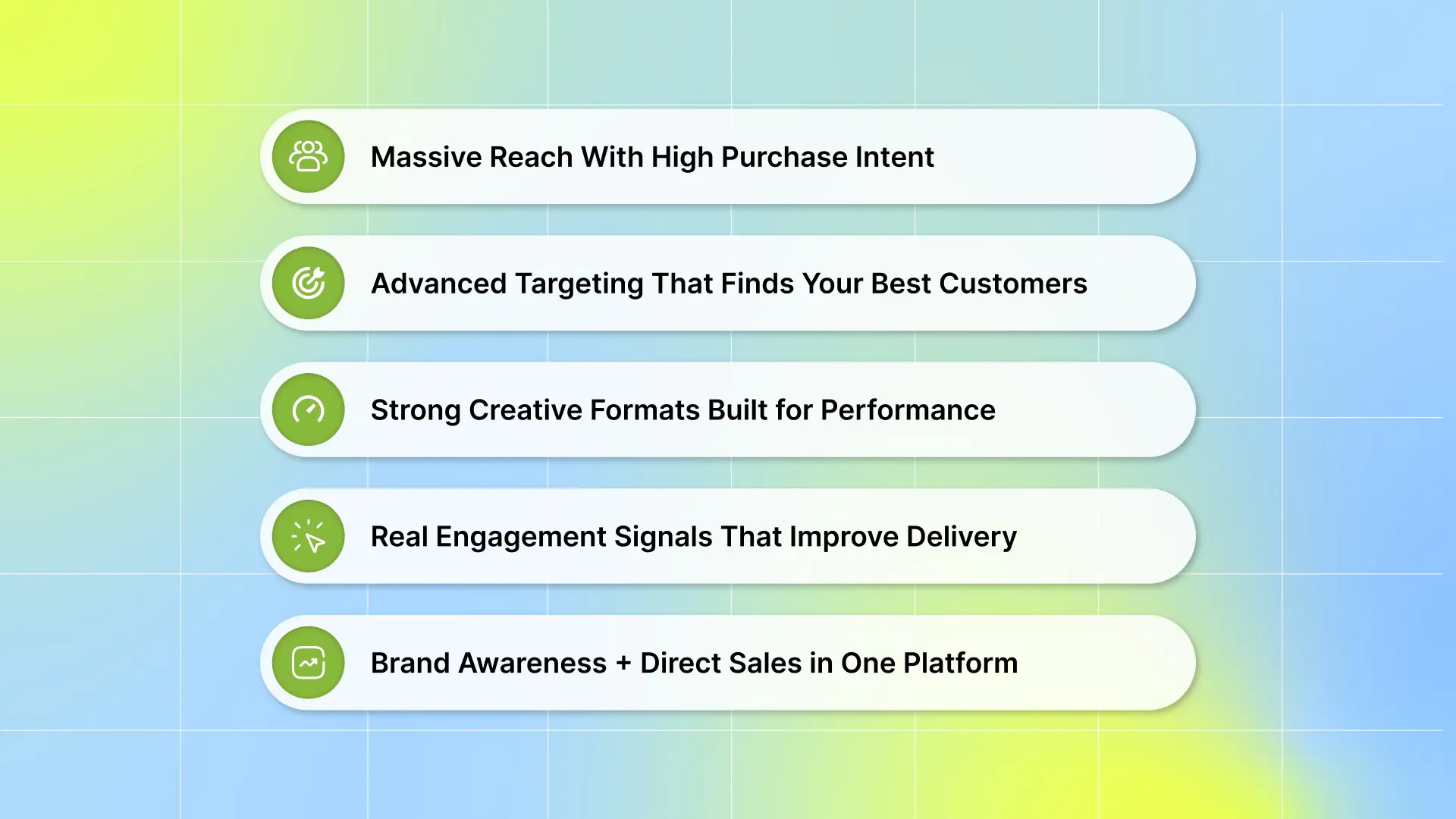
1. Massive Reach With High Purchase Intent: You get access to a huge global audience, giving you more room to test new creatives, product angles, and offers while still finding buyers who match your ideal customer profile.
2. Advanced Targeting That Finds Your Best Customers: You can target people based on interests, behaviors, lookalikes, or even run broad campaigns. This makes it easier for you to find high-value customers without wasting budget.
3. Strong Creative Formats Built for Performance: Video ads, UGC-style content, carousels, and product demos let you show your product in action. These formats are perfect for driving conversions and improving ROAS.
4. Real Engagement Signals That Improve Delivery: Likes, comments, shares, and saves help Facebook understand who responds to your creatives. Better engagement improves optimization and lowers acquisition costs.
5. Brand Awareness + Direct Sales in One Platform: You can introduce your brand, run retargeting, and drive purchases all within the same system, making Facebook one of the most complete UA channels for DTC brands.
But even with all these advantages, many e-commerce brands still struggle to get consistent results from their Facebook campaigns.
Also Read: Creating a Converting Facebook Ad: Practices and Examples
The Real Reason Most E-commerce Facebook Ads Fail
Most Facebook ads fail not because your product is bad, but because the ad system doesn’t get the right signals early enough. When your creative doesn’t hook the right audience or your offer isn’t clear, Facebook can’t optimize fast, and your costs shoot up.
Here are the most common reasons your Facebook ads fail:
1. Weak Hooks That Don’t Stop the Scroll: If your ad doesn’t grab attention in the first 2–3 seconds, users skip instantly. This hurts engagement, delivery, and ROAS.
2. Creatives Built for Clicks, Not Actual Buyers: Pretty videos can get views, but they often fail to attract customers who will actually purchase or stay loyal. You need product-first creative angles.
3. Offers That Aren’t Compelling Enough: Even the best creative can’t save a weak offer. If your offer doesn’t make people act now, your CAC stays high.
4. Audiences That Are Too Small or Over-Segmented: Over-targeting limits Facebook’s ability to find high-value buyers. Broader targeting usually performs better for DTC.
5. Creative Fatigue Hits Faster Than You Expect: Your winning ads burn out in days, not weeks. When fatigue shows up, and you don’t refresh fast enough, your performance crashes.
If you want to stay ahead of creative fatigue and know exactly when to refresh your ads, integrate your Facebook account with Segwise. Its fatigue tracking helps you spot early performance drops and uncover which creatives are actually driving conversions so you can optimize faster with confidence.
6. No Clear Message About Why Your Product Is Better: If your ad doesn’t highlight real value, social proof, or product differences, users don’t understand why they should buy from you.
7. Landing Pages That Don’t Match the Creative: A disconnect between your ad message and your product page kills conversion flow instantly. Even great ads can’t fix post-click experience.
Many of the reasons ads fail come down to weak signals and incomplete data. That’s why proper tracking is the first step toward improving performance.
How to Set Up Facebook Pixel to Capture Buyer Actions
Before you launch any Facebook ads, make sure your tracking is set up correctly. Without proper data, Facebook won’t understand who your high-value buyers are or what actions they take on your website.
Here is a simple, clear step-by-step setup you can follow:
1. Go to Meta Events Manager. This is where you create and manage your tracking setup.
2. Click “Connect data” and select “Web.”Since you’re tracking actions on your website, choose Web as your data source.
3. Click Connect. This starts the setup process for your Pixel.
4. Name Your Pixel and Click “Create Pixel”. Give your Pixel a name that matches your brand or store. This will create a new Pixel ID inside Events Manager.
5. Enter your website URL to check for partner integrations. Click Check. You will see different setup paths:
If a partner integration is available:
Platforms like Shopify, WooCommerce, BigCommerce, etc.
Click Next
Follow the on-screen instructions to automatically set up your Pixel and events.
If partner integration is NOT available:
Click Next.
Meta will give you manual or alternative setup options.
Now you can use the pixel to track activity and events on your website that you want Facebook to recognize for ad targeting.
Types of events you can choose to track are:
Purchase
Lead
Complete Registration
Add Payment Info
Initiate Checkout
Add to Cart
Add to Wishlist
Search
View Content
While the Meta Pixel (formerly Facebook Pixel) collects crucial data like page views, adds-to-cart, and purchases, helping optimize who sees ads, it doesn't inherently tell you the exact creative (image/video/text) reasons why one ad performs better than another; you need to combine pixel data with an AI-powered platform like Segwise for those qualitative insights.
Once integrated, Segwise, an AI-powered creative analytics platform, helps UA and performance marketing teams understand which creative elements drive performance, when creatives start fatiguing, and where budgets should shift before results drop. It connects creative elements (hooks, dialogs, visuals, formats, etc.) directly to business outcomes (ROAS, CPA/CPI, LTV, IPM, conversion rates), so teams stop guessing what works and start scaling creatives with data-backed confidence.
Once your tracking foundation is in place, the next step is to choose the right ad formats to showcase your products effectively and drive real conversions.
Best Facebook Ad Formats Every E-commerce Brand Needs
The ad format you choose can decide whether a shopper stops scrolling, watches your message, or clicks through to buy. Strong formats help you clearly show your product, quickly highlight benefits, and trigger the right signals for Facebook to optimize your campaigns. When you use formats that align with your offer and creative angle, your ads are easier to scale.
Here are the best Facebook ad formats every e-commerce brand should use:
1. Video Ads
Video is the strongest format for DTC brands because it lets you show your product in action within seconds. You can demonstrate benefits, highlight transformations, and tell a clear story about why your product works. For user acquisition, video helps Facebook understand who your best buyers are based on watch time, clicks, and engagement.
For example, Levi’s uses video ads to feature people wearing their winter collection. The video quickly highlights the product fit, movement, and style. This approach feels natural in the feed and helps viewers imagine the product in their own daily life, boosting engagement and qualified traffic.
2. Images
Images work well when you need a simple, direct message that gets attention fast. They load quickly, feel native inside the feed, and are great for showcasing best-selling products, new offers, or bold headlines. For UA teams, image ads are useful for testing product angles without needing full video production.
For example, Elephatitto, a luxury children's shoe brand, uses a simple boot product photo with the caption “Boot season is coming” and a clear CTA encouraging users to shop. The ad focuses on one hero item, a clean background, and a short message, making it easy to test interest.
3. Carousel Ads
Carousel ads let you showcase multiple products, benefits, or features in a single ad unit. Each card can link to a different landing page, making them perfect for brands with multiple SKUs or variations. This format is ideal for DTC brands that want to highlight bundles, product collections, or detailed step-by-step product stories.
For example, The Ends uses carousel ads to showcase different charm accessories and styling options for hoodies, sweatshirts, gym shorts, and sneakers. Each card highlights a unique product, such as charms attached to drawstrings or laid out creatively, helping users visualize how they can personalize their outfits.
4. Collection Ads
Collection ads open into an instant shopping experience inside Facebook. They combine a hero image or video with multiple product tiles below it. This format is great for improving conversion flow because shoppers can browse your catalog without leaving the platform, lowering friction and boosting purchase intent.
For example, Hayes London uses a collection ad featuring a strong hero visual of their premium leather boots, followed by multiple product tiles showcasing different colors and styles. This allows shoppers to explore the full range instantly, compare options, and move smoothly toward purchase, all without ever leaving the Facebook app.
5. Reels and Short-Form Vertical Ads
Short, vertical videos give you access to high-engagement placements like Facebook Reels. These formats feel native and perform extremely well for UGC-style creative, influencer-style reviews, quick demos, and strong hooks. For DTC brands, this format is one of the fastest ways to reach new shoppers.
For example, Adidas uses a simple UGC-style Reel showing a creator walking through the city, carrying a guitar case, and filming herself in a casual “day in the life” moment. The video includes natural shots of her shoes while walking, mirror reflections, and close-ups of the Adidas Superstar sneakers. The ad ends with a bold “SHOP NOW” screen and the iconic logo, making it feel authentic while still pushing a clear call to action.
With the right formats in place, the next step is to make sure your ads stand out and drive action.
Top Tips to Ensure Your Facebook Ads Standout
As a DTC growth marketer or UA lead, you need ads that not only look good but also drive real conversions and stable ROAS. Strong creative, smart targeting, and clear messaging make a huge difference in how your campaigns scale.
Here are a few tips that help your Facebook ads stand out and perform better:
1. Start with Clear and Measurable Goals
Before launching any campaign, you need to know exactly what success looks like for you, whether it’s driving purchases or lowering cost per acquisition. Clear goals help you guide the algorithm and make fast decisions when performance shifts. Without this clarity, your optimization will feel scattered and reactive.
Strong, specific goals also tell you where to allocate budget and which creative angles to test first. This gives you more predictable results and a better understanding of what drives actual revenue.
2. Use High-Quality and Interesting Ad Creative
Your creative is the first thing shoppers notice, and it decides whether they stop scrolling or ignore you. High-quality visuals, clean product shots, and strong storytelling help your brand look trustworthy and premium.
When you use interesting, creative formats such as UGC, before-and-after visuals, fast demos, or product-in-use clips, your ads instantly feel more relevant. Better creative increases engagement signals, which helps Facebook deliver your ads to people who are more likely to buy.
If you want to know which creative formats, hooks, or styles actually drive performance, Segwise gives you deep creative insights, so you can double down on what works and skip the guesswork. With tag-level performance optimization, you can instantly see which creative elements, themes, and formats drive results across all your campaigns and apps.
3. Create a Unique Facebook Offer
A strong offer helps your product stand out in a competitive marketplace. Offers such as free shipping, discounts, limited-time deals, or value packs give users a reason to act now rather than later. The right offer also helps you control the narrative around price and value.
You can test multiple offer types across your funnel to see what drives higher AOV or better conversion rates. This helps you build campaigns that convert more consistently and remain competitive during peak seasons.
4. Select the Right Call to Action for Your E-commerce Business
Your CTA tells users what they should do next, and choosing the wrong one can break your conversion flow. CTAs like "Shop Now" or "Get Offer" work differently depending on your product price, buying cycle, and audience intent. Picking the right CTA helps users feel confident about taking the next step.
A strong CTA reduces hesitation and improves click-through rates, helping Facebook optimize your campaigns more effectively. When done well, a small CTA change can lead to higher conversions with the same spend.
5. Precise Audience Targeting
Even with broad targeting becoming more effective, you still need a clear understanding of who your best customers are. Interest-based targeting, custom audiences, and lookalike segments help Facebook identify users most likely to buy from you. Having the right inputs ensures the algorithm has better signals to optimize against.
Precise targeting also reduces wasted spend. You can compare audience performance by looking at metrics like CPA and ROAS to see where your best results come from.
6. Utilize A/B Testing to Improve Ads
A/B testing helps you identify what works and what doesn’t without relying on guesswork. You can test different variations to understand which drives the best results for your brand. Even small differences can lead to major improvements in performance.
Regular testing also keeps your campaigns healthy as trends shift and creative fatigue sets in. When you consistently replace underperforming ads with new learnings, your results stay stable for longer.
With integration with Segwise, you can automate Experiment Tracking to monitor A/B tests, creative insights, and optimization experiments in one place. Plus, Fatigue Detection alerts you to performance drops early before they impact spend efficiency or campaign outcomes.
7. Optimize Your Ad Funnel
Every step of your funnel, from ad view, click, landing page, to checkout, needs to work smoothly for your user to convert. If your landing page is slow, unclear, or inconsistent with your ad messaging, users drop off fast. Improving each touchpoint creates a seamless experience that boosts conversions.
When your funnel is optimized, Facebook gets stronger conversion signals that help it deliver your ads more efficiently. This improves your ROAS. A well-optimized funnel also gives you more room to scale without losing profitability
8. Target Cart Abandonment
Cart abandonment is one of the highest-intent stages in e-commerce, and targeting these users can deliver some of your cheapest conversions. These shoppers know your product and already expressed purchase intent; they just need a final nudge. Retargeting helps you recover lost revenue with minimal effort.
Using incentives like reminders, small discounts, or social proof can help close the gap and drive quick conversions. This strategy gives you a strong bottom-of-funnel setup that boosts your overall purchase volume. It also improves the efficiency of your top-of-funnel campaigns by maximizing every click.
9. Set a Realistic Budget
A realistic budget helps Facebook gather enough data to optimize properly. When your budget is too low, your ads don’t exit the learning phase, leading to unstable delivery and higher CPAs. You need enough spending to test ads effectively.
Having a clear budget also helps you allocate spend across funnel stages. You can maintain a balance between prospecting, retargeting, and retention to ensure long-term profitability. With proper budget planning, scaling becomes smoother and more predictable.
10. Monitor and Analyze Regularly
Monitoring and analyzing your Facebook ad performance is essential for achieving consistent results. Track key metrics like CTR, conversions, and ROAS to understand what’s working. This helps you quickly identify strong ads, audience segments, and placements.
Use these insights to adjust your campaigns and improve efficiency over time. Set clear goals and KPIs, so you know exactly what success looks like. With data-driven optimization, your ads become more targeted, effective, and profitable.
Also Read: AI Tools to Create Winning Facebook Ads
Conclusion
Running effective e-commerce ads on Facebook takes more than just good visuals or catchy copy. You need a solid strategy from targeting and creative testing to funnel optimization. The proven tips include setting clear goals, building high-converting creatives, testing offers, and using the right ad formats. With these strategies, you can build campaigns that scale profitably and drive consistent user acquisition.
If you need deep insights into what’s working and why, you need to integrate your Facebook account with AI-powered tools like Segwise, which go beyond surface-level metrics.
To integrate, you just need to go to Segwise Dashboard → Settings → Ad Networks → Connect under Meta → sign in → select your Facebook Ad Accounts, and enable them for full creative analysis across your campaigns.
After successful integration, Segwise unifies data from your Facebook ad accounts and mobile measurement partners to show you which creative elements actually drive performance. Our multi-modal AI creative tagging automatically identifies and tags creative elements like hook dialogs, characters, colors, and audio components across images, videos, text, and playable ads to reveal their impact on performance metrics like IPM, CTR, and ROAS.
With tag-level creative element mapping, you can see which specific creative elements drive performance. Discover patterns like "this hook dialog appears in 80% of top-performing creatives" with complete MMP attribution integration. Moreover, with fatigue tracking, you can set custom fatigue criteria and monitor creative performance across Facebook and all major ad networks to catch fatigue before it impacts your ROAS.
So, why wait? Start your free trial and see what’s driving your best Facebook ads!
FAQs
1. What is a lookalike audience, and how can it help my e-commerce ads?
A lookalike audience is a group of users who share traits with your existing customers, letting Facebook find people likely to buy from you. It’s one of the best ways to scale your Facebook ads because it expands your reach to high-potential shoppers.
2. How does Facebook determine who sees my e-commerce ads?
Facebook uses a combination of demographics, interests, behaviors, and past engagement to determine which users are most likely to take your chosen action (e.g., purchase). The algorithm also factors in your bid, budget, and predicted value of each click or conversion.
3. How do dynamic product ads help e-commerce stores?
Dynamic product ads automatically show products based on what a shopper viewed or interacted with on your site, improving relevance and helping you drive more conversions with personalized ad experiences.