
Did you know AI campaigns can deliver up to 14% higher conversion rates and 52% lower acquisition costs?
In DTC advertising, costs are rising, platforms shift weekly, and winning creatives lose steam faster. Without clear insights, your team ends up guessing, testing the wrong hooks, scaling the wrong ads, and wasting UA budget. Ultimately, the pressure to make every ad dollar work smarter has never been higher.
This blog is your practical guide to using AI in DTC advertising. You’ll learn how AI can help you tag and track creatives, identify top performers, catch fatigue early, and automate the ad decisions that used to take hours.
What AI in DTC Advertising Really Means?
AI in DTC advertising refers to using machine-driven technology to analyze data, predict what will work, and automatically improve your ad performance. Instead of manual testing, AI studies how your audiences behave, which creatives drive results, and where your ad spend performs best to highlight what’s working and what’s holding you back.
This gives your team clearer direction on which ads to scale, which ads are slowing down, and where budgets can produce stronger returns.
But understanding AI's role is only the first step; what really sets it apart is how it solves the problems manual advertising faces.
Why Manual Advertising No Longer Works for DTC Brands
Manual optimization worked when you were running a few ads, but not when you’re managing hundreds of ads across multiple platforms. Today, success in user acquisition depends on how quickly you can turn data into action. That’s where AI steps in, replacing guesswork with speed, precision, and performance clarity.
Here are a few ways AI changes what used to be manual in DTC advertising:
Manual tracking takes hours; AI does it in minutes. You no longer have to export reports or compare metrics manually. AI tools automatically pull performance data across platforms.
Manual creative testing is guesswork; AI finds patterns instantly. Instead of testing random hooks or visuals, AI shows you exactly which creative elements drive clicks, installs, and purchases.
Manual budget allocation is reactive; AI optimizes spend instantly. AI automatically shifts your ad dollars to top-performing campaigns before you even notice performance changes.
Manual reporting is repetitive; AI delivers insights on autopilot. Daily dashboards and alerts keep you updated without spending hours building reports.
Manual fatigue detection happens too late; AI spots it early. You can catch performance drops as soon as they start and refresh your creatives before ROAS suffers.
But efficiency alone isn’t enough; better advertising still depends on understanding what truly moves people.
Also Read: Top Creative Analytics Platforms for DTC Brands
How AI Turns Human Desire into Action
Great DTC advertising has always been about understanding what people really want. AI doesn’t replace that human understanding; it strengthens it. When used right, AI helps you see beyond surface metrics and uncover what truly motivates your audience to click or buy your product.
AI can analyze your customer reviews, social comments, and search patterns to uncover what drives decisions, whether it’s convenience, confidence, savings, or lifestyle appeal. You’re not just optimizing ads for clicks; you’re optimizing for what people feel.
Every potential buyer is at a different level of awareness, from not knowing they have a problem to being ready to buy. AI helps you reach each stage with the right message, creative, and timing.
Here are the key Stages of Awareness:
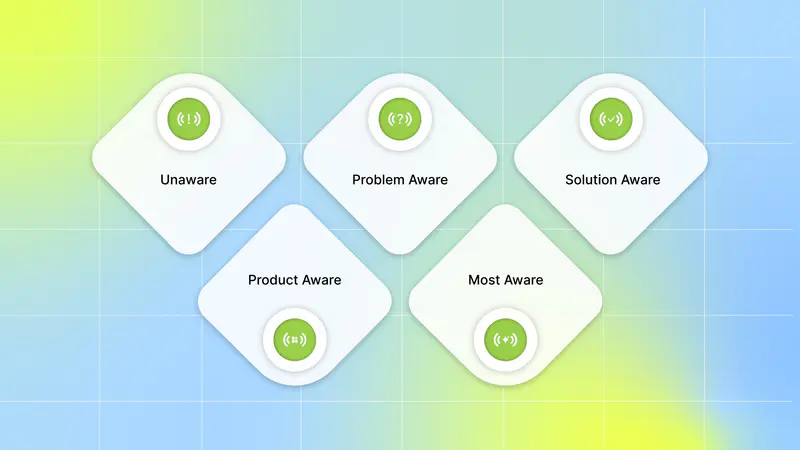
1. Unaware
At this stage, people don’t recognize the issue your product solves. If you push a sales message here, they’ll scroll right past it. Your focus is to spark curiosity and help them notice that something might be off.
How AI helps: It analyzes browsing patterns, engagement signals, and audience interests to identify early intent trends, helping you create awareness ads that educate and spark curiosity.
2. Problem Aware
They now feel that an issue exists, but can’t pinpoint the cause. They’re looking for explanations, not products. Speak directly to their frustration and help them understand what’s going wrong.
How AI helps: Predictive models cluster users who show similar intent signals. You can serve relatable video ads that empathize with their frustrations and clearly highlight the problem.
3. Solution Aware
At this stage, users are exploring different solutions. They know solutions exist, but aren’t familiar with yours. They’re comparing different brands and trying to understand what might fit their needs. This is where you softly introduce your solution as a strong option.
How AI helps: Creative-intelligence AI analyzes past ad performance to find which hooks, images, videos, and messaging lines resonated most with similar audiences. It then enables you to surface the best-performing combinations.
4. Product Aware
They’ve discovered your product but aren’t fully convinced yet. They’re looking for evidence reviews, comparisons, and reasons to trust you. This is your moment to highlight proof and clarity.
How AI helps: AI highlights which testimonials, benefit statements, product visuals, or feature callouts performed best across your past campaigns. This gives your team a clear direction on what to emphasize when addressing doubts and strengthening trust.
5. Most Aware
These users are at the final decision stage and just need a push. A clear offer, strong CTA, or reminder can help them complete the action.
How AI helps: AI consistently surfaces the creative elements to target high-intent users to deliver personalized offers, and serves timely ads that maximize conversion probability while minimizing wasted spend.
Once you know what motivates your customers, the next step is using AI to strengthen your entire advertising engine.
How AI Supports Your DTC Advertising Strategy
AI is changing how DTC teams plan, launch, and scale advertising. It removes a lot of manual work and gives you clearer insights across the entire funnel.
Here’s how AI supports your advertising strategy:

1. Creative Analytics & Tagging: Know What Actually Drives Results
Every DTC brand has hundreds of ad creatives running across Facebook, Google, and TikTok, but only a few truly move the needle. AI solves that by automatically tagging every creative and connecting elements (like colors, hooks, or CTAs) to performance outcomes.
With segwise creative analytics by using tag-level performance optimization, you can instantly see which creative elements, themes, and formats drive results across all your campaigns. With its creative tagging, you can automatically identify and tag creative elements across images, videos, text, and playable ads to reveal their impact on performance metrics like IPM, CTR, and ROAS.
How it helps your ad strategy:
Automated Tagging & Categorization: AI scans every ad video, image, or text and tags it based on key creative features. This means no more manual naming conventions or spreadsheets.
Element-Level Performance Mapping: It correlates creative elements (like “unboxing scenes” or “testimonial intros”) with ROAS, CTR, and installs to show what actually drives performance.
Unified Dashboard for Insights: All creative data from Facebook, Google, and TikTok lives in one place, giving your team a single source of truth for creative decision-making.
2. Creative Fatigue Tracking: Catch Decline Before It Kills Performance
Every UA team knows that ad fatigue can destroy a campaign overnight. What performs brilliantly today might flop next week, and by the time you notice, the budget’s already burned. AI fatigue tracking monitors creative performance continuously and alerts you before your metrics crash.
With Segwise fatigue tracking, you can automatically monitor and detect a continuous decline in performance metrics and spend share using internal logic. Catch fatigue before it impacts your budget allocation and campaign results. With custom success criteria tracking, you can set specific performance targets for new creatives you want to monitor. Track ROAS thresholds, spend share goals, or any custom criteria that matter to your optimization strategy.
How it helps your ad strategy:
Early Fatigue Detection: AI tracks changes in CTR, ROAS, and conversion rates over time. When it detects a consistent decline, it flags the creative for refresh before your performance drops too far.
Custom Success Criteria: You can define what “success” means for each creative, for example, “pause when ROAS falls 25% below average.” AI enforces it automatically.
Cross-Platform Tracking: Fatigue doesn’t always start on one platform. AI compares the same creative’s performance across Facebook, Google, and TikTok to identify where it’s slipping first.
3. Predictive Analytics: Know What Your Customers Want
What if you can spot which products will sell next month or which ads will perform before you even launch them? Predictive analytics uses machine learning to analyze patterns in your past campaigns and customer data, helping you make proactive decisions.
How it helps your ad strategy:
Demand Forecasting: AI identifies seasonal trends and product demand spikes using your past sales and traffic data. This helps your team develop creatives based on recent trends. The result? You launch product campaigns that speak directly to what customers will soon be searching for.
Customer Segmentation: AI helps break down your audience by demographics, interests, and behaviors, allowing you to tailor creatives that speak to each segment. For instance, showing a lifestyle-focused video to one segment and a value-driven testimonial to another.
Product Recommendations: Predictive algorithms personalize ad creatives or product carousels based on each user’s browsing and buying behavior, increasing click-through rates and average order value.
4. Automated Campaign Optimization: Scale Winners, Stop Losers
AI doesn’t just analyze, it acts. Instead of you manually checking dashboards all day, AI continuously optimizes campaigns proactively. It reallocates budgets, adjusts bids, and boosts the best-performing creatives to hit your performance goals faster and more efficiently.
How it helps your ad strategy:
Smart Audience Expansion: AI identifies which creatives perform best for different audience segments and expands into new, similar high-performing groups (lookalikes). The better your creative connects, the smarter your audience grows.
Budget Allocation: AI shifts spend away from low-engagement ads and reallocates to creatives that drive the highest ROAS. That means your best hooks, formats, or product visuals get seen more often without manual input.
Creative Rotation: AI automatically runs creative A/B tests, tracks which formats (e.g., UGC vs. product demo) resonate best, and surfaces winning variations, saving you hours of manual analysis.
5. AI-Powered Creative Generation: Scale Your Content Without Burning Out
Your ads only stay fresh if you keep testing, but producing creative volume manually is time-consuming. AI helps you generate, iterate on, and test creatives faster, while maintaining quality and consistency.
With Segwise AI creative generation, you can auto-generate new ad creative variations using creative elements that drive performance - winning hooks, CTAs, visual styles, and characters identified through your creative insights. You can also create variations for images, videos, and multiple aspect ratios from a single source creative. Generate platform-specific versions for Facebook, TikTok, Instagram, Google, and other advertising platforms.
How it helps your ad strategy:
Rapid Ad Variation Creation: AI generates multiple creative versions from your high-performing assets, automatically testing different visuals, text, and tones.
Data-Driven Ideation: It analyzes past winners and recommends new creative concepts, such as “product demo + testimonial” or “hook-first storytelling.”
Copy & Video Production: Generate ad copy, headlines, and even video edits tailored to your audience’s interests, pain points, and seasonality.
6. Personalization at Scale: Make Every User Feel Like Your Only Customer
DTC advertising works best when customers feel like your brand “gets them.” But personalizing thousands of ads manually is impossible. AI makes personalization scalable, adapting your message, creative, and timing to each user’s behavior.
For example, Fresh Clean Threads has seen a 50% increase in abandoned cart revenue and a 20% increase in revenue since adopting the hyper-personalization technology.
How it helps your ad strategy:
Dynamic Ad Content: AI shows users the most relevant product or message based on their browsing, purchase, and engagement history, making your ads feel tailor-made.
Smart Product Recommendations: Personalized “You might also like” or “Recommended for you” sections in ads or on-site drive more repeat purchases and higher AOV.
Retargeting Optimization: AI tailors retargeting ads with creatives and offers based on where each customer dropped off, turning lost traffic into conversions.
7. Cross-Platform Attribution: Finally Understand What’s Working
Your customers don’t follow a single path; they might see a TikTok ad, visit your site via Google, click a Facebook retargeting ad, and convert via Instagram. Without proper attribution, you can’t tell which channels actually drive results.
AI attribution solves that problem by using machine learning to map complex customer journeys and assign credit to the right touchpoints.
How it helps your ad strategy:
Multi-Touch Attribution: AI considers the full customer journey and distributes credit fairly across all platforms that influenced a conversion.
Cross-Device Tracking: It recognizes the same user across phone, tablet, and desktop, providing accurate performance data.
Incrementality Testing: AI compares campaign performance against control groups to reveal which ads actually drive new conversions.
8. Targeted Advertising: Reach the Right Audience, Every Time
With great creatives, it's also essential to reach the right people. AI fixes that by helping you find, segment, and target the exact audience most likely to convert based on behavior, not guesswork.
How it helps your ad strategy:
Dynamic Ad Content Optimization: Improving ads in response to customer interactions and behavior can be an effective strategy. AI algorithms can provide you with key insights into how different customer demographics respond to your ads, so you’ll be able to work out whether your ad creatives, messaging, or offers need tweaking.
Behavioral Targeting: Gaining a solid understanding of your customer’s online behavior is essential for developing targeted ads. You can deliver personalized ads through AI based on specific actions, including website visits, product views, and clicks.
Tailored Recommendations: AI-powered recommendation engines enable DTC brands to suggest products based on customer preferences and behaviors. By using machine learning algorithms, you’ll be able to refine recommendations as your target audience's preferences evolve continually.
After understanding where AI Supports Your DTC Advertising Strategy, now it’s about putting AI into action with a focused approach.
Also Read: How to Combat Creative Fatigue with AI Solutions
Steps to Implement AI in Your DTC Advertising Strategy
If you want AI to improve your ad results, you need a clear plan. These steps help you keep your campaigns consistent, scalable, and easier to manage. Here are the steps you can follow to set up AI in your advertising workflow:

1. Define the problems you want AI to solve
Start by listing the gaps blocking your performance today. It could be slow creative testing, unreadable data across platforms, unclear winning elements, or creative ad fatigue. This gives you a clear target for where AI can help first.
2. Choose AI tools that match your workflow
Pick tools based on your biggest needs: creative analytics, automated tagging, fatigue alerts, or creative generation. Your goal is to speed up decisions, not overload your stack.
You can choose AI-powered tools like Segwise, a creative analytics and generation platform that shows you which creative elements drive performance, when your ads start dropping, and where budgets should shift before your results drop.
3. Start with one AI-driven workflow
Begin small so your team can adapt quickly. For example, start with creative tagging or before testing predictive models or automated creative generation.
4. Test, learn, and refine your process
Run AI-powered insights against a small portion of your ad budget. Compare AI-backed decisions to your current workflow and adjust until you find the process that improves ROAS or reduces wasted spend.
5. Build a repeatable AI playbook for your team
Turn your learnings into a weekly workflow that includes creative reviews, fatigue checks, test plans, best-performing elements, and new idea suggestions. This helps your whole team make faster decisions using the same signals.
6. Scale AI across channels and creative types
Once the workflow works for Meta or TikTok, expand it to other platforms. Apply the same playbook to video ads, statics, UGC, product demos, or hooks to keep your growth consistent.
As you integrate AI into your workflow, it's equally important to consider ethical considerations.
Ethical Considerations When Using AI in DTC Advertising
As AI becomes a core part of advertising, it’s important to balance automation with ethics. For DTC brands, AI brings incredible efficiency, but it also comes with responsibilities around data use, fairness, and creative integrity. How you use AI can strengthen or damage trust with your customers.
Here are the key ethical and practical factors to keep in mind while integrating AI:

1. Data Privacy
AI works best with accurate data, but it’s your responsibility to protect your customers information. Make sure you stay compliant with data privacy laws such as GDPR and the CCPA. Focus on using first-party, consented data that customers willingly share with you. This not only keeps you compliant but also builds long-term trust and transparency.
2. Avoid Over-Automation
AI is a performance enhancer, not a replacement for human creativity. Keep a human in the loop for strategic and creative decisions. Let AI handle the heavy lifting, such as optimization and reporting, while your team continues to lead on storytelling, messaging, and brand tone. This ensures your ads stay authentic and emotionally engaging.
3. Bias and Fairness
AI models can unintentionally learn bias from the data they’re trained on, leading to skewed targeting or repetitive creative direction. Regularly review your AI outputs to ensure they’re inclusive and fair. Monitor which audiences your ads reach and how creatives are being recommended or served. Make conscious adjustments to avoid reinforcing stereotypes or excluding potential customers.
Conclusion
AI in DTC advertising is quickly becoming the new standard for how high-performing brands scale faster and smarter. From creative analysis and fatigue tracking to predictive insights and campaign optimization, AI helps you cut guesswork, save hours of manual work, and improve return on ad spend.
If you're ready to bring these capabilities into your workflow, Segwise is built just for that. Segwise helps DTC brands automate creative tagging, uncover winning ad elements, detect fatigue early, and turn insights into action without spending hours in spreadsheets.
Our powerful, multi-modal AI creative tagging automatically identifies and tags creative elements such as hook dialogues, characters, colors, and audio components across images, videos, text, and playable ads to reveal their impact on performance metrics like IPM, CTR, and ROAS. This means you don’t waste time manually tagging or guessing you get data-driven clarity about what creative aspects really work or fail.
It's creative fatigue tracking, catch fatigue before it impacts your budget allocation and campaign results. Moreover, with our Tag-Level Performance Optimization, you can instantly see which creative elements, themes, and formats drive results across all your campaigns. With our AI creative generation, you can generate creative variations based on actual performance data from your campaigns. Segwise understands which specific creative elements drive ROAS, CPA, and conversion rates via its Creative Tagging and Analytics agents.
So, why wait? Start your free trial today and see how fast AI can improve your creative performance!
FAQs
1. Is AI just hype or real value for DTC advertising?
AI isn’t hype when used right; it delivers real advantages like smarter targeting, creative insights, personalization, and automation of repetitive work.
2. Does AI replace human creativity and judgment?
No AI works best as a tool to augment human creativity. It gives data‑backed insights, automates routine tasks, and surfaces patterns, but humans still need to guide strategy, brand voice, and creative direction.
3. What are the risks of relying too much on AI for ad decisions?
Risks include over‑automation without human oversight, creative monotony, algorithmic bias, privacy/data concerns, and misinterpretation of AI output if data is poor or incomplete.