
Have you noticed that ad costs keep rising while it feels harder to get real results from your campaigns? In 2025, mobile and in‑app advertising is a huge part of digital ad spending, with billions going into these channels as teams compete for limited user attention. At the same time, cost‑per‑click and cost‑per‑install have climbed on major platforms, pushing marketers to find clearer signals that show which creative elements truly drive installs and long‑term engagement.
Instead of relying on instinct, this approach uses data from your campaigns and external ad sources to identify which hooks, visuals, and messages drive stronger installs, better retention, and lower acquisition costs. You can compare trends across platforms, spot early fatigue, and adjust strategies based on real performance, not assumptions.
In this blog, we’ll explain what Digital Ads Intelligence is, describe the key areas that make it useful for improving creative testing, audience matching, performance tracking, and fraud protection, and share simple steps you can take this week to start making smarter campaign decisions.
What is Digital Ad Intelligence?
Digital ads intelligence is a way to turn many scattered ad signals into clear, usable answers you can act on. At its core, it pulls data from sources such as social platforms, ad networks, measurement partners, and app analytics, then tags and links creative elements (hooks, visuals, calls to action) to performance metrics (clicks, installs, cost per install, retention). That makes it possible to see which creative choices are actually moving the needle instead of guessing.
Platforms and formats keep changing, and so do measurement rules. A good ad intelligence approach gives you a single view across channels so you can spot what works fast. For example, which short video format lifts install rate, or which message drives better 7-day retention? This is powered by automated tagging, cross-channel matching, and simple dashboards that link creative variants to real-value metrics.
Modern systems add AI to tag creatives at scale and flag trends early. They also pull competitive ad galleries so you can compare your creative choices to what others are testing. That outside view helps you pick experiments that have a higher chance of winning.
Why It Matters for Performance Teams
Ad costs are rising, user attention is limited, and manual creative work is slow. When you can link a specific creative element to downstream value like installs, day-7 retention, lifetime value, you stop wasting budget on guesses. Ad intelligence helps you find those links faster.
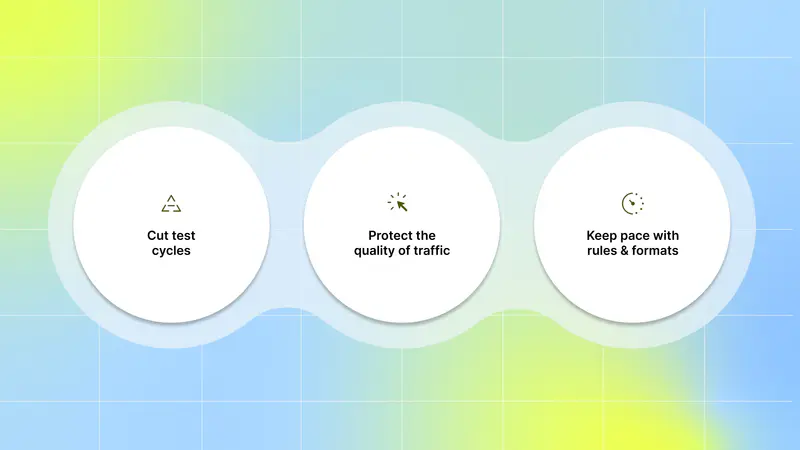
Three practical ways it helps you right away:
Cut test cycles: Instead of running dozens of blind tests, you use past patterns and competitor signals to pick the most promising variants. That lowers cost per install and speeds scaling.
Protect the quality of traffic: Fraud and fake engagement have grown more subtle as bad actors use AI. Good intelligence tools surface odd patterns so you can block low-quality sources before they skew your lookalikes or waste ad dollars.
Keep pace with rules and formats. Privacy shifts and new ad formats (short video, shoppable ads, CTV) change which tactics work. A central view lets you test and reallocate quickly as platform rules or creative trends change.
If you want lower acquisition cost, clearer creative playbooks, and fewer surprises from fraud or policy shifts, digital ads intelligence gives you the signals to make those moves with confidence. Next, we’ll break down the specific parts that make this work and small steps you can run this week.
To make these benefits practical, you need a clear view of the main building blocks that shape strong ad intelligence and guide better decisions.
Key Areas That Make Up Digital Ads Intelligence

To make digital ads intelligence actionable, it helps to understand the core areas that drive measurable results. By focusing on these five key components, marketing teams can turn scattered data into clear insights, optimize creatives, reach the right audiences, and protect campaign spend:
1. Competitive Creative Insights
Watch what other advertisers are testing so you don’t repeat the same guesses. You can collect the ads your competitors run on social and search, then tag those ads by format, message, and creative element. That shows which ideas they test often and which ones get repeated. Tools that gather ad libraries and organize creatives help you spot patterns without having to search each platform by hand.
Practical tools you can use now:
Meta Ad Library (see current Facebook & Instagram ads): Meta’s Ad Library lets you search ads that run across Facebook and Instagram. You can check an advertiser’s active ads, review creative formats, and read the ad text. It’s a good first stop when you need direct examples of what others are running. You can also use the Ad Library API to automate searches if you want to collect many ads on a regular basis.
Google Ads Transparency Center (view ads across Google properties): Google’s Ads Transparency Center provides a searchable view of ads running on Search, YouTube, and Discover. It shows ad start dates, formats, and basic advertiser details. Use this to find creatives that appear across search, and to spot new messaging or formats in the wider market.
AI-powered ad intelligence platforms (turn raw ad libraries into action): AI-driven ad-intelligence platforms provide structured creative analysis beyond what you can get from manual checks in Meta or Google’s public ad libraries. Segwise is a leading example, offering centralized tracking of competitor creatives pulled directly from Meta, automated tagging of key elements such as hooks, characters, text overlays, CTAs, themes, and pacing, and trend monitoring that surfaces newly launched ads each week. Together, these layers make it easier to spot patterns, understand which creative components consistently appear in high performers, and identify emerging styles or angles to inform your next round of testing.
This turns public ad data into structured insights you can act on quickly, especially when planning new creative tests or refining messaging.
Also Read: How to Use Facebook Ad Library for Smarter Ad Strategies
2. Audience Signals and Targeting Clarity
A good creative only works if it reaches the right people.
Digital ads intelligence ties creative features to the audience segments that react best. You can see which visuals or messages get more clicks, installs, or long-term engagement from particular cohorts. That lets you move promising creatives to the audiences most likely to convert and stick around. Reports and attribution platforms now link creative data with cohort metrics, so you don’t have to guess the fit.
How to use it this week:
Run a small test in which the same creative runs against two different custom audiences, and compare the install rate and day-7 retention.
If one audience shows higher retention, route more spend to that audience for further testing.
When you match a creative to the right audience, you raise the chance that a creative will scale. Next, use those matches to shape how you make and refine ads.
3. Improving Ad Creatives Through Data
Use facts, not hunches, to change what your ads show and say.
Automated tagging and AI let you break ads into parts, opening hook, characters, on-screen text, call to action, and measure which parts drive action. Large reports from industry players show that emotion, format, and creative structure can predict performance across millions of ads. Use those signals to write clearer briefs and prioritize variants that align with past winners.
How to use it this week:
Tag your top 30 creatives by hook type and outcome. Look for the top two hooks that drive installs with strong retention.
Build two new variants that retain the best hook while changing only the CTA. Test for seven days.
Data-driven creative changes speed up the discovery of winners. To measure impact, you next need creative-level tracking that follows performance through the funnel.
4. Creative-Level Performance Tracking
Track an ad from first impression to long-term value.
Link each creative to funnel metrics: view → click → install → retention → revenue. That way, you see not just early signals like CTR, but whether a creative actually brings higher lifetime value. Modern platforms integrate ad data with measurement partners, enabling you to compare creative variants against downstream KPIs.
How to use it this week:
Pick three creatives and map their CTR, install rate, day-7 retention, and ROAS side by side.
Pause creatives that show good installs but poor retention, and invest in those that show both installs and strong retention.
Tracking creatives end-to-end prevents short-term wins from becoming long-term drains. Protect that spend next by adding fraud and safety checks.
5. Protecting Spend Through Fraud and Safety Checks
Make sure your gains are real, and your ads run where they should.
Fraud and low-quality traffic still cost marketers billions. Good ad intelligence tools flag odd patterns (very high CTR with low installs, spikes from a single placement, or suspicious conversion patterns) so you can block bad sources. Combining fraud signals with creative and audience data keeps lookalike models clean and protects future bidding. Recent industry reports indicate that fraud remains a growing threat across mobile and programmatic channels.
How to use it this week
Add simple alerts for sudden spikes in CTR or conversion rates across any placement.
Run a quick validity check on top placements before using their data for lookalike training.
If you protect your data quality, the insights you get from creative tracking and audience signals stay reliable. That creates a loop: better tests, clearer winners, safer scaling.
If you apply these five areas together, you turn scattered ad activity into a steady stream of test ideas that reach the right people, convert at higher rates, and keep returning value. Start by saving competitor ads, then link winners to audiences, refine creatives with data, monitor creative impact across the funnel, and implement fraud checks. That order keeps your work focused and your budget safer.
When these parts work together, the process becomes easier to apply across different roles. Here’s how each team benefits from this setup.
Also Read: Creative Analytics Explained: How To Track, Measure, And Improve Ad Performance
Teams That Gain the Most From Digital Ads Intelligence
If you run paid campaigns, create ad assets, or measure post-install value, digital ads intelligence helps you work faster and spend smarter. Who benefits and how it helps you now:
If you manage campaign budgets and targets, you get clearer signals about which creatives actually lower cost per install and which ones waste spend. That means you can move budget to the winners faster and pause losers before they cost more. Use creative-level ROAS and retention links to guide scaling decisions.
If you produce or brief creative work, you gain tested ideas instead of guesses. Tools can show recurring hooks, formats, and styles competitors use and that perform well in the market. That shortens brief cycles and improves the odds that a new creative will win.
If you own measurement and long-term value, you can connect each ad variant to downstream metrics like day-7 retention and LTV. That stops the “CTR looks good, but customers don’t stay” problem and helps you optimize for real business value.
If you oversee multiple brands or accounts, you get repeatable playbooks. When one test shows an element that reliably improves retention or installs, you can replicate the idea across other campaigns or accounts with quick local tweaks, reducing wasted creative effort.
If you worry about bad or low-quality traffic, intelligence tools often include fraud and safety signals so you can block suspicious placements and keep your training data clean. That protects future targeting and lookalike models from being polluted by fake conversions.
Quick step you can take this week: pick one top-performing creative and map it to install rate and day-7 retention. If the retention is weak, hold scaling and run a variant that tests a different hook or onboarding message.
Applied together, these benefits cut waste, speed tests, and make scaling decisions that actually move business metrics. Once the core structure is in place, AI adds another layer of speed and clarity, helping you move from raw data to clear patterns more quickly.
How AI Strengthens a Digital Ads Intelligence Strategy
It’s a multiplier that helps you tag creatives, spot trends, and predict problems earlier. Below are the key ways in which AI adds value for you:
Automated tagging at scale: AI can break each ad element, such as opening hook, visuals, on-screen text, pacing, CTA, and tag them automatically. That lets you search and compare thousands of creatives based on the elements that matter most, instead of manual tagging.
Faster discovery of winning patterns: By analyzing large sets of ads, AI finds which combinations of elements correlate with strong installs or higher retention. Recent industry studies show that emotional hooks and certain storytelling formats more often drive installs and long-term value. Use those patterns to prioritize tests.
Early fatigue and trend signals: AI models can spot when a creative’s early metrics start to slip and warn you before costs spike. Predictive alerts help you refresh assets sooner, keeping CPIs stable and preserving audience interest.
Automated variant generation and scoring: Some platforms can generate new creative variants based on winning features and score them before you run them live. That speeds up creative iteration and helps you run smarter A/B tests.
Better fraud and safety detection when combined with creative signals: When AI flags odd creative-to-conversion patterns (for example, high clicks but no real installs), you can investigate and block bad placements quickly. That keeps your data honest for future modeling and bidding.
Quick actions you can run this week: connect one ad set to an automated tagging tool (or use a free trial of an AI creative tool), tag the last 50 creatives, and look for the top two recurring hooks tied to stronger install rates. Then create one variant that retains the best hook while changing the CTA.
When you use AI to organize creative signals, predict fatigue, and suggest variants, you spend less time guessing and more time scaling ideas that show real downstream value. With the value of AI in mind, the next question is how to put these ideas into action using tools built for creative analysis and competitive tracking.
Also Read: Understanding Creative Intelligence: Examples and Insights
Boost Your Digital Ads Intelligence with Segwise

It’s frustrating to invest time and budget in ads without knowing which ones will deliver results. You need quick, clear insights that show which creative ideas work and which don’t. Segwise makes this simple; it turns creative and competitor data into actionable signals so you can test smarter, scale faster, and focus on ads that really drive installs and long-term engagement.
What Segwise does for your digital ads intelligence,
Automatic creative tagging: Segwise’s multimodal AI tags elements in your ads, such as hooks, CTAs, characters, on-screen text, and more, and links those tags to performance metrics like IPM, CTR, and ROAS. That makes it simple to search and compare creative features across hundreds of assets.
Creative analytics & fatigue tracking: The platform shows creative performance at the asset level and warns you when an ad starts to lose momentum, so you can refresh assets before costs rise.
Competitor ad tracking (Meta): Segwise offers a free Meta Ad Library tracker and a paid competitor dashboard that scans Meta ads and shows recent competitor creatives in a 7-day rolling view. Use this to gather market ideas you can test quickly. Note: the free tracker scans the Meta Ad Library specifically.
AI-driven creative generation & recommendations: The tool can suggest new creative variants grounded in your tagged performance data, helping you keep a steady pipeline of ideas aligned to what the data shows works.
Unified data via no-code integrations: Segwise connects your ad platforms, MMPs, and internal sources without engineering work, so your creative tags map back to installs and LTV metrics in one place.
Segwise focuses on turning creative signals into action through tagging, competitor spotting (Meta), fatigue alerts, and data-backed variant generation so you can run fewer, smarter tests and protect spend. If you want to cover Google or YouTube competitor creatives as well, use Google’s Ads Transparency Center in parallel and bring those examples into Segwise or your internal tracker.
For clearer creative signals and a faster path from idea to test, Segwise provides practical features that fit seamlessly into your process and strengthen your digital ads intelligence. Start a free trial today to see how Segwise can simplify creative insights and competitor tracking.
FAQ's
1. What is digital ads intelligence?
A method that gathers ad data across platforms, tags creative elements, and links those signals to performance so teams know which ads actually drive installs and value.
2. How does digital ads intelligence help improve creative testing and lower acquisition cost?
By matching creative features (hook, format, CTA) to downstream metrics such as install rate and day-7 retention, it identifies variants that scale rather than waste test budget.
3. Can digital ads intelligence detect and reduce ad fraud or bad traffic?
Yes, modern systems use anomaly detection and machine learning to flag suspicious patterns (e.g., high clicks with no installs, odd placement spikes) so you can block malicious sources.
4. Which free/public sources and tools should I use first for ad intelligence?
Start with public libraries (Meta Ad Library, Google Ads Transparency Center) for competitor creatives, then add an AI ad-intelligence platform (examples include Segwise, AdClarity, or Improvado) to scale tagging and trend detection.
5. What quick steps show value fast from digital ads intelligence?
Tag your top 20–30 creatives, map three winners to CTR → install → day-7 retention, and run one small audience split to confirm which creative→audience pair actually improves retention.