
Key Takeaways
Model Purpose: CPC drives actions like clicks and conversions, while CPM helps you scale reach. Your choice should match your campaign goal.
Creative Impact: Your results depend more on creative quality. Strong hooks improve CPM efficiency, while clear messaging improves CPC performance.
Testing Strategy: Use CPM to capture attention, then shift to CPC to validate and scale what drives real action.
Budget Risk: CPC controls spend by charging for clicks, but it can be expensive, while CPM offers cheaper reach but risks budget waste on weak or repetitive creatives.
Winning Approach: The best strategy is not choosing one model; it’s combining CPC and CPM to test, learn, and scale high-performing creatives with confidence.
Are you struggling to decide whether CPC or CPM is the right model for your creatives?
Whether you’re running campaigns for mobile games, DTC brands, or subscription apps, this decision directly impacts how your ads are distributed and evaluated. Some ads look promising but don’t convert, while others burn your budget before you can learn anything. If the pricing model doesn’t match your creative goals, you might pause strong ideas too early or keep running the ones that don’t convert.
Research from Nielsen shows that creative can drive up to 89% of sales lift in digital campaigns, making it one of the biggest drivers of performance.
This blog breaks down CPC vs CPM, when to use each model, how they impact creative performance, and how to choose the right one so you can test faster, scale smarter, and drive better results
What Is CPC?
CPC (Cost Per Click) is a pricing model in which you pay only when someone clicks your ad, not when they just see it. You set how much you’re willing to pay per click, and your cost depends on how many users actually interact with your creative. This makes CPC a performance-based model where you’re paying for action, not just visibility.
As a creative strategist, CPC changes how your creatives are judged. Your ads need to do more than grab attention; they must drive clicks. If your hook, message, or CTA isn’t strong enough, your creative won’t get traffic at all.
Wondering how to calculate your CPC for a campaign? It’s simple: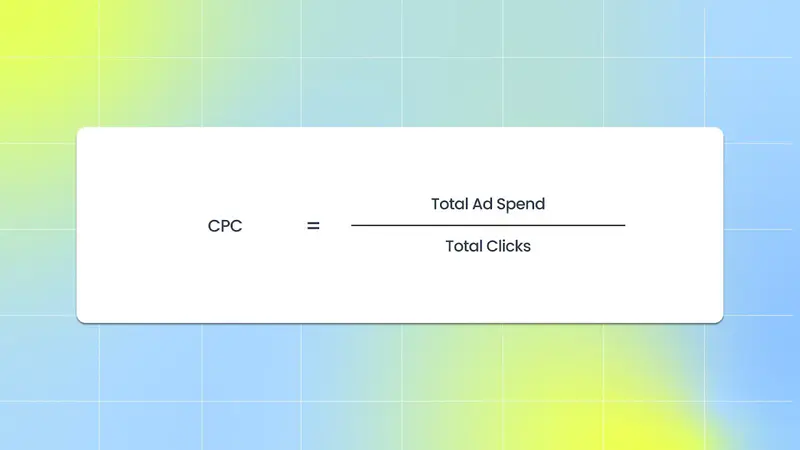
CPC = Total Ad Spend ÷ Total Clicks
Total Spend: The total amount you spent on your ad campaign.
Total Clicks: The number of clicks your ads received.
For example, if you spend $100 and get 400 clicks, your CPC would be $0.25 (100 ÷ 400 = 0.25).
While CPC focuses on actions like clicks, there’s another model that prioritizes reach and visibility.
What Is CPM?
CPM (Cost Per Mille) is a pricing model where you pay for every 1,000 impressions your ad receives, whether users click on it or not. Instead of paying for actions, you’re paying for visibility. This model is commonly used when your goal is to reach a large audience and get your creatives seen at scale.
As a creative strategist, CPM changes how your creatives are tested. Since you’re paying for impressions, your ads need to capture attention instantly, especially in the first few seconds. Strong hooks, visuals, and storytelling matter more here.
Wondering how to calculate your CPM for a campaign? Here’s the formula:
CPM = (Total Ad Spend ÷ Total Impressions) × 1,000
Total Spend: The total amount you spent on your ad campaign.
Total Impressions: The total number of times your ad was shown.
For example, if you spend $150 and your ad gets 50,000 impressions, your CPM would be $3(150 ÷ 50,000 × 1,000 = 3).
Now that you understand CPC and CPM individually, it’s important to see how they compare side by side and what sets them apart.
Also Read: Creative Optimization for Paid Social: Scale What Works and Stop Guessing
CPC vs CPM: Key Differences You Need to Know
CPC and CPM are not just pricing models; they determine how your campaigns are tested, scaled, and judged. Choosing between them directly impacts whether your ideas drive real results or just consume budget.
Here are the key differences between CPM and CPC:
While understanding the differences is important, what really matters is how each model impacts your performance and outcomes in real campaigns.
CPC vs CPM: What You Gain and Lose with Each Model
CPC and CPM each offer different advantages, but they also come with trade-offs that directly affect how your creatives perform and scale. To help you decide what fits your strategy best, here are the key benefits and risks of CPC vs CPM:
Benefits of CPC (Cost Per Click)
Pay only for real engagement: With CPC, you only pay when someone clicks on your ad. If your creative doesn’t drive action, you don’t spend. This makes it a safer option when you want to control the budget and focus on performance.
Clear signal of intent-driven creatives: CPC helps you understand which creatives actually drive action. Whether you’re promoting a mobile game, a DTC product, or a subscription app, clicks show real user interest, making it easier to identify high-converting ideas.
Disadvantages of CPC
You may pay for low-quality clicks: Not every click turns into a conversion. Some clicks may come from users who are not relevant or have low intent, which can impact your overall performance.
Costs can increase quickly: In competitive markets like gaming or DTC, CPC can become expensive. If your creatives don’t convert well, you may end up spending more without seeing strong results.
Benefits of CPM (Cost Per Mille)
High visibility: With CPM, your focus is on reach. You can ensure your creatives are seen by a large audience, which makes it ideal for building awareness, especially for mobile game launches, new DTC products, or subscription app campaigns.
Better budget planning and reach: Since you pay for impressions, you can estimate how many users will see your creatives. This makes it easier to plan campaigns and manage budgets.
Disadvantages of CPM
You pay even without engagement: CPM charges you for impressions, not actions. If your creatives fail to capture attention, you still spend money without getting meaningful results.
Risk of fatigue and ad blindness: If your creatives are repetitive or not engaging, users will start ignoring them. This is common in mobile game ads, DTC videos, and subscription campaigns where users see similar creatives repeatedly.
But how do you identify early signs of fatigue and know which creatives need to be refreshed before performance drops? This is where a creative intelligence platform like Segwise comes in.
With fatigue tracking, you can catch performance decline before it impacts budget allocation and campaign results. Also, you can set custom success criteria for the new creatives you want to monitor.
As a creative strategist, CPC rewards creatives that drive action, while CPM rewards creatives that capture attention.
Once you understand the pros and cons, the next step is to determine which model fits your situation.
How to Choose Between CPC vs CPM
The right choice between CPC and CPM depends on what you want. You should align the pricing model with your campaign goal and the stage of your creative.
Here are the key situations where you should use CPC or CPM:
When to Use CPC
Drive installs, purchases, or subscriptions: If your goal is to get users to take action, like downloading your mobile game, buying a DTC product, or subscribing to your app, CPC works best. You only pay when users click, which keeps your spend focused on results.
Retargeting campaigns: When you’re targeting an audience that already knows your brand or has interacted with it before, CPC helps you capture that intent efficiently. These users are more likely to click and convert.
A/B Testing of ads: Since CPC lets you pay for clicks, it is effective to run A/B tests on different ad variations. You can test different creatives, texts, and calls to action (CTAs) to identify which generate the most clicks and conversions, continually optimizing your campaigns.
But how do you know which specific creative elements are actually driving conversions when you’re analyzing hundreds of creatives? This is where a creative intelligence platform like Segwise comes in.
With tag-level creative element mapping, you can see which specific creative elements drive performance. You can also discover patterns like "this hook appears in 80% of top-performing creatives" with complete MMP attribution integration.
When to Use CPM
Run branding campaigns: If your goal is to strengthen your brand presence and increase the visibility of your app or product, CPM is the right choice. It ensures your creatives are seen by a large audience, helping users become familiar with your brand and setting the stage for future conversions.
Build awareness for new launches or new products: For mobile game launches, new DTC collections, or new app features, CPM ensures your creatives reach a large audience quickly.
Reinforce a multi-channel strategy: CPM works well alongside CPC to build a complete strategy. You can use CPM to generate reach and visibility, and then use CPC to capture that interest and drive actions like installs, purchases, or subscriptions.
Also Read: Mobile App Retargeting – Win Back High-Intent Users
Conclusion
Choosing between CPC and CPM isn’t just about cost; it’s about how your creatives are tested, evaluated, and scaled. CPC helps you identify which creatives can drive real action, while CPM helps you capture attention at scale. The right approach depends on your campaign goal and where your creatives are in the testing cycle.
But how do you actually know which creatives are driving better performance and which ones are just consuming your budget? This is where a creative intelligence platform like Segwise comes in.
With tag-level performance optimization, Segwise lets you understand which creative elements, themes, and formats drive results across all your campaigns and apps. With AI-powered creative analytics and creative tagging, you can connect creative elements (hooks, dialogs, visuals, formats, etc.) directly to business outcomes (ROAS, CPA/CPI, LTV, IPM, conversion rates), so teams stop guessing what works and start scaling creatives with data-backed confidence.
Moreover, with fatigue tracking, you can catch performance decline before it impacts budget allocation and campaign results.
So, if you want to stop guessing and start scaling creatives with confidence, it’s time to go deeper than campaign metrics. Start your free trial today and see which creatives truly deserve your budget!