
When your team is burning through ad spend testing dozens of variations across Meta, TikTok, and Google, the difference between a 2% CTR and an 8% CTR often comes down to one thing, whether your creative actually connects. Winning brands have figured out that bold creative ideas, backed by solid performance data, consistently outperform safe, templated approaches.
The brands doing this right are blending three things:
Storytelling that actually resonates with their audience (not generic brand-speak)
Digital tools that let them test and iterate fast
Teams that work together instead of in silos
This isn't about being "creative for creativity's sake." It's about using creativity as your strategic advantage, the thing that makes someone stop scrolling and pay attention.
Key Highlights
Winning brands prioritize creativity to emotionally connect with audiences, blending bold ideas and data-driven insights for innovation and impact measurement.
Creative-first marketing focuses on innovative storytelling that sparks emotional connections, balancing originality with measurable results through collaboration between creative and data teams.
Creativity fuels differentiation by transforming data insights into compelling stories, enhancing visual impact and experiential engagement to boost relevance and long-term loyalty.
Integrating creativity with traditional marketing revitalizes channels like print and TV through aligned messaging, data-tailored executions, and testing variations for better engagement.
Building a strong brand strategy foundation involves clarity, consistency, and emotional connection by defining purpose, audience needs, and ensuring messaging cohesiveness across channels.
Leveraging digital marketing enables precise targeting, real-time optimization, and dynamic content experimentation, maximizing reach while maintaining creative freshness across platforms.
Understanding Creative-First Marketing Strategies
Creative-first marketing means you build the campaign around a strong creative concept first, then figure out where and how to distribute it. Not the other way around.
Most marketing teams start by asking "What channels should we use?" or "What does the data say?" Creative-first flips that. You start by asking: "What's the one idea that will make our audience care?"
What that looks like in practice:
- Bold concepts rooted in audience insights - You're not guessing. You know your audience's pain points, what they care about, and what language resonates with them. Your creativity speaks directly to that.
- Flexibility to adapt across platforms - A strong creative concept works whether it's a 6-second TikTok ad, a carousel on Instagram, or a landing page. The core idea stays consistent, but the execution flexes to fit the platform.
- Collaboration between creative and data teams - Your creative strategists and your performance marketers are in the same room. The data team isn't just reporting numbers, they're helping identify which creative elements are actually driving results so you can iterate smarter, often using platforms like Segwise to automatically map creative variables to performance.
When you get this right, your campaigns don't just perform better. They resonate deeper, which means lower CPAs and higher lifetime value.
The Role of Creativity in Modern Marketing
In 2026, creativity isn't a nice-to-have. It's the primary lever for differentiation.
Your competitors are running ads on the same platforms, targeting similar audiences, and probably spending similar budgets. The only thing you control that they can't copy overnight is your creativity.
Creativity transforms raw performance data into something your audience actually engages with. You might know that "65% of your conversions happen on mobile" or "video ads get 3x more clicks than static images," but that data doesn't mean anything until you turn it into a compelling hook, a scroll-stopping visual, or an offer that feels personal.
The brands winning right now are nailing three creative drivers:
- Innovative storytelling - Not "we're the best" messaging. Real stories. User testimonials that feel authentic. Problem-solution narratives that mirror your audience's actual experience.
- Visual impact - Your creative needs to stand out in a feed where users scroll past 300+ pieces of content per session. Winning brands invest in high-quality visuals, bold colors, and dynamic motion that grab attention in the first 2 seconds.
- Experiential engagement - Interactive polls, AR try-ons, user-generated content campaigns, these tactics pull your audience into the experience instead of just talking at them.
Do this consistently, and you're not just running ads. You're building long-term brand relevance and loyalty.
How Creativity Integrates with Traditional Marketing Strategy
Traditional marketing channels, email, direct mail, TV, print, aren't dead. They're just boring when you use them the way everyone else does.
Creativity revitalizes these channels. Instead of a generic promotional email, what if your creative team wrote subject lines that feel like messages from a friend? Instead of a standard direct mail postcard, what if you sent something with a tactile element that makes people want to keep it?
How to integrate creativity into traditional tactics without losing what makes them effective:
- Align creative concepts with brand messaging - Your brand has a core promise and a set of values. Every piece of creative, whether it's a billboard or a Meta ad, should ladder up to that. Consistency across channels reinforces recognition.
- Use data to tailor creative executions - If your email data shows that certain segments respond better to urgency-driven messaging, let your creative team build around that insight. Don't just personalize the name in the subject line, personalize the entire creative angle.
- Test creative variations within traditional campaigns - Run A/B tests on your direct mail pieces. Test two different TV ad scripts in different markets. Traditional doesn't mean static. The brands getting ROI from these channels are iterating just like they would with digital.
The result? Better engagement, stronger brand recall, and measurable performance improvements even in channels people assume are "set it and forget it."
Building a Strong Brand Strategy Foundation
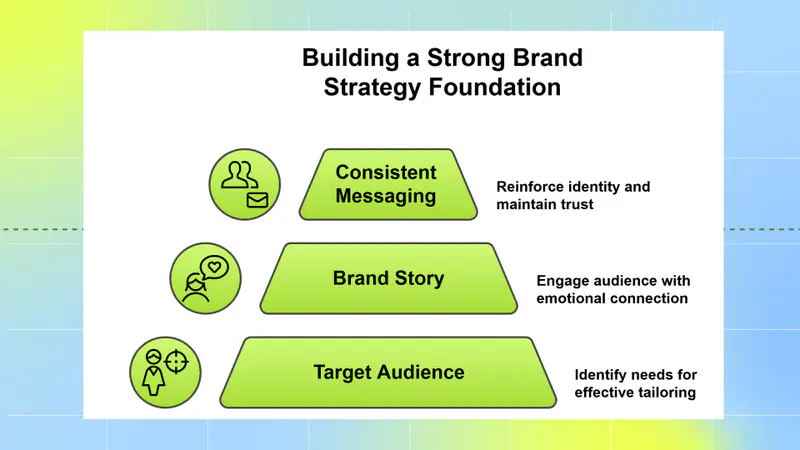
Before you can execute creative-first marketing, you need a brand strategy that's actually clear. Most brands think they have this figured out, but if you asked three people on your team, "What does our brand stand for?" you'd probably get three different answers.
How to build a foundation that supports bold, effective creative:
- Identify target audience needs: Not demographics. Needs. What problem are they trying to solve? What's frustrating them about current solutions? What do they value most when making a purchase decision? If you don't know this code, your creativity will always feel generic.
- Craft a compelling brand story: Your brand story isn't your company history. It's the narrative that explains why you exist and why that matters to your audience. The best brand stories make the customer the hero, not your product.
- Ensure consistent messaging across channels: Whether someone sees your ad on TikTok, visits your website, or talks to your sales team, they should feel like they're interacting with the same brand. Tone, visuals, value props, it all needs to align.
This foundation is what lets your creative team take risks. They know the guardrails, so they can push boundaries within them without going off-brand.
Elements of Effective Brand Building
- Define a clear brand purpose - Why does your brand exist beyond making money? Patagonia exists to save the planet. Nike exists to inspire athletes. What's yours? If you don't have a good answer, you're leaving creative potential on the table.
- Craft authentic storytelling - People can smell inauthenticity from a mile away. Use real customer stories. Show behind-the-scenes footage. Admit when you mess up. Authenticity builds trust faster than any polished ad campaign.
- Maintain consistent messaging - Repeat your core messages until you're sick of them. Your audience is seeing your content maybe 1% as often as you are. Consistency is what creates familiarity and recall.
- Engage audiences across touchpoints - Don't just blast people with ads. Create two-way conversations. Respond to comments. Feature user-generated content. Ask for feedback and actually use it.
- Deliver on brand promises - This is the most important one. If your creative promises something your product doesn't deliver, you'll lose trust permanently. Make sure your creative team understands what your product can and can't do.
Get these elements right, and your creative-first marketing has a solid foundation to build on.
Leveraging Digital Marketing for Creative Campaigns
Digital marketing gives creative teams something traditional channels can't: speed and precision.
You can test five different creative concepts, see which one resonates, and have new iterations live within 48 hours. That speed lets you learn faster and optimize continuously instead of waiting weeks for results.
Utilize data to personalize creative messages
If you know someone abandoned their cart, your retargeting creative should acknowledge that. If someone engaged with your content about a specific product feature, your next ad should go deeper on that feature. Personalization makes creative feel relevant instead of generic.
Test variations quickly for impact: A/B test everything: headlines, visuals, CTAs, video lengths, first three seconds of dialogue. Digital platforms make it easy to run these tests at scale. The brands that win are the ones testing the most variations and learning the fastest.
Integrate cross-channel campaigns for cohesive storytelling: Someone might see your TikTok ad, Google your brand, check out your Instagram, and then visit your site. If each of those touchpoints feels disconnected, you lose them. Plan your creativity so the story flows across channels.
This approach maximizes reach while keeping your creativity fresh. You're not just running ads, you're building a dynamic creative engine that improves over time.
For mobile game marketers and DTC brands running high-volume campaigns, tools like Segwise help you rapidly identify which specific creative elements are driving performance across all your networks, so you can double down on what works and kill what doesn't faster than manual reporting allows.
Case Studies: Creative-First Strategies in Action
Look at brands that actually executed creative-first strategies and won.
Nike: "Dream Crazy" Campaign
Nike didn't just make an ad. They took a stand on a social issue by featuring Colin Kaepernick and building the campaign around purpose-driven storytelling. The creative was bold, polarizing, and 100% aligned with Nike's brand values. Result? Massive engagement, cultural relevance, and increased sales despite (or because of) the controversy.
Airbnb: "Live There" Campaign
Instead of showcasing beautiful properties, Airbnb's creative focused on the experience of living like a local. The visuals were immersive, the messaging was emotionally driven, and it differentiated them from every other travel brand showing generic vacation photos. The campaign reinforced what makes Airbnb different and drove significant brand preference.
Key takeaways from these examples:
Prioritize authentic narratives
Both brands told stories that felt real and aligned with their core values. They didn't try to be something they're not.
Adapt creativity across platforms
These campaigns worked as TV spots, social ads, out-of-home placements, and digital experiences. The core idea was flexible enough to scale.
Measure impact to refine approaches
Both brands tracked not just conversions but brand sentiment, cultural impact, and long-term loyalty metrics. Creative-first doesn't mean ignoring data, it means using data to fuel better creative.
Other Notable Current Marketing Campaigns
Dove: "Self-Esteem Project"
Dove's campaign goes beyond selling soap. They're tackling body image issues and promoting self-confidence through educational content, workshops, and authentic storytelling. The creative isn't product-focused, it's mission-focused. And it works because it aligns perfectly with Dove's brand positioning around real beauty.
Spotify: "Wrapped"

Every December, Spotify turns user data into shareable, personalized creative. "Wrapped" is brilliant because it makes the user the star. People share their Wrapped summaries on social media, giving Spotify millions of dollars in organic reach. It's creative, it's data-driven, and it's built for virality.
Apple: "Shot on iPhone"
Apple's campaign showcases user-generated content, real photos and videos taken by iPhone users. The creative is beautiful, authentic, and it reinforces Apple's product quality without feeling like an ad. It's also a community-building strategy that makes customers feel like they're part of something bigger.
These campaigns show that innovation, emotional connection, and platform adaptability create lasting impact. The common thread? They're all creative-first, with strategy and data supporting the creative idea, not the other way around.
Measuring and Optimizing Creative Marketing Success
Creative-first doesn't mean "ignore the numbers." You need to measure impact, or you're just guessing.
The difference is in what you measure and how you use those insights. Don't just track vanity metrics like impressions or reach. Focus on metrics that actually indicate whether your creative is working:
Setting clear KPIs
Before you launch, define what success looks like. Is it CTR? Conversion rate? Brand sentiment? Engagement rate? Creative recall? Pick 3-5 KPIs that matter for your specific campaign goal.
Monitoring audience feedback
Read the comments. Check social sentiment. Run surveys. Qualitative feedback tells you things quantitative data can't, like whether your messaging is landing the way you intended or if people are misunderstanding your creative.
Iterating based on data insights
Use performance data to inform your next creative iteration. If video ads with user testimonials are outperforming product demos by 40%, make more testimonials. If certain color palettes or CTAs consistently drive better results, bake those learnings into your next campaign.
This closed-loop process ensures creativity drives measurable growth, not just applause from your creative team.
Conclusion: Applying Creative-First Marketing to Your Brand
If you want to build a creative-first marketing strategy that actually drives results, here's where to start: Make creativity the foundation, not an afterthought. Build your campaigns around strong creative concepts, then figure out the distribution strategy.
Focus on authentic storytelling that aligns with your brand's core values. Don't chase trends that don't fit who you are. Leverage digital tools for testing, optimization, and real-time performance tracking. Creative-first doesn't mean data-ignorant, it means using data to fuel better creative decisions.
Measure impact continuously and adapt. Track the metrics that matter, learn from what's working (and what's not), and iterate fast. The brands that win are the ones that balance bold ideas with rigorous performance analysis. They take creative risks, but they're not reckless. They know what's working because they're tracking creative performance down to the element level.
If you're running creative at scale across Meta, TikTok, Google, and other ad networks and need to identify which specific elements are driving your best ROAS, tools like Segwise can help you tag, analyze, and optimize your creative faster than manual tracking ever could.