
Your ad platforms are only as smart as the data you feed them.
Signal engineering is the process of refining how you collect and process user signals, including core conversion events (install, purchase, subscribe), clicks, video views, add-to-carts, device types, and engagement patterns. When your signals are clean and standardized, your campaigns get smarter. Bidding becomes more accurate. Attribution stops being a black box. Personalization actually works.
For performance marketers running high-volume campaigns across Meta, TikTok, Google, or AppLovin, signal engineering is the difference between burning budget on users who'll never convert and systematically finding the ones who will.
Key Highlights
Signal engineering refines data collection by capturing high-quality user signals, including conversion events (purchases, subscriptions, installs), clicks, engagement patterns, and device data, giving you clearer audience insights and better targeting decisions in paid marketing.
It cleans up your conversion data by standardizing inputs and ensuring privacy compliance, which means better attribution accuracy and less guesswork about what's actually working.
Conversion optimization isn't just about tweaking landing pages. It's about increasing the percentage of users who complete your desired action through disciplined testing, segmentation, and messaging that actually resonates.
Signal engineering enables real-time campaign adjustments and smarter bidding by feeding platforms accurate user intent data, cutting wasted spend and improving conversion rates.
The core principles? Data quality, signal standardization, privacy compliance, and seamless data flow. Get these right, and your targeting and campaign performance improve across the board.
When signal engineering integrates with your marketing stack, you get precise, actionable data that leads to smarter decisions and better ROI in increasingly complex paid environments.
Understanding Conversion Optimization in Paid Marketing
Conversion optimization is straightforward: increase the percentage of users who do what you want them to do. Sign up. Purchase. Install. Subscribe.
It's not guesswork. It's a disciplined process of analyzing user behavior, testing ad creatives, refining landing pages, and ensuring your messaging hits the right audience at the right time. The tactics, A/B testing, audience segmentation, personalized messaging, are all aimed at one thing: making every dollar of ad spend drive measurable results.
When you're scaling campaigns in mobile gaming or DTC, conversion optimization is how you move from "this campaign seems okay" to "we know exactly which creative elements drive installs and why."
The Role of Conversion Rate in Measuring Campaign Success
Conversion rate is the metric that tells you if your campaign is actually working. It shows the percentage of users who completed your desired action after seeing your ad.
A 2% conversion rate means 2 out of every 100 users converted. If that jumps to 3%, you just increased efficiency by 50% without spending more. That's why it matters.
Conversion rate reflects how well your ads, landing pages, and targeting perform together. If your CTR is high but conversion rate is low, your targeting is off or your landing page isn't delivering on the ad's promise. If both are low, your creative isn't resonating.
Monitoring conversion rate helps you identify what's broken, allocate budgets intelligently, and prove ROI to stakeholders. The factors influencing it? User experience, signal quality, message relevance, and how well your tracking is set up.
Core Principles of Signal Engineering in Digital Advertising
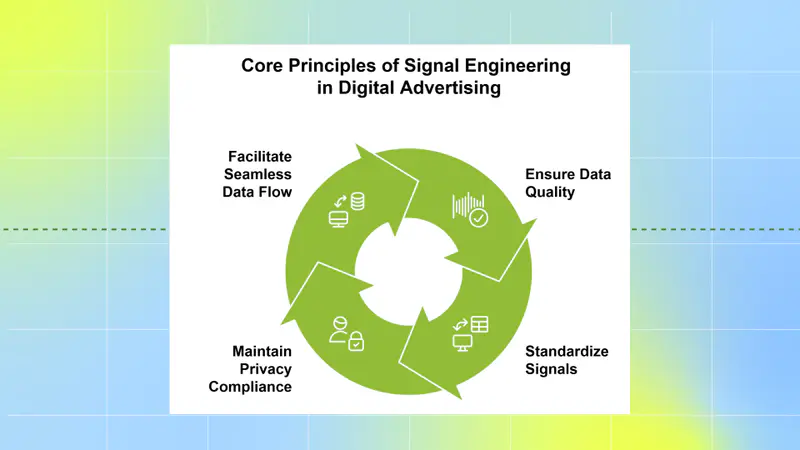
Signal engineering works when you follow four core principles:
1. Data Quality: Filter out the noise. Not every click is meaningful. Not every impression drives value. Signal engineering identifies which signals matter and which are just clutter, ensuring your platforms optimize on the right inputs.
2. Signal Standardization: Meta tracks conversions one way. TikTok does it differently. Google has its own system. Signal engineering standardizes these inputs so you can compare performance accurately across platforms and make unified optimization decisions.
3. Privacy Compliance: With ATT, GDPR, and evolving privacy regulations, signal engineering ensures you're capturing data in ways that respect user privacy while still delivering actionable insights. This isn't optional, it's foundational.
4. Seamless Data Flow: Signals need to flow from user action → tracking system → ad platform in real time. Delays or breaks in this flow mean your campaigns optimize on outdated data, which means wasted spend.
When these principles are in place, marketers can optimize targeting, improve attribution accuracy, and boost overall ad performance without constantly second-guessing their data.
How Signal Engineering Enhances Conversion Optimization
Signal engineering directly improves conversion optimization by giving you cleaner, more accurate data to act on.
Cleaner Data: Instead of optimizing campaigns based on noisy or incomplete signals, you're working with high-quality data that reflects true user intent. That means fewer false positives and better targeting decisions.
Cross-Platform Standardization: When signals are standardized across Meta, TikTok, Google, and programmatic networks, you can compare performance accurately and shift budget to what's actually working, not what looks good in one platform's reporting.
Real-Time Personalization: With accurate signals feeding your campaigns in real time, you can dynamically adjust creatives, bids, and targeting based on what's working right now, not what worked last week.
Privacy-First Compliance: Signal engineering ensures your data collection respects user privacy, which keeps you compliant and protects your campaigns from being throttled by platforms enforcing stricter rules.
The result? Less wasted spend. Higher conversion rates. Marketing efforts that align with true user intent instead of guesswork.
Improving Ad Performance Through Signal Engineering
Ad performance improves when platforms have precise, high-quality data to optimize against.
Signal engineering delivers this by filtering irrelevant signals, standardizing user data, and integrating real-time insights into your campaigns. Here's what that looks like in practice:
Better Audience Segmentation: Instead of broad targeting, you identify high-value segments based on accurate behavioral signals. For example, in mobile gaming, you can segment users who watch 75% of your video ad versus those who drop off at 3 seconds, then optimize creative and bids accordingly.
Attribution Accuracy: When your signals are clean, you know which creative, platform, or audience actually drove the conversion. No more guessing whether Meta or TikTok deserves credit for that install.
Dynamic Creative Personalization: Real-time signal data enables you to serve different creatives to different segments. If "X" characters are driving a 2.5% Conversion Rate (or $40 CPA) while "Y" characters are at 1.5% Conversion Rate (or $65 CPA), you can dynamically prioritize the winning creative elements without manual intervention." (Focus on conversion/CPA, not just CTR).
For performance marketers, this means reduced wasted spend and increased ROI because every optimization decision is grounded in reliable data.
Want to see which creative elements are actually driving your conversions? Platforms like Segwise use AI to automatically tag creative variables (characters, CTAs, concepts) and map them to performance, giving you the granular insights signal engineering enables.
Enhancing Campaign Optimization with Signal Engineering
Campaign optimization is only as good as the data you're optimizing against. Signal engineering ensures that data is precise, actionable, and available in real time.
With Signal Engineering, we can:
Identify High-Value Segments: Instead of optimizing for "all conversions," you can prioritize users with the highest predicted lifetime value (pLTV) or best Day 7 retention, ensuring your budget goes toward users who'll actually stick around.
Adjust Bids Dynamically: When signals feed platforms accurate data about which audiences are converting, automated bidding strategies (like Meta's Cost Cap or Google's Target CPA) perform better because they're optimizing on truth, not noise.
Personalize Creatives Effectively: Signal data reveals which creative elements resonate with which audiences. For a DTC brand, that might mean serving product-focused ads to high-intent users and brand storytelling ads to cold audiences.
Improve Cross-Channel Attribution: Clean signals make it possible to track user journeys across platforms. You can see that a user clicked a TikTok ad, visited your site via Google search, and converted after seeing a Meta retargeting ad, then allocate budget accordingly.
These capabilities reduce wasted spend and amplify ROI because every optimization decision is data-driven and timely, not reactive and delayed.
Integrating Signal Engineering with Marketing Analytics and Technology
Signal engineering doesn't work in isolation. It needs to integrate with your marketing analytics platforms, MMPs (Adjust, AppsFlyer, Singular), and ad networks to deliver value.
When signal engineering is properly integrated, you get:
Unified Data Streams: All your creative assets, ad network data, and MMP data flow into one platform. No more jumping between dashboards or reconciling conflicting reports.
Real-Time Performance Monitoring: Signals feed your analytics stack in real time, so you can catch creative fatigue, underperforming campaigns, or attribution shifts as they happen, not days later.
Improved Cross-Channel Attribution: Standardized signals make it possible to map user journeys accurately across Meta, TikTok, Google, and programmatic networks, ensuring your attribution models reflect reality.
The result is actionable insights for precise targeting and faster optimization, ultimately driving higher conversion rates and maximizing ROI across all your paid marketing efforts.
For teams managing creative data across multiple networks, Segwise integrates with 10+ ad networks and MMPs to unify creative analytics in one dashboard, giving you the cross-platform visibility signal engineering requires.
Cross-Channel Attribution Modeling and Signal Engineering

Attribution is broken in most marketing stacks because signals aren't standardized. Meta claims credit for a conversion. So does Google. So does TikTok. Who's right?
Cross-channel attribution modeling combined with signal engineering solves this by integrating clean, standardized signals from every touchpoint. When signals are consistent, you can accurately assign credit to the channels and creatives that actually drove conversions.
With consistent Signal Engineering we can improve:
Data Accuracy: Clean signals eliminate duplicate or conflicting data, so your attribution model isn't skewed by platform biases or tracking errors.
Clearer ROI Measurement: You know which platforms, campaigns, and creatives are genuinely driving value, not just which ones report the highest numbers.
Smarter Optimization Decisions: When attribution is accurate, budget reallocation becomes straightforward. You shift spend from underperforming channels to winners, confidently.
Together, signal engineering and cross-channel attribution modeling empower truly data-driven marketing strategies instead of platform-reported guesses.
Leveraging Facebook Campaign Optimization and Paid Media Placement
Facebook (Meta) campaign optimization uses machine learning to target high-value users efficiently, but it only works well if you're feeding it accurate signals.
We can leverage Meta's optimization features:
Automated Bidding: Use Cost Cap or Bid Cap strategies, but ensure your conversion signals are clean. If Meta's algorithm is optimizing based on noisy data, it'll waste spend chasing low-quality users.
Creative Testing: Test diverse formats, video, static, carousel, but track which creative elements (not just which ad) are driving conversions. Platforms like Segwise use AI-powered tagging to automatically map elements like CTAs, characters, and concepts directly to your conversion signals, providing the granular data that signal engineering requires.
Granular Audience Segmentation: Don't just use broad targeting. Segment by behavior, device, engagement level, and use clean signals to identify which segments convert best.
When you combine Meta's native optimization with signal engineering, you get precise data feeds that improve targeting accuracy, boost conversion rates, and reduce wasted spend. This synergy makes paid media placement on Meta significantly more effective.
Practical Applications and Services for Conversion Optimization Using Signal Engineering
Real-Time Audience Segmentation: Clean signals let you segment users by intent, behavior, and predicted value in real time, ensuring ads reach the right people at the right moment.
Dynamic Bid Adjustments: Platforms can adjust bids automatically based on accurate user signals, prioritizing high-value conversions and reducing spend on low-intent users.
Personalized Creative Delivery: Signal data reveals which creative elements resonate with which audiences, enabling dynamic creative optimization at scale.
Cross-Channel Attribution: Standardized signals make it possible to track user journeys across platforms, improving budget allocation and campaign effectiveness.
Marketing platforms and specialized agencies (especially those focused on mobile gaming, DTC, and subscription apps) offer these services, helping businesses reduce wasted spend and improve ROI by leveraging clean, actionable signals to optimize paid campaigns effectively.
Choosing the Right Conversion Optimization Services
Not all conversion optimization services are built the same. If you're scaling paid campaigns, here's what to prioritize:
Signal Engineering Expertise: The provider should understand how to capture, clean, and standardize signals across platforms, not just run A/B tests.
Real-Time Analytics: Delayed data means delayed decisions. Look for services that deliver insights in real time so you can act fast on creative fatigue or performance shifts.
Cross-Channel Attribution Support: Your campaigns don't run in silos, so your optimization service shouldn't either. Ensure they can track and attribute conversions across Meta, TikTok, Google, and programmatic networks.
Integration with Your Stack: The service should plug into your existing marketing tech, MMPs, ad networks, dashboards, without requiring a complete overhaul.
Privacy Compliance: Make sure the provider follows GDPR, ATT, and other privacy regulations. Non-compliant data practices will hurt your campaigns and your brand.
A tailored approach with transparent reporting maximizes ROI and reduces wasted ad spend, addressing the real challenges performance marketers face in paid campaigns.
Measuring Success: Key Metrics and Tools for Signal-Driven Conversion Optimization
Accurate measurement depends on tracking the right metrics with the right tools.
Key Metrics:
Conversion Rate: The percentage of users completing your desired action.
Click-Through Rate (CTR): Indicates ad relevance and creative performance.
Cost Per Acquisition (CPA): Shows efficiency of ad spend.
Attribution Accuracy: Measures how well you're assigning credit to the right channels.
Return on Ad Spend (ROAS): The ultimate ROI metric for paid campaigns.
Tools:
Google Analytics: For website conversions and user behavior tracking.
Facebook Ads Manager / Meta Business Suite: For Meta campaign performance.
MMPs (Adjust, AppsFlyer, Singular): For mobile app attribution and cross-platform tracking.
Specialized Signal Engineering Platforms: Tools that use AI to automatically tag creative elements and unify creative data, ad network performance, and MMP data in one dashboard (like Segwise for creative analytics).
Prioritize metrics that reveal user intent and campaign impact. Track them in real time. Use that data to make swift, data-driven optimizations that reduce wasted spend and maximize ROI.
Conclusion: Driving Paid Marketing Success with Signal Engineering
Signal engineering is no longer optional for performance marketers serious about maximizing ROI. It's foundational.
When your signals are clean, standardized, and flowing in real time, your campaigns get smarter. Targeting improves. Attribution becomes reliable. Personalization works. Wasted spend drops.
To succeed, integrate signal engineering into your analytics and optimization workflows. Prioritize data quality over data volume. Standardize signals across platforms. Continuously refine campaigns based on precise user signals, not platform-reported guesses.
The marketers winning in paid advertising right now are the ones who've moved beyond surface-level optimization and built their strategies on accurate, actionable data. Signal engineering is how you get there.