
The best AI optimization tools for programmatic advertising in 2026 are Segwise (Growth from $499 per month) for creative intelligence across 15+ ad networks and MMPs, The Trade Desk (Kokai and Koa AI, no published rate card) for independent omnichannel bidding, and Google Display & Video 360 (no published rate card) for teams whose measurement already lives inside Google. We ranked ten tools on how much of the optimization decision each one actually makes for you, how far its AI reaches across networks, and how much of its pricing it is willing to put in writing.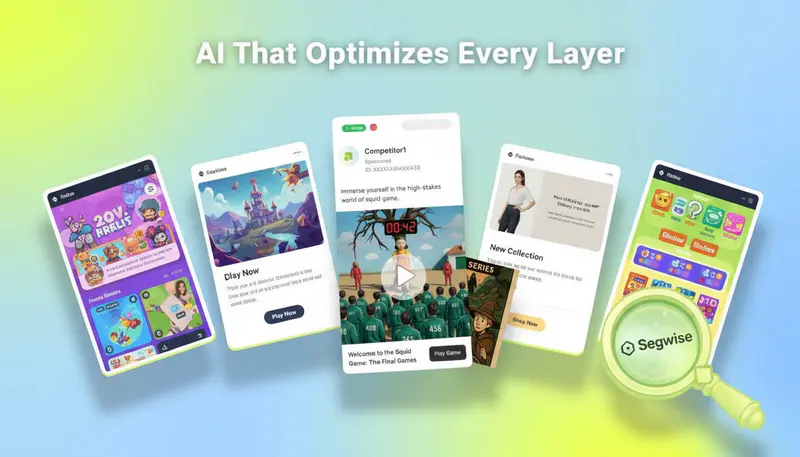
Disclosure: this guide is published by Segwise, one of the 10 tools reviewed here. Every price was checked at the vendor's own pricing page in September 2026, Segwise gets the same limitations treatment as everything else on this page, and any Segwise performance figures are self-reported by our customers and labeled as such.
The Two Layers Programmatic Optimization Actually Happens In
Here is something most practitioners will not say out loud: you can have the smartest bidding algorithm in the room and still waste a large chunk of your budget on the wrong creative.
Programmatic advertising has never been more automated, and the large majority of US digital display inventory is now bought this way. What no vendor publishes an auditable figure for is how much of each dollar survives the open-web supply chain to reach a viewable, fraud-free impression that matched the creative to the person seeing it. The honest position is that the leakage is real, the size of it is contested, and you should measure your own share of working media rather than trust a number from a roundup.
Teams that win at programmatic are usually not the ones with the most sophisticated DSP setup. They are the ones who noticed that programmatic optimization happens at two levels, and bought for both.
Media buying optimization. Machine learning that scores impressions, predicts bid outcomes, allocates budget and adjusts bids in real time. Every major DSP does some version of this today, and the differences between them are mostly about inventory access, identity and data, not about the model.
Creative optimization. AI that reads what is inside the ad (hooks, visual styles, CTAs, audio, on-screen text) and connects those elements to the outcomes you track. This is the layer most programmatic teams have no tooling for at all.
What this category does not cover: ad fraud detection, brand safety platforms and attribution tools. Those are adjacent but distinct, and mixing them into a DSP comparison is how buyers end up with three tools that all report on the same problem and none that fixes it.
Every tool below is flagged with the layer it primarily addresses.
Why Almost No DSP Publishes a Price, and What You Can Pin Down Instead
This is the single most useful thing to understand before you shortlist anything. Of the ten tools on this page, exactly one publishes a rate card you can read without talking to a salesperson: Segwise. Every DSP here is contracted, and the fee is quoted as a percentage of media spend that varies by account size, channel and how much of the platform you switch on. Any page that gives you a confident dollar figure for The Trade Desk or DV360 is quoting somebody's guess.
That does not mean you go in blind. It means you go in asking about the fee stack rather than the price, because the platform fee is rarely the largest number on the invoice.
The practical consequence is that the fee stack, not the platform fee, decides how much of your budget reaches inventory. Two DSPs quoting the same platform percentage can differ by a wide margin once data and verification are added, which is why the fee-stack question belongs on the first call rather than the last.
All 10 Tools Compared at a Glance
Which Layer and Which Tool Fits Your Spend
Pick the layer before the vendor. Almost every unhappy programmatic buyer we have talked to bought a second media buying tool when the gap was creative, or bought a creative tool when the gap was inventory access.
The 10 Best AI Optimization Tools for Programmatic Advertising
1. Segwise - Best for creative intelligence across your entire programmatic stack
A DSP can optimize your bids down to the millisecond, but it cannot tell you that the problem is not your targeting. It is that your hook performs better with a gameplay reveal than a character close-up. That is Segwise's job.
Segwise is an agentic AI creative intelligence platform built around four specialised agents: a Creative Tagging Agent, an always-on Creative Strategy Agent (which powers the AI chat, native fatigue tracking and asset clustering), a Creative Generation Agent and a Competitor Tracking Agent. It connects to 15+ ad networks (Meta, Google, TikTok, Snapchat, Axon from AppLovin, Unity Ads, Mintegral, Moloco, Liftoff and more) plus all five supported MMPs (AppsFlyer, Adjust, Branch, Singular and Kochava), giving you one view of what is working creatively across your whole programmatic footprint.
Key features:
Multimodal AI tagging. The Creative Tagging Agent analyzes video frames, transcribes audio, reads on-screen text and identifies visual styles. Every element gets tagged and mapped to any metric you already track, not just ROAS or CPI. It is one of very few platforms that tag playable (interactive) ads, which matters if you buy on Axon or Mintegral.
Creative Strategy Agent (AI chat). A conversational interface to your own creative data. Ask which hook style drove the most installs last month and get the answer without configuring a dashboard. It also analyzes and drafts creative briefs and concepts.
MCP access. Segwise exposes an MCP so you can query your creative data from your own tooling rather than only through the dashboard.
Native fatigue tracking. The Creative Strategy Agent watches every creative across every connected platform for performance-decline and spend-share signals and alerts before performance crashes. You set the threshold, for example a 20% ROAS decline over seven days.
Competitor creative tracking. Monitor competitor ads, see which hooks and visual styles they are running, and run gap analysis on the angles they are not using.
Creative Generation Agent. Generates net-new, data-backed creative from your own winning patterns: static, all video types, AI-generated UGC-style video and playables, plus video storyboards.
Unified cross-network view. Setup is about five minutes and no-code, ten to fifteen minutes to connect every source. The 7-day free trial backfills up to two weeks of history automatically, and paid plans backfill up to three months.
When you should try it: if you run programmatic across more than two ad networks and cannot quickly answer which creative element is driving your best ROAS right now, that is the gap Segwise closes. It is particularly strong for mobile gaming studios buying across Axon, Meta and TikTok at once, and for DTC brands that need to know what is working in their visuals and messaging across channels.
Limitations: Segwise is a creative intelligence platform, not a DSP. It complements your media buying stack and does not replace it, so it will not bid, pace or buy inventory for you. Competitor tracking currently covers Meta only, with more platforms in development.
Pricing: Segwise starts at $499/month for advertisers spending up to $250K/month, with a special 50% discount for startups spending under $50K/month. Seven-day free trial, no credit card.
2. The Trade Desk (Kokai and Koa AI) - Best for independent omnichannel programmatic

The Trade Desk is the default independent DSP for agencies and enterprise advertisers who want open-internet reach without being locked into the Google ecosystem. The Kokai platform, powered by the Koa AI engine, is its most serious investment in AI-assisted campaign management.
Koa does what you would expect from a mature ML bidding system: recommendations across audience selection, bid strategy and budget pacing. What is notable is the deliberate choice to make those recommendations visible and auditable rather than treating optimization as a black box. You can see what Koa is recommending and why, which matters when you are justifying spend decisions to a client or a board.
Key features:
Koa AI recommendations across audiences, bids and frequency, surfaced rather than silently applied.
Kokai interface built to shorten time to insight on cross-channel campaigns.
UID2 and cookieless identity options, which matter as third-party signal keeps degrading.
The strongest independent access to CTV and streaming inventory.
Open marketplace reach across display, video, native, audio and CTV.
Audience Unlimited data marketplace for third-party segments.
When you should try it: you manage significant budget across multiple channels and need genuine independence from the walled gardens. Especially compelling if CTV or identity-forward targeting is central to the plan.
Limitations: the depth requires expertise to unlock. Custom bidding and advanced analytics reward specialist teams, and a lean setup will use a fraction of what it pays for. Pricing requires direct contracting.
Pricing: not published. There is no public rate card; seats are contracted directly or through approved partners, with the platform fee quoted as a percentage of media spend and enterprise-level minimum commitments. Treat any specific percentage you read elsewhere as an estimate, and get yours in the contract.
3. Google Display & Video 360 - Best for teams deeply integrated in the Google stack

DV360 is Google's enterprise DSP inside Google Marketing Platform, and its advantage is obvious. If your measurement, attribution and audience data already live in Google Analytics 4, Campaign Manager 360 and Search Ads 360, DV360 shortens time to value against any independent DSP.
The AI splits into automated bid strategies that respond to auction signals in real time, and a custom bidding option using Python scripts that lets teams encode their own KPI into the bidding logic. Custom bidding is where DV360 earns its complexity tax: it is genuinely powerful for teams whose business goal is not expressible as target CPA or target ROAS.
Key features:
Automated bidding across maximise conversions, target CPA, target ROAS and viewable CPM.
Custom bidding via Python scripts for bespoke bid multipliers on your own signals.
Native connection to Google Analytics, Campaign Manager, YouTube and Search, so one data layer covers Google properties.
Activation of Google first-party signals and audience segments.
AI-assisted brand suitability controls for placement management at scale.
When you should try it: you already run Google Ads heavily, GA4 is your primary measurement tool, and you want programmatic display plugged into that same stack without integration overhead.
Limitations: custom bidding needs Python familiarity and developer time, so teams without technical resource never reach the depth they are paying for. Reporting is excellent inside Google properties and thinner outside them.
Pricing: not published. DV360 is contracted through Google or a certified partner and requires a Google Marketing Platform agreement. Platform fees are quoted as a percentage of media and differ between open-auction inventory, YouTube and programmatic guaranteed, and partners frequently add a management fee on top. Ask for all three percentages separately.
4. Amazon DSP (Performance+) - Best for ecommerce, CPG and retail media

Amazon DSP's core argument is its data. No other platform has commerce intent signals this specific. If someone searched for protein powder, added a competitor brand to their cart and browsed nutrition content on Amazon properties, that is purchase-intent data no other DSP can replicate.
Performance+, the AI-automated campaign type, applies those first-party signals to handle audience creation, creative selection and goal-based optimization with minimal manual setup. For advertisers whose audience actively engages on Amazon surfaces, it is one of the most efficient setups available.
Key features:
Performance+ automated campaign setup and optimization toward explicit ROAS or CPA goals.
Retail signals covering purchase history, product search and category browsing.
Amazon owned and operated inventory plus Twitch and streaming.
Non-endemic reach that extends Amazon signals to off-Amazon inventory for brands that do not sell on Amazon.
Convergence with Sponsored Ads data for sellers already running retail media.
When you should try it: you are in ecommerce, CPG, entertainment or any vertical where Amazon purchase signals overlap your audience. Especially effective for DTC brands with an Amazon presence.
Limitations: walled-garden constraints mean you partly depend on Amazon's own measurement, and the signal quality degrades on inventory outside Amazon surfaces. Spend minimums apply, and the managed-service tier carries a materially higher one than self-serve.
Pricing: not published. Set against media spend and quoted by Amazon or an approved partner. Amazon removed its formal self-serve minimum, but the models still need enough volume to train, so ask what monthly spend your account team considers viable before committing.
5. Moloco - Best for in-app programmatic where LTV matters more than install volume

Moloco is the DSP you choose when ROAS stability and clean lifetime-value signal matter more than raw install volume. It is a machine-learning-first buying platform for in-app exchange inventory, and it is the tool most obviously missing from an open-web-only DSP shortlist if your product is an app.
Moloco publishes its own scale figures on bid request volume and prediction throughput, and the architectural point behind them is the one that matters: the model is trained on your own downstream events, so it performs in proportion to how good those events are. Feed it clean day 7 and day 30 signal through your MMP and it will find high-value users. Feed it installs only and it will buy installs.
Key features:
Programmatic DSP with open in-app exchange inventory access.
Bidding optimized toward downstream value rather than volume.
Strong Android performance in markets where the large in-app networks are less dominant.
Deep MMP integration for in-app event optimization.
Re-engagement campaigns as a separate motion from acquisition, priced and optimized differently.
Creative experimentation across exchange inventory.
When you should try it: your UA strategy is performance-first, your D7 and D30 data is clean, and your portfolio skews Android. Give it at least 30 days before judging it.
Limitations: it is less effective on iOS for advertisers without a solid SKAdNetwork postback setup, and weak downstream signal produces weak results with no way around it. Volume is usually lower than the large in-app networks, so it tends to run alongside one rather than replace it.
Pricing: not published. Performance-based, with take rates and platform fees tied to outcomes and a CPM, CPC or CPA blend depending on campaign type.
6. StackAdapt - Best for lean teams running contextual targeting at scale

StackAdapt has a strong reputation among performance marketers who want self-serve DSP access without enterprise complexity. Page Context AI maps keywords and semantic meaning to page-level content, giving contextual targeting that does not depend on third-party cookies.
What separates it from the other DSPs here is the experience of using it. Setup is faster, campaign management needs less specialist knowledge, and the education program is genuinely useful rather than a marketing artifact. That reflects a real design philosophy aimed at letting small teams compete.
Key features:
Page Context AI for semantic page analysis and cookie-free contextual placement.
Display, native, video, CTV, audio and DOOH from one platform.
A self-serve workflow designed for fast deployment without specialist expertise.
Retargeting plus lookalike audience expansion.
Real-time cross-channel reporting with configurable attribution windows.
When you should try it: you are a mid-sized team or agency that wants serious programmatic capability without an enterprise contract and onboarding timeline. Particularly strong for B2B advertisers and content marketers, where contextual signal beats behavioral data.
Limitations: the contextual focus means less access to commerce or identity-rich signal than Amazon DSP or The Trade Desk. If purchase intent data is the whole point of your plan, it will underperform those two.
Pricing: not published as a rate card, but StackAdapt states it does not mandate a minimum spend, which is a large part of its appeal to lean teams. Self-serve, managed and hybrid support models are available and priced differently, so ask for all three.
7. Liftoff (with Vungle Exchange) - Best for app teams that want programmatic and playables in one contract

Liftoff merged with Vungle in 2021 and now runs one of the broadest mobile growth platforms in the market: Accelerate, Direct, Influence, Monetize, Intelligence and the Vungle Exchange DSP. For a buyer, the appeal is having programmatic exchange access, playable and rewarded creative formats, and influencer-driven UA behind a single integration.
Key features:
Vungle Exchange programmatic DSP with extensive in-app inventory.
Native playable capability alongside rewarded video and standard formats.
In-house fraud prevention plus third-party detection and IAB-compliant brand safety controls.
Cortex optimization for bidding and audience targeting.
When you should try it: you want one contract covering programmatic UA, playable creative and influencer, and you run globally across tier one plus emerging markets.
Limitations: the breadth works best with a dedicated account manager, and the self-serve flows are less polished than the big in-app networks. Performance varies noticeably by vertical and creative format, so pilot per format rather than per platform.
Pricing: not published. Performance-based with CPM, CPI or CPA models depending on campaign type.
8. Quantcast (Ara) - Best for open-internet audience discovery and mid-funnel growth

Quantcast built its reputation on audience intelligence. The Ara machine learning engine sits on a large real-time behavioral dataset and surfaces audience insight that updates as behavior changes. Its sweet spot is mid-funnel programmatic: reaching people who have not yet entered your owned ecosystem but are showing interest across the open web.
Data freshness is the distinctive part. Traditional audience segments are often stale by the time they are activated, and Ara's real-time model reflects behavior now rather than a fortnight ago.
Key features:
Ara AI for audience discovery and activation.
A large proprietary behavioral dataset updated continuously across the open web.
Planning and analytics alongside buying, so you can profile an audience before spending on it.
Display, video and CTV activation from the same platform.
When you should try it: you are running awareness and consideration campaigns on the open web and want to discover new segments rather than only retarget known ones.
Limitations: performance varies significantly by vertical and by how much data exists in your category. Expect testing cycles rather than plug-and-play, and weaker commerce signal than Amazon DSP.
Pricing: not published. Sales-led, with technology cost usually embedded in media pricing or structured as managed service. Reviewers report low to no minimum for self-serve entry.
9. Adobe Advertising DSP - Best for large teams already on Adobe Experience Cloud
Adobe Advertising DSP is the pick where Adobe is the operating system: Adobe Analytics, Audience Manager, Real-Time CDP and Experience Platform. If that is your stack, the integration depth is real. Segments built in Audience Manager activate directly in campaigns, and conversions measured in Adobe Analytics flow back into bidding logic.
The AI layer is Adobe Sensei, which handles package-level optimization and pacing across a media plan, allocating impressions toward delivery and goal targets.
Key features:
Adobe Sensei for package pacing, impression delivery and goal attainment.
Native data flow with Analytics, Audience Manager and Real-Time CDP.
Cross-channel buying across display, video, CTV, native and audio from one seat.
Pre-bid and post-bid brand safety controls.
When you should try it: your organization has an established Adobe stack and significant programmatic budget. The integration benefit compounds with how much Adobe you already run.
Limitations: enterprise complexity and cost make it impractical for mid-market teams or anyone outside the Adobe ecosystem, and Sensei's optimization is less transparent and less customisable than DV360 custom bidding or Koa.
Pricing: not published. Negotiated on media volume, usually inside a broader Adobe Experience Cloud contract, with enterprise-level minimum commitments.
10. Yahoo DSP - Best for cookieless targeting in privacy-constrained campaigns
Yahoo DSP is not the biggest platform here, but it has invested heavily in identity resolution and privacy-forward targeting through Yahoo ConnectID, authenticated targeting and ID-less solutions, and it added Comscore AI-powered ID-free audiences to widen that further.
For advertisers where privacy constraints are a real design input, regulated industries, European markets, or brands with strict first-party data policies, Yahoo offers targeting that works without third-party cookies and without requiring an authenticated sign-in.
Key features:
Yahoo ConnectID authenticated identity graph for cookieless targeting.
ID-less targeting powered by contextual and behavioral signal.
Comscore AI ID-free audience segments.
Growing CTV inventory through streaming partnerships, plus display, video and native across Yahoo properties and exchange inventory.
When you should try it: cookie deprecation has already cut your addressable reach, or you operate in markets with strict privacy regulation. A strong supplemental DSP rather than a primary one for most buyers.
Limitations: ecosystem breadth and data depth are smaller than Google or The Trade Desk in most markets, and features and availability vary by region.
Pricing: not published. Contracted through Yahoo or reseller partners with no stated minimum spend, and a platform fee charged as a percentage of media cost plus an optional management fee.
The Network and Mediation Layer That Is Not a DSP
Search results for programmatic tools mix two different things together, and buying the wrong one is expensive. The ten tools above are software you license. The platforms below are places you buy media. They run their own AI optimization, but you cannot license it, point it at another network, or take it with you, so they are deliberately not in the ranking or the comparison table.
The distinction is not pedantic. A team that says "we already have AI optimization because we run Advantage+" has bought optimization inside one channel, which is a different purchase from a DSP that buys across many, and different again from a creative layer that reads across all of them.
Axon and MAX from AppLovin. Axon is AppLovin's bidding model and MAX is its in-app bidding mediation layer, which pulls in many demand partners through a unified auction. Axon went global self-serve in June 2026 and is no longer invite-only. It is the largest single in-app channel by revenue share on iOS and the default first network for most casual and hybrid-casual studios. Formats cover playable, rewarded video, interstitial and banner. The trade-off is a take-rate pricing model rather than transparent CPM, and an algorithm that needs weeks to integrate and a couple of months of volume before its performance means anything.
Unity LevelPlay. Unity's mediation layer combined with Unity Ads, integrated directly through the Unity Editor and unifying a large set of networks into one auction. It is the natural pick for any game built in Unity, and it is where playable creative tends to be most cost-efficient. Studios on Unreal or a proprietary engine get much less from the Editor integration. Note that this is the layer the old ironSource mediation product became; ironSource Ads is no longer an advertiser buying channel, so anything still telling you to buy it is out of date.
Meta Ads. Not programmatic in the open-auction sense at all, and still where most app and DTC budget goes. App Event Optimization, Value Optimization and Advantage+ do the optimizing, and they optimize only within Meta. Post-ATT iOS measurement still leans on SKAdNetwork and probabilistic modeling.
TikTok Ads. The fastest-growing channel for app advertisers, with App Event Optimization, target ROAS bidding and predictive value models, plus Spark Ads for boosting creator content. Creative fatigues faster here than anywhere else on this page, which is exactly why a fatigue-tracking layer earns its cost on TikTok before it does elsewhere.
Self-serve streaming TV. Most CTV inventory sits inside the enterprise DSPs, which means annual contracts, five-figure minimums and a media-plan cadence built around quarterly flighting. Performance teams that iterate weekly either skip CTV or hand it to an agency. Vibe is one of the self-serve alternatives built for a weekly cadence: low daily minimums, no annual contract, direct-supply channel inventory, first-party CRM and lookalike targeting, and integrations with Northbeam and Triple Whale so CTV results land in the same attribution view as the rest of the stack.
How a Mobile Gaming Programmatic Stack Actually Gets Built
In-app programmatic behaves differently enough from open-web display that the generic DSP advice above does not transfer cleanly. This section is for app and gaming teams specifically.
Most mid-sized studios do not pick a platform. They run a mix: a small number of core channels carrying the majority of budget, plus two or three secondary ones for diversification and for the moments when a core channel's performance moves. The mix is decided per genre, per geo and per LTV curve, not once for the whole portfolio.
Anchor on scale first. Axon and Unity LevelPlay are where in-app volume lives, and for a Unity-built game with heavy playable creative the LevelPlay integration is the cheapest path to it.
Add a programmatic DSP for ROAS stability, not for volume. This is where Moloco and Liftoff belong. They perform against downstream value, which makes them the right second layer once your event ladder is clean and the wrong first layer while it is not.
Use Meta or TikTok for reach and creator-style creative. Neither is programmatic, both are unavoidable.
Do not skip the MMP. Without an MMP such as AppsFlyer, Adjust, Branch or Singular you lose post-install event optimization, which is where most of the ROAS lift in this channel comes from. Every platform on this page reads from one of those four.
Give each new channel a real pilot window. The in-app bidding models need weeks, not days, of volume before their numbers mean anything. A one-week test on a learning-phase algorithm measures the learning phase.
Put the creative layer on top last, and only if you are running three or more networks. Below that, the native dashboards are enough. Above it, creative comparison across networks stops being possible by hand.

Playable ads deserve a specific note. Where a network's playable inventory is priced efficiently, playable installs can come in materially cheaper than standard video on the same network, and that gap is one of the few genuine arbitrage opportunities left in in-app UA. It also creates a measurement problem: playables are the one creative format most analytics tools cannot read, which is why playable tagging is a capability worth checking for rather than assuming.
What to Ask a DSP on the First Call
Because nobody on this list publishes a rate card, the demo call is where the price gets set. These are the questions that actually move the number.
What is the platform fee as a percentage of media, and at what spend levels does it step down?
Which of the following are inside that fee and which are billed separately: third-party data, pre-bid verification, viewability measurement, ad serving, dynamic creative?
Is managed service optional, and what is the self-serve rate if we bring it in-house in year two?
Is the minimum commitment monthly, quarterly or annual, and what happens if we underspend it?
Can we see the bid-level and placement-level logs, or only aggregated reporting?
What does the algorithm optimize toward by default, and can we point it at our own downstream event?
How long is the learning period on a new campaign before performance data is meaningful?
Can we export creative-level performance data, and at what granularity?
Question eight is the one buyers forget. A DSP that cannot export creative-level data means the creative optimization layer has nothing to read, and you have bought half a stack.
Where the Creative Analysis and Generation Tools Live
This page ranks the optimization layer. Three adjacent categories have their own comparisons, and keeping them separate is deliberate, because a generation tool in a bidding comparison helps nobody.
Best ad creative analysis tools for the full comparison of platforms that analyze creative performance, including the ones that do reporting rather than intelligence.
Best AI ad generation tools for producing the creative in the first place, which is a different purchase from measuring it.
Creative intelligence for mobile games and subscription apps for the app-vertical cut of the analysis category.
Best ad spy and competitor research tools for seeing what everybody else is running on these same networks.

Which Programmatic AI Tool Should You Buy First?
AI is running the media buying layer reasonably well now, and the differences between the DSPs on this page are mostly about inventory, identity and data rather than about the quality of the model. That makes the bigger unlock in 2026 the other layer: knowing what is inside your ads and why it is working.
If you already run one of these DSPs, the next purchase is almost never a second DSP. It is the creative layer, because that is the one nobody in the media buying stack covers. If you run none of them, buy for inventory and identity first, on the channel where your audience actually is, and add the creative layer once you are across three or more networks.
Segwise for creative intelligence across 15+ networks, The Trade Desk for independent omnichannel bidding, DV360 if your measurement already lives in Google, and Moloco or Liftoff if your inventory is in-app. Most teams already own one of the middle three. The first one is usually the gap.
Frequently Asked Questions about AI Optimization Tools for Programmatic Advertising
What are the best AI optimization tools for programmatic advertising in 2026?
They split across two layers. For creative optimization, Segwise leads with multimodal tagging across 15+ networks, fatigue tracking, competitor tracking and creative generation, from $499 per month. For media buying, The Trade Desk (Kokai and Koa AI) is the strongest independent DSP, DV360 is the pick for teams inside Google's measurement stack, Amazon DSP is best where retail and commerce signal matter, and Moloco or Liftoff are the answer for in-app inventory. Most teams need one tool from each layer, and almost nobody needs two DSPs before $250k a month in spend.
What is the difference between a DSP and a creative intelligence tool?
A DSP optimizes how and where impressions are bought: bid price, audience, inventory selection. A creative intelligence platform optimizes what is in those ads, by analyzing creative elements, mapping them to the metrics you track, detecting fatigue and informing what to produce next. DSPs treat the creative as given. Creative intelligence treats the creative as the variable. They are complementary, and buying a second DSP when the gap is creative is the most common mis-purchase in this category.
How much does a DSP cost?
None of the nine DSPs on this page publishes a rate card. Fees are quoted as a percentage of media spend, negotiated per account, and the platform fee is usually not the biggest line: third-party data, verification, ad serving and managed service can add more than the platform itself. StackAdapt and Yahoo both state that they do not mandate a minimum spend, which makes them the realistic entry points below $50k a month. Anyone quoting you a specific dollar figure for The Trade Desk or DV360 is quoting an estimate.
Are AppLovin, Unity, Meta and TikTok programmatic optimization tools?
No, and the distinction matters when you are budgeting. They are places you buy media, each with its own AI optimizing inside its own inventory. Axon, Unity's ROAS Optimizer, Meta's Advantage+ and TikTok's predictive ROAS bidding are all real optimization, but you cannot license any of them, point them at another network, or take them with you. A DSP buys across many sources; a network optimizes within one. They are covered in the network and mediation section above rather than in the ranking.
What is the best programmatic setup for mobile gaming advertisers?
Anchor volume on the in-app networks and mediation layers, add Moloco or Liftoff as the programmatic DSP once your day 7 and day 30 event data is clean, use Meta or TikTok for reach and creator-style creative, and connect one of the five major MMPs so post-install optimization actually works. On the creative side, this vertical runs the highest creative volume of any, and playables are the format most analytics tools cannot read at all, so playable tagging is worth checking for specifically. Segwise is one of very few platforms that tag playable ads.
How do AI programmatic advertising tools actually improve ROAS?
Through two separate paths. Media buying AI scores impressions in real time, predicts conversion likelihood and moves bids to cut waste, which is a pricing and allocation gain. Creative AI identifies which elements inside the ads are driving performance so teams can iterate on what works and pause what is decaying before it burns budget, which is a content gain. The second one compounds, because a winning creative pattern keeps paying across every network you run it on.
Do I need a DSP if I am spending under $10,000 a month?
Usually not. Below roughly $10k a month the fee stack and the learning-period cost outweigh the incremental reach, and you are better off buying the channel platforms directly and putting the tooling budget into understanding your creative. StackAdapt and Yahoo are the exceptions worth a conversation, because neither mandates a minimum spend. The threshold that actually matters is not the spend though: it is how many networks you run. Three or more and the consolidation problem starts costing real hours.
How do I choose between Google DV360 and The Trade Desk?
It usually comes down to your existing stack. If GA4 is your primary measurement tool and you run heavy Google Ads alongside display, DV360 creates less integration friction and its Python custom bidding is the most configurable option on this page. If you want independence from Google, need strong CTV or identity capability, or manage multiple advertisers, The Trade Desk is the stronger independent platform and Koa is more transparent about what it is recommending and why. Both have mature AI bidding, and neither will tell you anything about your creative.
Which programmatic tool is best for DTC brands?
Amazon DSP is compelling if your audience engages on Amazon surfaces, because the commerce intent signal is not replicable elsewhere. For broader reach, The Trade Desk covers the open internet best. For understanding why your product shots, lifestyle imagery and offer messaging are or are not converting, Segwise's DTC and ecommerce creative analytics gives element-level insight across Meta, TikTok and Snapchat that no DSP dashboard provides.
Can programmatic AI replace manual campaign management?
Not entirely, and the good teams are not trying to. They use AI for the decisions that happen too fast or at too much scale for a human to make reliably, which is exactly what auction-time bidding is. What it does not replace is judgment: which audience to reach, what to say, how to position against competitors, when a creative direction is finished. That is where a human plus a tool that can actually see the creative still beats either alone.