
Updated July 2026.
A video ad hook is the first 2 to 3 seconds of your ad, the opening moment that stops the scroll and earns the rest of the view. The metric that scores it is hook rate: the share of impressions that keep watching past three seconds, calculated as 3-second plays divided by impressions. A strong hook rate is roughly 30% or higher on Meta and 40% or higher on TikTok; below those numbers, the opener is too slow and most of your budget never reaches the pitch. This guide gives you 25 tested video ad hook examples, sorted by the angle each one uses, plus the 2026 benchmarks to measure them against and a repeatable way to find which openers actually drive conversions.
You only get a moment to make someone stop scrolling. If the first few seconds of your video don't grab attention, people move on, and your money goes to waste. Testing hooks takes time, and guessing wrong hurts performance. Short video now grabs most attention and ad dollars, so a poor opener costs more than before.
Also, many viewers watch with the sound off, so your first frames must work without sound. And short clips are a top way people learn about products, so your opening must make the value clear fast. Finally, video will make up the bulk of internet traffic by 2026, so picking tested, repeatable openers matters more than ever.
In this blog, we'll show 25 trending video ad hook examples you can try, explain when each tends to work best, and give simple tests to measure what wins.
Why You Need Strong Video Ad Hooks
You have just a couple of seconds to catch your viewer's attention. Data shows that in mobile feeds, people often scroll past content within about 1.7 seconds if nothing grabs their interest.
The opener carries most of the weight. Meta's own analysis finds that 47% of a video campaign's value is delivered in the first three seconds, and on TikTok 71% of users decide whether to scroll past inside those same three seconds. Miss the window and the algorithm notices too: clips that hold 70 to 85% of viewers through the first three seconds earn about 2.2x more total views than weaker openers, while anything under 60% retention gets throttled.
Because video ad budgets and competition keep rising, wasted impressions are no longer cheap. Global digital video ad spend is projected to hit $230 billion in 2026, up 22% year over year, so a slow opener now burns more money than it did a year ago.
If the very start of your ad doesn't stand out, the rest of the video rarely gets watched. That's where a good "hook" comes in: the opening moment that stops the scroll and prompts a viewer to stay. This guide stays focused on the mechanics of the video opener itself. If you sell a DTC or ecommerce product and want angle ideas written for that buyer, see our companion guide on DTC ad creative hooks.
Now that we understand why a strong hook is essential, let's explore concrete examples you can use right away to capture attention.
Also Read: Facebook Ad Hooks That Actually Work: A Breakdown of 2026's Most Engaging Approaches
25 Video Ad Hook Examples That Stop the Scroll
Effective hooks are the backbone of scroll-stopping video ads. Below are 25 video ad hook examples that show how different approaches grab attention, spark curiosity, and keep viewers watching:
1. The Mistake Most People Don't Realize They're Making
This hook exposes a mistake your audience unknowingly repeats. It instantly sparks self-reflection and makes viewers wonder, "Am I doing that too?"
Copy: "If you keep doing this with your skincare routine... you're wasting money."
Examples:
"If you exfoliate before cleansing... you're doing it backward."
"Most people let their AI summary tool do this wrong. Here's the fix."
"Everyone ties their running shoes like this... and it ruins the fit."
Why it works: Nobody likes being wrong. This hook activates curiosity and a desire to fix something immediately.
A/B testing: Test how direct the callout feels ("Stop doing this" vs. "You might be doing this wrong") and test a softer emoji in text captions vs. none.
2. Lead With a Fact That Feels Impossible but True
Leading with a sharp, unexpected fact prompts viewers to keep watching to understand the context.
Copy: "Your keyboard is dirtier than a toilet seat. Here's the fastest way to clean it."
Examples:
"Your air fryer uses more power than your fridge when used like this."
"The average person wastes 40 hours a year scrolling for lost photos."
"This $12 kitchen tool replaces six things in your drawer."
Why it works: The fact creates a mental gap that people stick around to close.
A/B testing: Try numbers vs. non-numerical claims, and test showcasing the fact on-screen text first vs. voice-first.
3. A Quick Alert Your Audience Can't Ignore
A short alert that tells viewers something bad might happen if they don't act right away.
Copy: "If your fridge sounds like this, unplug it. Now."
Examples:
"If your smart home device flashes yellow, don't ignore it."
"Your phone battery is dying faster because of one setting; turn it off."
"If your gym water bottle smells like this, toss it immediately."
Why it works: Alerts break scrolling patterns instantly. People treat risk-related content as a priority.
A/B testing: Test severity of phrasing ("stop everything" vs. "quick heads-up") and test warning colors in captions (red label vs. neutral).
4. The "Let's Test It" Visual Experiment
Viewers love quick experiments that reveal results, especially when the outcome is unexpected.
Copy: "We put two popular stain removers to the test watch which one actually works."
Examples: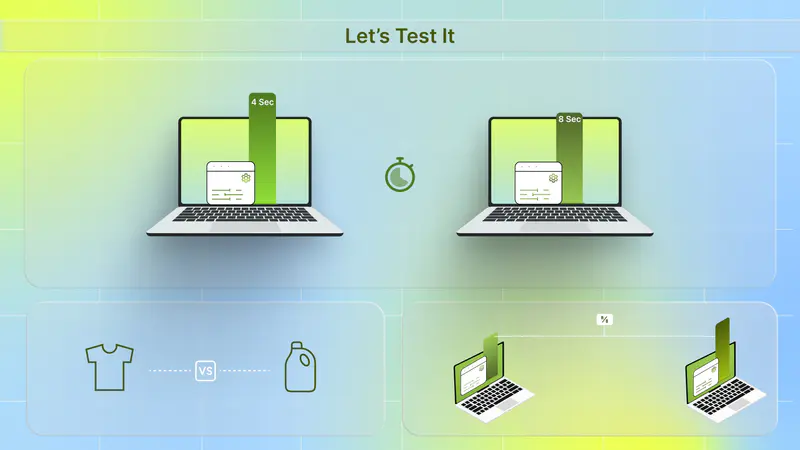
Testing viral laundry sheets vs. liquid detergent on a stained white shirt.
Trying three trending mascara brands to compare smudge resistance.
Putting two popular desk lamps against each other to reduce eye strain.
Why it works: People stick around to see the outcome, especially when the setup feels honest.
A/B testing: Experiment with reveal timing (3 seconds vs. 8 seconds) and compare side-by-side vs. sequential clips.
5. Call Out the Exact Problem Your Viewer Feels
Start by naming the exact pain your target audience feels.
Copy: "Tired of your makeup melting off by noon? Try this."
Examples:
"If your Reels flop after 200 views, this is why."
"Tired of your leggings rolling down during workouts?"
"Can't keep your apartment smelling fresh with pets around?"
Why it works: When the viewer hears their exact frustration, they instantly tune in.
A/B testing: Test specific pain phrases ("exhausted by," "frustrated with," "sick of") and different emotional tones.
6. Start With a Direct Question That Hits Home
A direct question invites the viewer to participate mentally.
Copy: "Still using three apps to plan your week?"
Examples:
"Does your dishwasher leave cloudy glasses?"
"Still editing videos manually instead of using AI cut tools?"
"Struggling to wake up without snoozing four times?"
Why it works: Questions activate a personal "yes/no" response, which boosts retention.
A/B testing: Try broad questions vs. niche ("Remote workers...?" vs. "Everyone..."), and test on-screen bold question vs. verbal question.
7. The Hidden Insight People Wish They Knew Earlier
Create the feeling of insider information with a short phrase that hints at withheld knowledge.
Copy: "What no one tells you about organizing small kitchens..."
Examples:
"What nobody tells you about affordable travel in 2026."
"What creators wish they knew before buying a $500 camera."
"What new homeowners never get warned about their first winter."
Why it works: People crave shortcuts, secrets, and unfair advantages.
A/B testing: Test "What no one tells you" against "Here's the part they don't mention."
8. Jump Into the Buzz and Give Your Take
React to something trending, a product, a meme, or a claim everyone is talking about.
Copy: "Everyone says this $15 blender is amazing. Here's my honest test."
Examples:
Reacting to a viral kitchen hack that "doubles spice flavor."
Testing a trending Amazon gadget that everyone says is overrated.
"This 'AI cleaning routine' is all over TikTok. Here's if it works."
Why it works: You piggyback on existing attention and enter the conversation already happening.
A/B testing: Compare positive-reaction videos and skeptical ones, and test duet vs. standalone reactions.
9. Real Reactions That Tell the Story for You
Show a real user's face, emotion, or mini-story in the first seconds.
Copy: "I didn't expect this to actually fix my back pain."
Examples:
A user installing renter-friendly lights and whispering, "Wait... that was too easy."
A mom showing her toddler actually playing quietly with a sensory toy.
Someone is trying a new pillow and visibly melting into it.
Why it works: Humans trust other humans more than brands.
A/B testing: Test raw shaky UGC footage vs. slightly polished cuts.
10. Hook Viewers With a Value or Price Shock
Lead with price shock, especially effective during budget-conscious buying periods.
Copy: "This was $120 last year... now it's $29."
Examples:
"This $18 lamp looks like a $120 designer version."
"I replaced my $300 blender with this $45 one. Here's the difference."
"These $9 press-on nails look better than salon acrylics."
Why it works: Price sensitivity is high; value triggers immediate attention.
A/B testing: Test showing the old price first vs. the new price first.
11. Open With a Mystery That Needs Solving
Leave out one key detail so viewers feel compelled to continue.
Copy: "There's one thing in your bathroom that expires faster than you think..."
Examples:
"There's one spot in your room causing all the dust."
"This random kitchen ingredient cleans your sink better than any spray."
"Your earbuds sound 2x better if you flip this setting."
Why it works: Humans dislike unresolved stories; suspense pulls them forward.
A/B testing: Test longer vs. shorter suspense windows (2 seconds vs. 6 seconds).
12. Show the Issue and Fix It in Seconds
Quickest hook to convey practical value.
Copy: "Water stains everywhere? Try this trick."
Examples:
Dirty stovetop → wipe with a viral cleaning paste → shiny in 2 seconds.
Wobbly tripod → creator shows simple tightening trick.
Cable mess → magnetic organizer snaps everything into place.
Why it works: Fast gratification boosts watch time and conversions.
A/B testing: Compare direct point-of-view demos vs. standard angle demos.
13. Tap Into Scarcity to Spark Instant Action
Lean on limited availability, urgency, or exclusivity.
Copy: "They restocked today. These sell out in hours."
Examples:
"Yes, the viral pink water bottle is back, and it's selling out again."
"The last batch of these self-heating mugs drops tonight."
"Flash sale on the projector everyone's using for home theaters."
Why it works: People act faster when something feels scarce.
A/B testing: Test countdown timers vs. plain text scarcity notes.
14. Make a Bold Claim That Promises Big Payoff
Use strong descriptors to set expectations for the "best," "fastest," or "easiest" solution.
Copy: "The fastest way to clean a messy room has been proven."
Examples:
"The fastest way to fold a shirt, even kids can do it."
"The softest leggings I've ever worn, I'm not kidding."
"The only keyboard that made me type faster instantly."
Why it works: Big claims grab attention as long as the payoff follows.
A/B testing: Compare "best" vs. "easiest" vs. "fastest."
15. Relatable Awkward Moment as the Attention Grab
Spotlight a small, awkward, or annoying everyday moment.
Copy: "If your shoes make this squeaky sound... here's how to fix it."
Examples:
Trying to record a video, and the tripod collapses.
Oversleeping and showing up on Zoom with pillow marks.
Carrying groceries only for the handles to break at the door.
Why it works: People relate instantly, and shared discomfort builds connection.
A/B testing: Compare humor-driven discomfort scenes vs. serious versions.
16. Handwritten Text That Pulls the Eye
Handwritten or handwriting-style text pulls attention because it feels personal.
Copy: On-screen: "3 things I wish I knew at 25 →"
Examples:
Hand-drawn checklist: "3 daily habits that fixed my sleep →"
Handwritten notes showing a simple meal plan.
A creator writing "Budget breakdown that finally worked for me."
Why it works: Visual motion keeps eyes engaged, especially for silent viewers.
A/B testing: Test handwriting vs. block typography.
17. Use a Comment Reply or Stitch to Start the Story
Use the native "reply to comment" bubble, which signals authenticity and conversation.
Copy: "Replying to @Jess, yes, it actually removes stains this fast."
Examples:
Replying to a comment asking, "Does this acne patch actually work?" → demo.
Stitching a viral cleaning fail with: "Here's how to actually fix that stain."
Responding to: "Is the sound machine worth it for babies?" → real results.
Why it works: It looks native, human, and interactive.
A/B testing: Test responding to positive comments vs. skeptical comments.
18. A Visually Satisfying Moment That Stops the Scroll
Visual pleasure, smooth motions, perfect cuts, clean transitions.
Copy: "Watch this peel... It's perfect."
Examples:
Cutting soap into perfect cubes.
A robotic vacuum creates smooth, symmetrical cleaning lines.
A bright LED light strip switching colors flawlessly in one swipe.
Why it works: Satisfying visuals hold attention even without context.
A/B testing: Test close-up macro shots vs. wider satisfying shots.
19. A Numbered Breakdown Viewers Can Follow Instantly
Numbers promise structure and predictable value.
Copy: "3 ways to make your room look bigger, and #2 is instant."
Examples:
"3 AI tools that save me 2 hours a day."
"4 budget swaps that cut my grocery bill by 30%."
"5 small decor changes that make a tiny apartment feel bigger."
Why it works: People commit more when they know exactly what they're getting.
A/B testing: Compare odd vs. even numbers and short lists vs. longer ones.
20. Reveal a Shortcut That's Simpler Than Expected
Breaks the assumption that something is difficult.
Copy: "You don't need expensive tools, here's the 30-second fix."
Examples:
Fixing a jammed zipper with lip balm.
Cleaning a foggy mirror using shaving cream.
Using a single clip to organize all cables behind a desk.
Why it works: Reduces overwhelm and encourages immediate action.
A/B testing: Test "easier than you think" vs. "takes less than a minute."
21. Put Two Options Head-to-Head
Show your product vs. the old way, a competitor, or a common workaround.
Copy: "$200 vacuum vs. $59 vacuum, and I was shocked by the result."
Examples:
Reusable paper towels vs. regular rolls: absorption test.
Budget smart bulb vs. premium brand: brightness comparison.
TikTok-viral water bottle vs. a $10 dupe.
Why it works: Comparison simplifies decision-making dramatically.
A/B testing: Compare explicit brand callouts vs. generic "other brand."
22. Interrupt the Scroll With Something Unexpected
Something unusual breaks the scrolling autopilot.
Copy: "Stop! Look at this."
Examples:
Creator appears upside-down, talking normally.
Sudden loud whisper: "Hold up, try this."
Quick glitch transition that immediately resets attention.
Why it works: Anything unexpected resets attention.
A/B testing: Test subtle vs. dramatic interruptions.
23. A Mini Story Told in Three Fast Beats
A tiny narrative with a clear arc grabs attention and feels emotionally complete.
Copy: "My skincare routine kept failing... until I tried this."
Examples:
Person tries to clean a stain → stain spreads → product fixes it instantly.
Someone tries to organize the wardrobe → clothes fall → a simple tool solves it.
Cooking attempt fails → new technique → perfect result.
Why it works: Story structure creates built-in dopamine.
A/B testing: Test comedic vs. serious narratives.
24. Behind-the-Scenes (BTS)
People love seeing how things get made or who's behind the brand.
Copy: "Here's how we hand-roast your coffee beans each morning."
Examples:
A candle-making business shows how they pour each batch.
A bakery is preparing viral croissant cubes at 4 AM.
Behind the scenes of packaging customer orders with personalized notes.
Why it works: Transparency builds trust and human connection.
A/B testing: Compare raw iPhone BTS vs. edited cinematic BTS.
25. Share the Spotlight With Another Creator
Bring in another creator or collaborate visually to amplify reach.
Copy: "Testing this gadget with @Jordan, honest reactions only."
Examples:
Two fitness creators try a trending resistance band set.
A chef and a nutritionist rate viral recipes together.
A home-decor creator and a handyman partner to redo a room in 2 hours.
Why it works: Shared audiences increase reach and produce social proof.
A/B testing: Test collaborating with a similar niche creator vs. a contrasting niche creator.
With these 25 hooks as inspiration, you can start experimenting, combining approaches, and refining your own openings to capture attention instantly and create hooks that work consistently across campaigns.
Also Read: How to Find Winning Creatives and Use AI to Maximize ROAS
How to Measure Whether Your Hook Actually Works (2026 Benchmarks)
A hook is only as good as the numbers behind it, and in 2026 nearly every strong account has a decent opener, so the winners are decided at the margins. Three metrics tell you whether an opener earns its spend:
Hook rate (3-second view rate): 3-second video plays divided by impressions. This is the single clearest read on opener strength. Use these 2026 benchmarks: on Meta, under 15% is weak, 20 to 25% is average, and 30% or higher is strong; on TikTok, under 18% is weak, 25 to 32% is average, and 40% or higher is strong.
Thumb-stop rate: the earlier scroll-stop signal (often a 2-second view on fast-scroll TikTok feeds). It tells you whether the very first frame stopped the thumb, before the message even lands.
Hold rate: the share of viewers still watching deeper in (commonly measured at 15 seconds or 50% completion). A high hook rate with a collapsing hold rate means the opener wrote a check the rest of the ad could not cash.
Read those three together. If hook rate is low, the first frame is the problem. If hook rate is healthy but hold rate falls off a cliff, the opener is fine and the dead zone is seconds 5 to 15. For a deeper playbook on lifting these numbers, see our guide on hook rate improvement strategies.
The angles themselves are also shifting. In early 2026, 84% of top-performing ads used a direct viewer challenge or an unresolved ending, curiosity-driven openers rather than flashy showcases. Openers that frontload a problem, shock, or payoff (hooks 1 through 5 and 11 above) tend to earn 30 to 50% higher view-through rates, and user-centered scripts can lift click-through by up to 2x versus generic edits. During seasonal and peak-shopping windows, price-shock and scarcity openers (hooks 10 and 13) spike hardest; our breakdown of festive ad hooks that boost ROAS covers when to lean into them.
How to Craft a Winning Video Ad Hook
Grabbing attention right away sets the tone for everything that follows, so here's how to shape a hook that instantly earns attention:
1. Start With the Crucial First 2-3 Seconds
Those first seconds decide whether someone keeps watching. Open with a bold visual, a short line of text, or a quick action that makes the viewer pause. Keep the idea simple and easy to understand, even without sound.
2. Make It Mobile-First and Soundproof
Most people scroll with sound off, so your hook needs to communicate the message visually. Use clear on-screen text, clean framing, and movement that tells the story on its own. This keeps the hook strong in every viewing situation.
3. Lead With One Strong Attention Driver
Pick one angle for your hook and build around it. The most reliable options in 2026 are:
Urgency or risk: a quick warning that sparks action.
A surprising fact: short, unexpected information that builds curiosity.
A quick demo or mini-test: show the result before the viewer moves on.
A real reaction: a genuine human moment makes the ad feel trustworthy.
A pattern interrupt: a visual or framing shift that stands out.
A single clear idea works better than multiple competing elements.
4. Use User-First Formats and Native Features
Short-form ads perform better when they feel like regular posts. Use casual camera angles, short personal lines, POV shots, and platform features like reply bubbles, stitching, or quick captions. These details help your hook blend into the feed while still standing out.
5. Personalize With Simple Variations
Create a few small variations of your hook with different headlines, thumbnails, or first frames. Dynamic systems can match these versions to the right audiences and improve performance with minimal effort.
6. Use AI Tools to Speed Creative Testing
AI editing tools help you trim clips, auto-caption videos, highlight standout moments, and quickly spin out multiple versions, letting you test more and faster without slowing down your workflow.
Tools such as Segwise take this a step further by automatically tagging creative elements (like hooks, onscreen text, CTAs, visuals), linking them to performance data, and recommending what to iterate. This makes spotting what works simple and scaling your top-performers much easier.
7. Deliver on the Promise and Close Strong
Whatever your hook claims, clearly show the payoff. A fast demonstration or a simple reveal keeps the viewer engaged and encourages action. A strong finish makes the whole message feel complete.
By combining attention-grabbing hooks with thoughtful delivery, you can create video ads that not only stop the scroll but also drive meaningful results.
Also Read: Creative Optimization in 2026: Dynamic Creative Optimization (DCO) Playbook for Mobile UA
How Segwise Helps You Find and Scale Winning Hooks
Testing 25 hook angles is easy. Knowing which opener actually moved installs or ROAS, across hundreds of creatives and several ad networks, is the hard part, and it is exactly where campaign-level dashboards fall short. Segwise works at the element level:
Automatic hook-level tagging. Segwise's multimodal AI analyzes video, audio, image, and text together, so it tags the hook line, on-screen opening text, spoken hook, pacing, and first-frame visual on every creative, without the 20-plus hours a week teams lose to manual tagging.
Tag-to-metric mapping. Every tagged element is mapped to performance metrics like CTR, IPM, installs, and ROAS, so you can see which hook style, not just which whole ad, is driving results.
Asset clustering to isolate the hook. Segwise groups ads that share the same underlying footage or audio into clusters, letting you compare two near-identical creatives and pin the ROAS difference to the one variable that changed, the opening hook or text overlay. That turns fuzzy A/B tests into clean, element-level reads.
Fatigue tracking on winners. Once a hook is working, Segwise's automated fatigue detection flags it when performance and spend share start sliding, so you refresh the opener before budget burns instead of after.
Ask in plain language. The AI creative strategist holds full context on your account, so you can ask questions like "which hook style drove the most installs last month?" and get a direct answer, no report-building required.
Generate the next round from what won. Segwise turns winning hook patterns into net-new creatives and scene-by-scene AI video storyboards, exportable in every aspect ratio, so your next batch of openers is built on evidence instead of guesswork.
Conclusion
Strong hooks turn first-second attention into measurable action. Choose a single clear angle, run quick tests with the video ad hook examples above, and scale the few openings that raise conversions. Design each test to report simple KPIs (clicks, installs, ROAS), so you know which hook actually moves your business. Treat every winning hook as a repeatable asset: vary headlines, thumbnails, and pacing, then keep iterating on the versions that prove profitable.
If you run many video ads, it is hard to know which opening hook or creative element actually drives conversions. Manual tagging and campaign-level reporting hide the element-level signals you need, so teams keep guessing and waste budget. That is where Segwise stands out.
Segwise is an AI-first creative analytics platform that automatically tags creative elements such as hook lines, on-screen text, product shots, CTAs, visuals, and audio, and then maps those tags to performance metrics like CTR, installs, IPM, and ROAS. It unifies creative and performance data across major ad networks with no-code integrations, tracks creative fatigue, and surfaces which specific elements to scale or refresh.
Segwise is the strongest choice for replacing manual guesswork, letting you scale only what actually works.
Start a Free Trial at Segwise to connect your accounts, run element-level analysis, and generate data-backed creative iterations that scale the best hooks.
FAQ's
1. What is a video ad hook, and why does it matter?
A hook is the very first 2-3 seconds of your video that must stop someone mid-scroll and make them keep watching; without a strong opener, most views drop off fast.
2. How long should my video ad hook be?
Keep it super short, aim for about 2-3 seconds, that delivers a single, clear idea so it reads on mobile and without sound.
3. What fast video ad hook examples can I try right away?
Try a quick question that names a pain, a surprising fact, or a price shock, or a 2-second demo/experiment that shows the result. These are common high-impact video ad hook examples.
4. How do I test which hook actually improves conversions?
Run small A/B tests with one variable change (headline, first frame, or pacing), then compare CTR, view rate, and conversion KPIs to find winners.
5. How can I make a hook work when people watch with the sound off?
Use bold on-screen text, clear visuals, or motion that tells the story alone, plus captions so viewers instantly get the value without audio.
6. What is a good hook rate in 2026?
Hook rate is 3-second video plays divided by impressions. On Meta, 20 to 25% is average and 30% or higher is strong; on TikTok, 25 to 32% is average and 40% or higher is strong. Anything meaningfully below those ranges usually means the opening frame is too slow or generic.
7. What is the difference between hook rate and hold rate?
Hook rate measures whether people stay past the first three seconds, so it grades the opener. Hold rate measures how many are still watching deeper in, around 15 seconds or 50% completion, so it grades the rest of the ad. A strong hook rate with a weak hold rate means the opener works but the middle loses people.
8. How many hooks should I test?
Test several angles at once rather than one at a time. Change a single variable per version (the first frame, the opening line, or the pacing) so you can attribute any lift to the hook itself, then scale only the openers that clear your hook-rate and conversion benchmarks.
9. Are video ad hooks different from DTC ad hooks?
The mechanics overlap, but the framing differs. This guide focuses on the video opener itself, the first-frame craft that lifts hook rate on any platform. DTC hooks lean harder on offer, product, and buyer psychology; for that angle, see our guide on DTC ad creative hooks.
10. How does Segwise identify which hook drives conversions?
Segwise automatically tags the hook line, opening text, and first-frame visual on every creative, maps each tag to metrics like CTR, IPM, installs, and ROAS, and uses asset clustering to isolate which opener caused a performance difference between similar ads. You can connect your accounts and run element-level analysis on a 7-day free trial.