
Finding strong Festive Ad Hooks can be stressful. Demand rises, budgets feel tight, and every scroll moves faster. People shopping for seasonal moments expect ads to feel fresh and right for the occasion. If the opening line does not make sense to them right away, they move on before your offer even appears.
Mobile screens now shape almost all holiday buying. Most actions happen in a few seconds of video or a quick tap on a feed. The first line must create interest, make sense for the season, and connect to what the viewer wants right now. With higher competition and more automation in ad delivery, those early seconds influence both conversions and return on spend.
You are not short on creative ideas. You are short on the right seasonal hook that proves value instantly. That is the gap this blog helps you solve.
In this blog, we'll share 10 strong festive ad hooks that fit today’s mobile buying habits, plus simple check-points to help you spot which openers move your results and scale faster into this season.
What are Festive Ad Hooks?
Festive ad hooks are short and attention-grabbing openings in an ad that fit a holiday moment. They give people a reason to pause and feel like the message relates to the season they are in. A good hook connects your offer to a celebration, a gifting need, a limited-time chance, or a special perk. It quickly shows why the moment is right to try, buy, or tap now.
Why Festive Ad Hooks Matter?
Holiday periods mix high intent and heavy competition. People research more, compare more, and expect quick proof you’re worth their spend. Ads that open with a tight, timely hook cut through the noise and turn short attention into clicks, installs, and purchases.
Google’s 2025 holiday insights show shoppers blend searching, streaming, scrolling, and shopping more than ever, so the first seconds on mobile decide whether someone keeps watching. Using hooks that match seasonal signals, price, convenience, and relevance improves conversion and return on ad spend.
Ad formats that fit mobile screens and short attention spans (vertical video, bold captions, and fast cuts) are top performers this season. Platforms also favor creatives that pair well with their automation and bidding tools, so your hook should work for both humans and the algorithms that deliver your ads.
Now, let’s look at festive ad hooks that have proven effective this season.
Also Read: How to Create Ads That Stop the Scroll: Top Tips for Success in 2025
Top 10 High-Performing Festive Ad Hooks
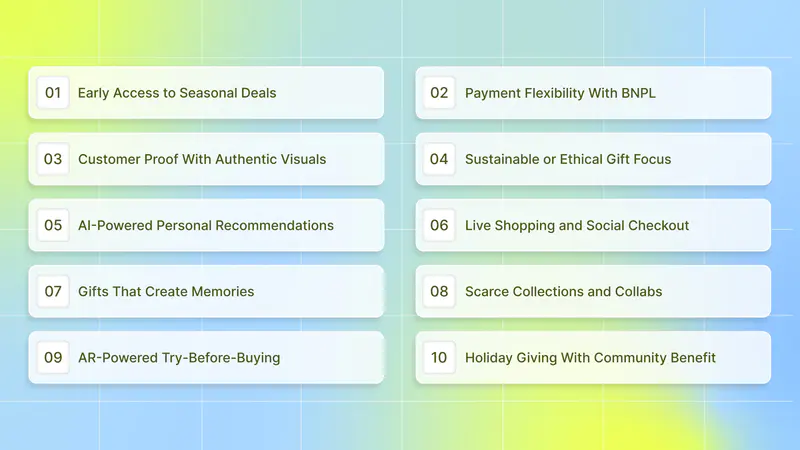
Holiday demand grows fast, and attention spans shrink even quicker. To help your ads stand out in busy feeds, the list below highlights ten proven festive ad hooks shaped by current shopper behavior and platform trends. As you read through them, picture how each one fits into your campaigns and those first few seconds that decide performance:
1. Early Access to Seasonal Deals
Brands are launching holiday discounts earlier each year. Shoppers look for early value and better stock selection.
Hook copy: “Early access to holiday pricing. Limited inventory for the first arrivals.”
Example:
“Holiday prices start now. Shop before items run out.”
“Early deal drop for email subscribers. Activate your access.”
“Today only. Get gifts sorted before the December rush.”
Why it works:
Starting promotions before peak days captures shoppers who want selection and control. Early-access windows shift purchase timing forward, reduce stock-outs, and raise average order value when paired with member incentives. Run a short pre-sale for a specific segment and compare lift over the following 72 hours.
A/B testing: Compare “members only” access with “limited hours” messaging. Track CTR and add-to-cart activity in the first 72 hours.
2. Payment Flexibility With BNPL
Higher-priced gifts convert better when monthly or split payments are visible up front. BNPL use strengthened through the 2025 holiday window.
Hook copy: “Split payments into 4 at checkout. Zero interest for approved buyers.”
Example:
“Make the holidays easier. Pay in 4 with zero added cost.”
“Premium gift. Smaller payments. Checkout takes seconds.”
“Spread the joy. Flexible plans available at checkout.”
Why it works:
Visible split-pay options reduce price friction and increase approval for higher ticket items. Advertising a concrete payment example converts better than vague claims, and tracking BNPL adoption shows its direct impact on order size. Add a price example in creative and measure checkout conversion and AOV.
A/B testing: Test price examples against generic statements. Measure checkout completion and AOV changes.
3. Customer Proof With Authentic Visuals
User voices influence credibility. Social buying behaviors continue rising.
Hook copy: “Top pick for more than 10,000 happy gift givers.”
Example:
“Rated 4.9 by thousands who gifted this last season.”
“See why shoppers call this their happiest holiday purchase.”
“Real customers. Real gifts. Real reactions.”
Why it works:
User-generated content creates trust faster than polished ads because viewers perceive it as unbiased. Short real customer clips increase click-throughs and reduce hesitation, particularly among younger audiences who rely on social proof. Use short UGC clips in the feed and compare engagement and conversion rates with brand videos.
A/B testing:
Test UGC clips against brand-produced content. Monitor engagement through to purchase.
4. Sustainable or Ethical Gift Focus
Shoppers pay attention to packaging and sourcing choices, especially during gifting season.
Hook copy: “Plastic-free gifting that supports the planet.”
Example:
“Smart gifts made with recycled materials. Better for everyone.”
“Every purchase supports cleaner packaging and cleaner living.”
“Choose gifts that make holidays brighter for the planet too.”
Why it works:
Buyers weigh sustainability more heavily in purchase decisions, especially for gifts. Clear, specific claims about recycled materials or a concrete donation amount raise perceived value and can increase sales among conscious segments. Highlight one measurable eco benefit in creative and track conversion and repeat rate.
A/B testing: Compare charity-linked versions with recycled material promises. Track return rates and repeat interest.
5. AI-Powered Personal Recommendations
Personalized ad content increases attention and relevance for each viewer.
Hook copy: “Gift picks based on the people you shop for most.”
Example:
“Gift ideas based on who you shop for most.”
“A list made for your family. Pick and send in minutes.”
“Your top three gifts for Dad are ready to review.”
Why it works:
Personalized picks reduce decision time and increase relevance, boosting conversion and order value when recommendations align with past behavior. Dynamic creatives that show a short list for specific recipient types perform better than generic feeds. Deploy a dynamic set for top segments and compare CVR and basket size.
A/B testing: Compare static selections against data-driven placements. Optimize conversion and completion rates for gift journeys.
6. Live Shopping and Social Checkout
Viewers enjoy real-time demonstrations and exclusive savings while watching inside the app.
Hook copy: “Live holiday show with limited codes for viewers only.”
Example:
“Live at 7 PM. Quick demos and secret codes for viewers.”
“Watch. Tap. Gift. Checkout happens inside the stream.”
“Limited bundles during our live holiday show.”
Why it works:
Live demos create a buying moment where viewers see product use and receive an immediate incentive. Real-time interaction and short exclusive codes convert impulse viewers into buyers at a higher rate than static posts. Host a short live event with a time-limited code and measure view-to-purchase conversion.
A/B testing:
Test hosts, show length, and code visibility. Focus on the view-to-purchase rate.
7. Gifts That Create Memories
Experience gifting grows when budgets change or clutter concerns rise.
Hook copy: “A present they can enjoy together, or anytime they choose.”
Example:
“Give a weekend escape instead of another thing to store.”
“Spa day for two. Delivered as a digital surprise.”
“Cooking classes that turn into favorite memories.”
Why it works:
Experience gifts avoid clutter and appeal to shoppers seeking meaningful buys, which supports last-minute purchases and digital delivery. E-vouchers and instant fulfillment reduce friction and improve satisfaction when redemption is simple. Offer digital delivery and track redemption and post-purchase feedback.
A/B testing: Compare experience vs product versions with similar pricing. Measure redemption and customer satisfaction after purchase.
8. Scarce Collections and Collabs
Limited editions create urgency and increase perceived status.
Hook copy: “Only available during the holiday season. Small release.”
Example:
“Holiday release with a small batch. Available while it lasts.”
“Artist collab for the season. Once sold, it is gone.”
Why it works:
Limited runs and partner drops increase perceived rarity and social shareability, thereby shortening decision windows and increasing willingness to pay. Public counters for remaining units or time increase urgency and measurable sell-through. Launch a small batch with a visible remaining counter and track sell-through rate and social mentions.
A/B testing: Test scarcity is tied to quantity, while scarcity is tied to time.
9. AR-Powered Try-Before-Buying
Augmented try-ons reduce doubt around size, fit, or home placement.
Hook copy: “View this in your home or try it on with a tap.”
Example:
“Add to your living room preview with one tap.”
“Try these sunglasses using your phone camera.”
“Place this holiday tree in your space before ordering.”
Why it works:
Interactive try-ons resolve fit, scale, or placement uncertainty and reduce returns by improving purchase confidence. Ads that offer an in-ad preview lift add-to-cart rates and reduce post-purchase friction. Add an AR preview link to the creative and monitor changes in add-to-cart and return rates.
A/B testing: Compare try-on placements in the feed vs the landing page. Monitor product return percentages as a secondary metric.
10. Holiday Giving With Community Benefit
Acts of kindness resonate strongly during seasonal moments.
Hook copy: “Every gift you buy supports a family this season.”
Example:
“Each order supports a family in need this season.”
“Your gift funds meals in local communities.”
“Track the donations your shopping helps create.”
Why it works:
Cause-linked shopping increases emotional value and brand preference during seasonal buying. Concrete, trackable commitments, such as a fixed donation per order or a live donation meter, build credibility and drive higher conversion among cause-minded buyers. Run a campaign with a clear donation metric and measure conversion and repeat purchase behavior.
A/B testing: Compare fixed contribution messages to percentage-based ones. Test with and without a progress indicator.
With these hooks in place, your ads start strong, feel timely, and align with the expectations people bring to holiday shopping. Small shifts in the opening moments often decide how far your budget goes, so testing a few of these ideas can help you spot the versions that deliver higher-quality engagement and stronger returns through the season ahead.
Once you know what performs well, the next step is picking the right one for your audience and testing it in the first seconds of your ad.
Also Read: Creative Optimization in 2025: Actionable Insights Report
How to Find a Winning Festive Ad Hook

Holiday attention is short, so your hook needs to earn interest right away. The steps below show how to find a festive ad hook that connects fast and drives real results:
Start with what your audience actually wants: Look at recent behavior: what people searched for, what gifts or features were trending, and which ad creatives got clicks in past seasons. Use search terms, past campaign data, and store or app activity to spot common needs and timing cues. Real user signals help you pick a hook that feels relevant.
Mine your winning creatives for repeatable patterns: Pull your top-performing ads from last season and note the opening moments: beats, visuals, captions, and CTAs. Find patterns, not just one winner, but repeated elements that show up across winners. This makes it easier to copy what works into new hooks.
Use UGC and real people signals for authenticity: Hooks that feel like real people talking or showing the product often build more trust and drive better clicks. Gather short clips, testimonials, or authentic unboxings and test those hooks alongside produced ads. UGC is a core format to test in 2025.
Break the pattern in the first second: Try a small surprise, a quick question, or a clear time cue in the first frame to interrupt scrolling. Pattern-breaking, combined with a clear seasonal cue (gift, deadline, or celebration line), increases the chance someone watches on. Keep it simple and bold.
Build at least three short hook options per campaign: Make one emotional hook, one value/offer hook, and one practical/use hook. That variety helps you test which tone converts best for each placement and audience. Short videos, vertical frames, and shoppable cards should each get their own test variant.
Use creative analysis tools to speed discovery: Upload assets to an ad-analysis or AI tool that tags on-screen text, shots, and sound. These tools can show which visual or copy elements correlate with installs or purchases, so you can find winning hooks faster. You can also use Segwise. It automatically tags creative elements such as visuals, on-screen text, audio, hooks, and CTAs across images, videos, and playables/interactive formats. Segwise then links those tags to performance metrics like CTR, installs/IPM, and ROAS, and pulls data from major ad networks and measurement partners so you can see which exact hook moments drive results.
Test fast, measure the right metrics, then scale winners: Run short A/B tests focused on the first 3 seconds. Track click rate, watch rate (for video), and the next step you want (install, add to cart). When a hook raises the conversion that matters, scale it, but keep monitoring post-install value to keep ROAS healthy.
When you keep tests small, fast, and tied to real shopper signals, you find hooks that actually move ROAS, then scale those winners with confidence.
Also Read: AI Ad Analysis Tools in 2025: Find What Drives Creative Success
Conclusion
Festive Ad Hooks need to prove their value in real revenue terms. Pick one clear outcome (ROAS or conversion), run tight, element-level tests that tie moments in your creative to that outcome, scale only the creative elements that drive real performance, and automate measurement so wins accumulate across the season.
That’s where Segwise can make a difference. Segwise is an AI-first creative analytics platform whose multimodal AI automatically tags hook lines, visuals, on-screen text, audio cues, and CTAs, then maps those tags to campaign KPIs like ROAS, CTR, and IPM, giving you element-level insight across networks.
See it on your own creatives. Start a Free Trial to run an evaluation, unify creative + performance data, and use those insights to guide smarter ad‑spend decisions.
FAQs
1. Which Festive Ad Hooks lift ROAS best on mobile?
Hooks that show quick seasonal value (early deals, limited stock, or a clear price example) in the first 3 seconds using vertical video and bold captions tend to boost clicks and conversions on mobile.
2. How fast should I A/B test Festive Ad Hooks during the holidays?
Run short A/B tests focused on the first 3 seconds over 48–72 hours, compare CTR, watch-rate, and add-to-cart, then scale the variant that moves the key metric.
3. Is it worth advertising BNPL or flexible payments in my Festive Ad Hooks?
Yes, showing concrete split-pay options often raises average order value and conversion, but be clear about terms since consumer risks and regulatory scrutiny can matter.
4. Should I use UGC or AR as a festive hook?
Short UGC clips build fast trust and clicks, while AR try-ons cut uncertainty and lower returns; both work well as quick seasonal hooks when shown right away.
5. Which metrics prove a Festive Ad Hook is winning?
Watch early engagement (3-sec view), CTR, add-to-cart/checkout conversion, and ROAS, plus return or redemption rates, to see real business impact.