
Updated July 2026.
The AI marketing tools for dropshipping that actually move ROAS are the ones that fix the loop between creative production and creative analytics. In 2026 the ad platforms already handle targeting, budgets, and bid strategy, so creative is the last variable a dropshipper still controls. The stack that wins tags every ad, spots fatigue early, and generates new winners from proven patterns. Segwise sits in that creative intelligence layer, unifying data from 15+ ad networks and MMPs and turning winning tags into new creatives automatically.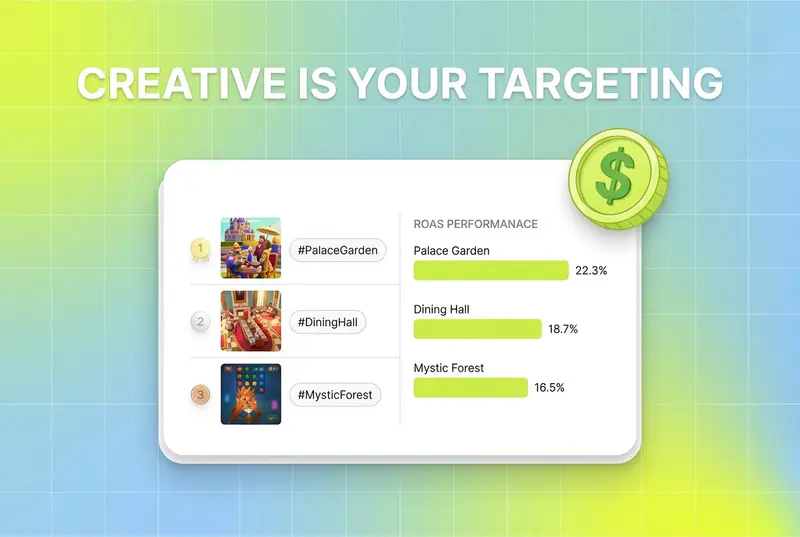
Key Takeaways
Dropshipping is now 27% of ecommerce fulfillment worldwide, and that base is growing at roughly 22% CAGR through 2030.
Ecommerce stores that actively use AI are growing 2-3x faster than those that don't.
Creative fatigue is the single largest invisible cost in paid social. As ad frequency climbs unchecked, cost per acquisition can more than double when the same creative keeps serving a saturated audience with no structured review.
Meta delivery in 2026 routes spend to creative the algorithm "believes in." Once ad frequency crosses 2.5, performance declines rapidly in cold-audience campaigns and falls off a cliff past 4.0.
The five highest-leverage AI categories for dropshippers are creative intelligence, creative generation, ad fatigue detection, email and retention automation, and product research. A lean stack uses one tool per layer.
Creative intelligence platforms like Segwise tag every ad element (hooks, CTAs, visuals, audio) and connect each tag to ROAS, which is how scaling brands identify winning patterns instead of guessing.
The one-line shift: In 2026, the algorithm chooses who sees your ad. You choose what they see. That is the only lever left, and it is where AI should earn its keep.
Introduction
Most dropshippers treat AI as a content shortcut. Write a product description, spin up a thumbnail, draft an email, move on. The real story in 2026 is different. Paid social platforms have absorbed the old levers (targeting, bidding, placement optimization) into their own algorithms, and the teams still beating the averages are the ones that have rebuilt their stack around creative data.
The market context supports this. The global dropshipping market was valued at $445.5 billion in 2025 and is projected to hit $1.25 trillion by 2030, a CAGR of 22%. That growth is almost entirely paid-media-driven, which means more creatives being produced, more creatives being tested, and more creatives fatiguing. Orders driven by AI search increased 15x between January 2025 and January 2026. Intent is shifting, inventory is scaling, and the brands that can iterate faster win.
If you are scaling a dropshipping store or small DTC brand, the question is not "should I use AI?" It is "which AI layer has the highest dollar return per hour I spend integrating it?" This post breaks down the five categories of AI marketing tools that actually move revenue, the stack that small brands are converging on, and the one capability most dropshippers skip entirely.
Also read Creative Experimentation Platforms for Ads: What Actually Works in 2026
The shift in 2026: creative is your targeting

For most of the last decade, dropshipping growth playbooks were written around targeting. Lookalike audiences, interest stacks, custom segments, conversion event manipulation. That layer has now been absorbed into the platform. Meta's Advantage+ Shopping Campaigns and TikTok's Smart Performance Campaigns decide the audience for you. Google's Performance Max does the same on its side.
The result: creative is the only variable you still own outright. Industry practitioners put it bluntly: your creative is now your targeting, because the ad itself signals who should see it. A video ad's hook, pacing, on-screen text, and CTA together tell the algorithm who the right audience is, faster than any interest targeting ever did.
That is why AI marketing tools aimed at creative intelligence and creative production have pulled ahead of AI tools aimed at media buying. The leverage has moved upstream.
The numbers back this. McKinsey's 2025 research on AI adoption found that companies closing the adoption-to-scaling gap show 1.7x higher revenue growth and 2.7x higher ROIC than laggards, with generative AI driving margin increases of 1.2 to 1.9 percentage points across retail. The teams winning are not the ones using AI to write ten more Instagram captions. They are the ones using AI to understand and produce better creative at scale.
Where AI actually moves revenue for dropshippers
There are roughly five categories of AI marketing tools that matter for a dropshipping or small DTC operation. Each addresses a different leak in the funnel. In most cases, one tool per layer is enough.
Creative intelligence (tagging and analytics)
This is the category most dropshippers skip, and the one with the highest ROI once adopted. Creative intelligence platforms use multimodal AI to read your ads the way a consumer does. They analyze the video frame-by-frame, transcribe spoken dialogue, tag visuals, extract on-screen text, and map each element to performance metrics like CTR, CVR, ROAS, and spend share.
Why this matters: if you cannot tell which hook, character, color, or CTA is driving conversions, you are iterating blind. Teams running 50-plus creatives a month without tagging end up relying on intuition rather than data, which burns production budget on concepts that never had a chance.
Segwise is built around this layer. Its Creative Tagging Agent applies multimodal AI to video, audio, image, and text simultaneously, tagging every creative element automatically and mapping each tag to ROAS, CPI, CTR, and any custom event. It is the only platform that tags playable (interactive) ads as well, which matters if you also run gaming-adjacent campaigns. The outcome that comes up most in customer conversations is around 20 hours per week saved on manual tagging per app or brand, and a 50% ROAS improvement from acting on creative patterns the team did not previously see.
Other tools in this space bolt creative analysis onto an attribution stack, which suits stores already running a separate measurement platform, while heavier enterprise tools serve larger DTC brands with in-house media teams. The trade-off is that creative intelligence is a secondary layer rather than the core of those products.
Creative generation
The bottleneck most dropshippers hit is production capacity. A store testing new products weekly needs 10-20 new creatives per launch, and most designers simply cannot keep up. This is where AI creative generation earns its place.
The new generation of tools does not just spit out generic stock imagery. The good ones are driven by your own performance data. Segwise's Creative Generation Agent, for instance, identifies your top-performing tags (a hook style, a CTA, a visual treatment that is winning) and produces new static creatives built around those winning elements, then lets you edit the output by prompting. It exports in every major aspect ratio (1:1, 4:5, 9:16, 16:9) so assets are ready for Meta, TikTok, Snapchat, and Google without manual resizing. The stated impact is halved creative production time, which is the metric most operators feel immediately.
If you are not yet at the volume to justify a dedicated creative intelligence platform, a stack of Canva Pro ($15/month) plus Claude or ChatGPT handles roughly 70% of content needs. It will not give you tag-level intelligence, but it gets copy and design output out the door.
Ad fatigue detection
Ad fatigue is the most expensive invisible problem in dropshipping. Research from IAB's 2025 UK Digital Ad Spend Report suggests the average consumer now sees more than 5,000 digital ads per day. A Simulmedia study found that people who saw the same ad 6-10 times were 4.1% less likely to buy the product than those who saw it 2-5 times.
A widely used fatigue detection method compares a creative's last 7 days against its 30-day baseline. A creative is flagged when two or more metrics have declined over the last seven days and current performance sits more than 15% below the 30-day baseline. Without a structured weekly review, a meaningful share of monthly ad spend keeps flowing to creative that has already fatigued.
Dedicated fatigue detection is where native monitoring shines. Segwise's fatigue tracking runs the equivalent review automatically across every creative on every connected platform (Meta, Google, TikTok, Snapchat, YouTube, Axon, Unity Ads, Mintegral, IronSource), with custom thresholds you set yourself (for example, "alert me when ROAS drops 20% over 7 days"). Alerts land in email or Slack before CPA spikes.
Email and retention automation
Paid traffic is only half the funnel. The other half is repeat purchase, and email is the channel that actually compounds.
The category leaders here for dropshipping are Klaviyo (free up to 250 active profiles, strongest flow builder, deep Shopify integration), Omnisend (stronger SMS native, AI subject line and copy generation, plans from $16/month), and GetResponse for behavior-triggered automation. Each has shipped AI features: AI-generated subject lines, AI product recommendations, AI-assisted flow setup, and AI send-time optimization. None of these replace strategy, but they compress the execution time meaningfully.
For customer service, Tidio's AI support bot handles up to 70% of queries automatically, which is significant for a small team fielding "where's my order?" emails all day.
Product research
Product research is the first layer, and it is also the most saturated. Sell The Trend, AutoDS, and Dropship.io all offer AI-driven product discovery, trend spotting, and store analysis. Dropshipping Copilot pairs product finding with AI-generated listings.
The honest read: product research AI tools shave hours off your day, but they do not beat a close reading of TikTok trending sounds and your top-performing creatives. If you are early and picking products, use them. If you are scaling, your creative data is the better signal for what to double down on.
Why creative intelligence is the unlock most dropshippers miss
Every dropshipping AI article covers product research, email automation, and content generation. Very few cover the creative intelligence layer, because it has historically been gated behind enterprise tooling priced for eight-figure ad spend.
That gate is closing. Multimodal AI now makes it possible to tag thousands of creatives at scale without a data engineer, and the unit economics make sense for stores spending $20K+ per month on paid social. The unlock is simple: when every ad is tagged by hook, character, visual style, CTA, pacing, and emotional tone, you stop asking "is this ad working?" and start asking "which hook style converts best on cold traffic for this product category?"
That shift is the difference between optimizing campaigns (everyone does it) and optimizing creative (almost nobody does it systematically). The result is what Segwise describes as true creative intelligence, the gap between knowing what won and knowing why it won.
A concrete example: a DTC skincare brand running 40 creatives across Meta and TikTok can see that "before/after" hooks are outperforming "problem/solution" hooks by 2.1x on ROAS, but only when paired with a female voiceover and text overlay in the first two seconds. Without tagging, that pattern is invisible. With tagging, it becomes the brief for the next 10 creatives.
How to build a lean AI marketing stack for dropshipping in 2026
Most "best AI tools for dropshipping" posts list 20 tools. Real operators use four or five. Here is the minimal stack that covers every leverage point.
1. Creative intelligence platform
This is the spine of the stack. Segwise fits this role for dropshipping, DTC, and small gaming studios because of its no-code integrations with Meta, Google, TikTok, Snapchat, YouTube, Axon, Unity Ads, Mintegral, and IronSource, plus AppsFlyer, Adjust, Branch, and Singular on the MMP side. Setup takes under 15 minutes and historical data imports automatically. You get a unified creative performance view, automated tagging, and native fatigue detection out of the box. For dropshippers under $20K/month spend, delaying this layer is fine. Above that, it is the highest-ROI integration in the stack.
2. Ad platform + content generation
Canva Pro ($15/month) plus Claude Pro ($20/month) or ChatGPT Plus covers product descriptions, ad copy, social posts, basic design, and most static creative work. A small brand can ship 30+ creatives a month with this combo alone.
3. Email and SMS
Klaviyo for ecommerce flows (free under 250 active profiles, strongest conversion data pull), or Omnisend if you need stronger SMS out of the box. Both have AI features worth using for subject lines and send-time optimization.
4. Customer support AI
Tidio handles the long tail of "where's my order?" and product questions, automating up to 70% of queries so your team focuses on the exceptions.
5. Product research (optional, early stage only)
Sell The Trend or AutoDS if you are still picking products. Skip this layer once your catalog stabilizes.
The rule: one tool per layer
Five tools total. Dropshippers who run 15 overlapping AI tools almost always have lower ROAS than dropshippers running a lean, integrated stack, because every extra tool fragments data and dilutes attention.
Common pitfalls when adopting AI marketing tools
A few patterns show up repeatedly in dropshippers who adopt AI tools and see no lift.
Using AI to produce more, not better. Generating 200 product descriptions in an hour is not the same as generating 20 product descriptions that convert. Quality metrics (CVR, add-to-cart rate) matter more than output volume.
Ignoring the creative data loop. Creative generation without creative analytics is just faster guessing. The two belong together. Generate new variations based on what your tag-to-metric mapping shows is actually working, not based on generic "good ad" templates.
Waiting too long on fatigue. The 7-day vs 30-day check is a weekly habit, not an emergency response. Brands that run it every week scale. Brands that only run it when CPA spikes stall, because by then Meta's delivery has already deprioritized the creative and the decline is accelerating.
Over-stacking tools. Omnisend, Klaviyo, Mailchimp, and ActiveCampaign all in one stack means four dashboards and fragmented data. Pick one per layer.
Forgetting attribution. AI ad optimization without unified MMP data (AppsFlyer, Adjust, Branch, or Singular for app-based models, or a dedicated web attribution platform for web-based models) means optimizing on noise. At minimum, connect a measurement layer before spending on optimization.
Bottom Line
In 2026, AI marketing tools for dropshipping separate into two camps. The ones that replace an hour of manual work (content generation, email automation, customer support) and the ones that change what you can see (creative analytics, fatigue detection, tag-level performance). Both matter, but the second camp is where the compounding returns sit, because platforms now optimize everything else on your behalf. Creative is the one lever you still fully control.
Several platforms play in the creative intelligence space at different scale points, from ecommerce attribution suites with a creative layer bolted on to enterprise tools built for large in-house media teams. For dropshipping and small DTC brands scaling on paid social, Segwise's no-code setup, multimodal tagging, native fatigue detection, AI Chat for creative strategy, and integrated creative generation make it the most complete single platform to plug in. If you want to see which creative elements are actually driving your revenue and generate new winners from those patterns automatically, explore Segwise or start for free.
Frequently Asked Questions
What are the best AI marketing tools for dropshipping in 2026?
The best AI marketing tools for dropshipping in 2026 cluster into five categories: creative intelligence (Segwise), creative generation (Segwise, Canva AI), email and SMS automation (Klaviyo, Omnisend), customer service (Tidio), and product research (Sell The Trend, AutoDS). A lean stack uses one tool per category. Segwise is typically the highest-ROI pick for brands spending more than $20K/month on paid social because it unifies creative data from 15+ ad networks and MMPs and maps every creative element to revenue.
How much does an AI marketing stack cost for a dropshipping store?
A lean AI marketing stack for dropshipping costs roughly $50-200/month at small scale and $500-2,000/month at mid-scale. Canva Pro ($15), Claude Pro ($20), Klaviyo (free under 250 active profiles), and Tidio (free tier available) cover the basic layers. Creative intelligence platforms like Segwise are custom-priced based on ad spend and usage, and typically pay back through ROAS improvement and time saved on manual tagging rather than flat cost reduction.
How does AI help detect ad fatigue in Meta and TikTok ads?
AI detects ad fatigue by monitoring every creative across every connected platform for patterns of declining CTR, rising CPM, falling CVR, and dropping spend share. Platforms like Segwise use 7-day versus 30-day performance comparisons and custom fatigue thresholds to flag creatives before ROAS collapses. Meta's own data shows frequency above 2.5 tends to trigger decline in cold-audience campaigns, and cost per acquisition can more than double once a creative saturates its audience.
What is creative intelligence and why does it matter for dropshippers?
Creative intelligence means tagging every element of every ad (hooks, CTAs, characters, visual styles, audio, on-screen text) with multimodal AI and mapping each tag to performance metrics like ROAS, CPI, CTR, and CVR. It matters for dropshippers because platforms now handle targeting algorithmically, leaving creative as the only controllable variable. Segwise's Creative Strategy Agent surfaces these tag-level patterns automatically, which is what separates teams that iterate on data from teams iterating on gut feel.
Can AI actually generate winning ad creatives for dropshipping?
AI can generate winning ad creatives when the generation is driven by your own performance data rather than generic templates. Segwise's Creative Generation Agent identifies your top-performing tags (a specific hook, CTA, or visual style that is converting) and produces new static creatives built around those winning elements, with prompt-based editing and multi-format export for Meta, TikTok, Google, and Snapchat. The stated outcome is halved creative production time. Generic image generators handle output without the tag-level data loop that ties each creative back to what actually converts.
How do I pick a creative intelligence platform for dropshipping?
Match the platform to your scale and channel mix. Segwise is strongest for brands that want creative-level intelligence plus AI creative generation in a single platform, especially if you run on Meta, TikTok, Google, Snapchat, YouTube, Axon, Unity Ads, Mintegral, or IronSource (or use AppsFlyer, Adjust, Branch, or Singular). Ecommerce brands that want attribution and measurement first, with creative analysis as a secondary layer, tend to reach for a dedicated analytics suite. Enterprise DTC brands with large in-house media teams and bigger budgets usually run heavier tools built for that scale.
Do small dropshippers really need AI tools, or can they wait?
Small dropshippers benefit from AI at the content generation and email automation layer from day one (Canva Pro, Claude, Klaviyo). The creative intelligence and generation layer becomes meaningful once you are spending $15-20K/month on paid social, because below that you do not have enough creatives running to reveal statistically meaningful patterns. The fatigue detection layer is valuable the moment you have three or more creatives running at once.
What does Segwise do that generic AI marketing tools don't?
Segwise unifies creative and performance data from 15+ ad networks and MMPs (Meta, Google, TikTok, Snapchat, YouTube, Axon, Unity Ads, Mintegral, IronSource, AppsFlyer, Adjust, Branch, Singular), automatically tags every creative element with multimodal AI, runs native fatigue detection with custom thresholds, and generates new creatives from winning patterns. It also includes the only multimodal tagging that covers playable (interactive) ads, a Creative Strategy Agent that answers creative performance questions in plain language, and a Competitor Tracking Agent for competitor ad monitoring. Most generic AI tools cover one of these in isolation.