
Updated August 2026. Pricing, ownership and feature facts re-verified 31 August 2026.
Segwise vs Pencil: The Short Answer
Segwise and Pencil solve two different halves of the creative problem. Pencil is the cheaper AI ad generator, self-serve from $14/month. Segwise is the cross-network creative intelligence and generation platform that shows which creative elements actually drive ROAS.
If your bottleneck is producing ad variations on a small budget, Pencil is dramatically cheaper at entry and wins on price. If your bottleneck is knowing which hook, CTA, character, format or playable mechanic is driving installs and revenue across Meta, TikTok, Google, Axon and your MMP, Segwise is the platform built for that measurement problem, and it generates new creatives off the back of the answer.
Key Takeaways
Core Challenge: Creative strategists often launch dozens of ad variations across Meta Ads, TikTok, and other networks but still struggle to understand which creative elements actually drive results.
Segwise Advantage: Segwise connects creative elements like hooks, visuals, dialogs, and formats directly to metrics such as ROAS, CPA, IPM, and LTV through automated AI tagging and unified cross-network analytics.
Pencil Focus: Pencil, part of The Brandtech Group since August 2023, specializes in AI-powered ad generation and creative production. It runs as two products: a self-serve app (Core and Growth plans) and the enterprise Pencil Pro sold through Brandtech.
Price Gap (real, and it matters): Pencil publishes its self-serve pricing and it is cheap: Core $14/month ($11/month billed annually, 50 generations) and Growth $55/month ($44/month annually, 250 generations). Pencil Pro is contact-sales. Segwise is quoted per account with a 7-day free trial and no credit card required. For a solo marketer or a two-person team, Pencil is the far cheaper entry point.
Best Choice: Choose Pencil if your priority is generating ad volume cheaply and fast. Choose Segwise if you need element-level creative intelligence, cross-network and MMP analytics, playable-ad tagging and fatigue detection, plus generation grounded in that data.
Are your ad creatives generating installs and sales?
For mobile game studios, DTC brands running paid video ads, subscription apps, and growth agencies, creative performance can feel unpredictable. You launch dozens of ad variations across Meta Ads, TikTok, and other networks, yet it’s hard to see what's driving real results. Without clear creative insights, teams keep testing blindly, making it hard to repeat winning concepts. That’s where platforms like Segwise and Pencil come in.
This blog compares Segwise vs Pencil to determine which one fits your creative strategy, analytics needs, and campaign optimization workflow.
What is Segwise?
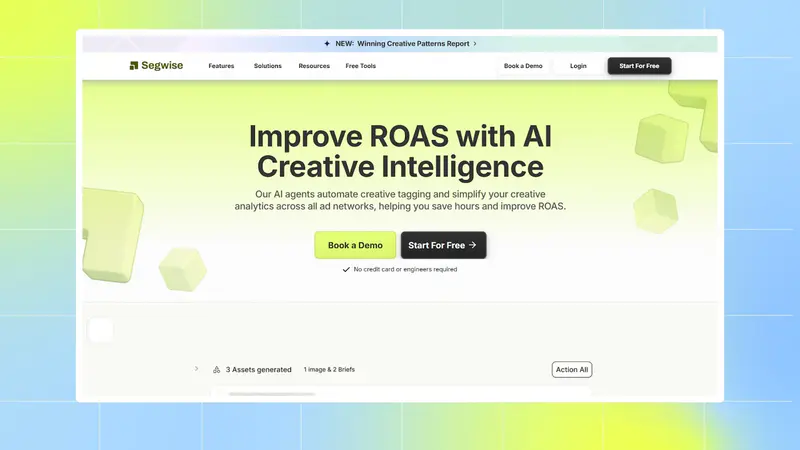
Segwise is an AI-powered creative intelligence platform that helps mobile game studios, DTC brands, subscription apps, and performance marketing agencies optimize their advertising creative performance. Segwise unifies creative data from 15+ ad networks and MMPs: Meta, Google, TikTok, Snapchat, YouTube, Axon (AppLovin), Unity Ads, Mintegral and more, plus all four major MMPs: AppsFlyer, Adjust, Branch and Singular: automatically tags every creative element using multimodal AI, and then generates new, data-backed creatives from the winning patterns it finds.
The platform runs on four specialist agents:
Creative Tagging Agent: multimodal tagging across video, audio, image and text, including playable (interactive) ads, which Segwise is the only platform to tag. Every tag is mapped automatically to performance metrics.
Creative Strategy Agent (AI Chat): an always-on creative strategist with full context on your account. Ask it anything about your creative performance, tags, competitors or custom metrics in plain language and get an answer, or a built report, back immediately. It also powers fatigue tracking, new-creative tracking and asset clustering.
Creative Generation Agent: generates net-new static, video (including AI UGC-style) and playable creatives plus scene-by-scene video storyboards, all grounded in your winning tag patterns. Outputs are editable by prompt and exportable in every network aspect ratio, and each one is auto-tagged and tracked once live so performance feeds back into the same intelligence layer.
Competitor Tracking Agent: tracks and tags competitor ads. Currently Meta only, with more platforms in development.
Setup is no-code and takes about five minutes per source, 10 to 15 minutes to connect everything. The free trial runs 7 days and automatically backfills up to two weeks of historical data; paid accounts backfill up to three months.
Unlike traditional analytics tools that focus on campaign metrics, Segwise provides creative-level intelligence, helping teams understand exactly which creative elements (hooks, CTAs, characters, visual styles, emotions, audio components) drive performance and which don't. This enables data-driven creative decisions that save time, reduce wasted ad spend, and accelerate creative iteration cycles.
Now that you understand what Segwise offers, let’s take a closer look at Pencil.
What is Pencil?

Pencil is an AI-powered ad generation platform that helps brands and marketing teams create, test, and scale digital ad creatives using generative AI. It generates complete ads rather than isolated components, applies brand guidelines automatically, and lets teams edit in a browser-based Editor, Canvas and Workflows surface. Pencil also connects directly to media accounts to pull performance data, score creatives and predict likely winners before media budget is spent.
An important correction to how Pencil is usually described: it is not a standalone independent startup. Pencil was acquired by The Brandtech Group in August 2023 and now runs as two distinct products under one brand:
Self-serve Pencil (trypencil.com): Core at $14/month ($11/month billed annually, 50 generations per month) and Growth at $55/month ($44/month billed annually, 250 generations per month). Both are live and transacting as of 31 August 2026.
Pencil Pro: the enterprise product sold through Brandtech to global brands. No published pricing; contact sales. Pro adds enterprise brand safety, data protection, IP ownership guarantees, Adobe Firefly Services integration (partnership announced December 2024) and Google Cloud model access.
Pencil is also multi-model rather than locked to one vendor. Current integrations include Claude for copy, Gemini image and video models, and ElevenLabs for AI voiceover, with voiceovers reusable across Editor, Canvas and Workflows. Pencil claims $1BN in media spend across 5,000 brands.
Where Pencil stops is measurement depth. It scores and predicts creative performance, but its public feature set does not include element-level tagging mapped to bottom-of-funnel metrics, MMP integration, playable-ad analysis, asset clustering or automated fatigue detection. So a team can produce a great deal of creative with Pencil and still not be able to answer "which hook style is driving our ROAS on Axon versus Meta, and is it fatiguing?" That measurement layer is what Segwise is built for.
Now that you know what each tool offers, let’s look at how Segwise and Pencil stack up side by side.
Also Read:What Is an Ad Intelligence Solution and Why It Matters
Feature Overview: Segwise vs. Pencil
While both platforms aim to improve creative performance, here’s a quick look at their core features to show what makes each platform unique:
A note on the ❌ marks: they mean the capability is not part of the vendor’s documented public feature set as of 31 August 2026, not that it is technically impossible. Pencil publishes no pricing for Pencil Pro, and neither vendor publishes seat or ad-account caps for its enterprise tier.
After comparing their features side by side, the next step is to see which platform aligns better with your specific goals.
Which Platform Is Right for You?
Choosing between Segwise and Pencil depends on whether your team needs deep creative performance intelligence or a platform focused primarily on generating and producing ad creatives at scale. Both platforms support modern creative workflows, but they solve different problems.
Here’s a simple guide to help you decide which platform fits your team best:
Choose Segwise if you need:
Clear visibility into what actually drives creative performance: Segwise analyzes your ad creatives using AI-powered tagging and links creative elements like hooks, visuals, messaging, and formats directly to metrics such as ROAS, CPA, IPM, and LTV. This helps creative strategists understand not just which ads perform best, but which elements make them work.
Early signals when creatives start losing effectiveness: Segwise continuously monitors campaign performance and identifies patterns that suggest creative fatigue. Your team can refresh or iterate creatives before declining performance starts affecting campaign efficiency.
A unified view of creative performance across all ad channels: Instead of switching between multiple dashboards, Segwise brings together ad network data and attribution data into one place. This gives your team a single source of truth for evaluating creative performance across campaigns.
Faster creative iteration based on real insights: By identifying patterns in winning creatives, Segwise helps teams build new creative variations using proven elements rather than relying on trial and error.
Centralized reporting for teams managing multiple campaigns: Custom dashboards and automated reports make it easier for creative strategists, growth teams, and agencies to track how creative decisions impact campaign results across projects.
If your team wants to make creative decisions based on real performance insights rather than assumptions, Segwise is the best creative intelligence platform to support that workflow.
Choose Pencil if you need:
Pencil is primarily an AI ad generation and creative production platform, not a deep creative performance intelligence tool. It works well if your main goal is:
Generating large volumes of ad creatives using generative AI.
Quickly producing and editing images, videos, and ad assets in a browser-based studio.
Creating multiple variations of ads for different channels, audiences, or markets.
Managing creative workflows from concept to launch in one place.
However, Pencil does not focus on deep insights or cross-network creative intelligence. It helps teams produce creatives faster, but it offers limited visibility into which creative elements actually drive results.
Where Pencil genuinely wins
It would be dishonest to run this comparison without saying plainly where Pencil is the better buy:
Price at entry, by a wide margin. $14/month, or $11 on annual billing, is a rounding error in a marketing budget. No creative intelligence platform, Segwise included, competes at that number. If you are a solo founder, a freelancer or a two-person DTC team that needs ads made this week, Pencil is the rational choice and the cost of being wrong is trivial.
Published, self-serve pricing. You can sign up and see the bill without a sales call. That is a real advantage over every enterprise-quoted tool in this category.
Complete ads, not components. Pencil generates a finished ad with brand guidelines applied, rather than assets you then have to assemble.
Enterprise brand safety through Brandtech. Pencil Pro is a serious option for global brands that need IP ownership, data protection and Adobe Firefly Services in the workflow, backed by a holding group that works with 8 of the top 10 global advertisers.
Model breadth. Claude for copy, Gemini for image and video, ElevenLabs for voice, refreshed as frontier models ship.
The honest split: Pencil is the better production buy at the low end. Segwise is the better measurement and scaling buy once ad spend is large enough that knowing which element works is worth more than the tool costs. Plenty of teams run both.
The decision is simple:
If your priority is creating and scaling ad creatives quickly, Pencil can support that workflow.
If your priority is understanding why creatives perform, optimizing campaigns, and building a data-backed creative strategy, Segwise provides deeper insights.
So, for teams focused on scaling winning creatives with confidence, Segwise offers a stronger foundation.
Also Read:How to Combat Creative Fatigue with AI Solutions
Conclusion
Choosing between Segwise and Pencil ultimately depends on what your team needs most from a creative platform. Pencil focuses on AI-powered ad generation and creative production, helping teams quickly create and launch multiple ad variations. Segwise, on the other hand, focuses on creative intelligence and performance insights, helping teams understand which creative elements actually drive results.
If your priority is optimizing creative performance, reducing wasted ad spend, and scaling proven ad concepts, Segwise stands out as a dedicated creative intelligence platform.
It combines AI-powered creative tagging and fatigue tracking to help teams make smarter creative decisions with confidence. Also, with tag-level creative element mapping, you can see which specific creative elements drive performance. It connects creative elements (hooks, dialogs, visuals, formats, etc.) directly to business outcomes (ROAS, CPA/CPI, LTV, IPM, conversion rates), so instead of guessing what works, you can see exactly which creative variables drive ROAS and growth.
Moreover, it also tags playable ad elements and interactive components, helping teams understand how interactive creatives influence performance. Also, with free tools like Video to Playable for quick MP4-to-HTML conversion via drag and drop, creative optimization becomes both practical and engaging.
So do you also want to turn creative insights into a winning creative strategy? Start your free trial and see how creative intelligence can help you scale higher-performing ads.
Frequently Asked Questions
Is Pencil still around in 2026?
Yes. Pencil is live and transacting at trypencil.com as of 31 August 2026. It is owned by The Brandtech Group, which acquired it in August 2023, and it runs as two products: self-serve Pencil (Core and Growth) and the enterprise Pencil Pro.
How much does Pencil cost?
Self-serve pricing is published: Core is $14/month ($11/month billed annually) for 50 generations, and Growth is $55/month ($44/month billed annually) for 250 generations. Pencil Pro has no published price and is sold via contact sales.
How much does Segwise cost?
Segwise is quoted per account rather than sold from a public price list. There is a 7-day free trial with no credit card required, which automatically imports up to two weeks of historical data so you can check tag accuracy on your own creatives before committing. Paid accounts backfill up to three months.
Does Pencil do creative analytics?
Partly. Pencil connects to media accounts, pulls performance data and scores or predicts creative performance. What it does not publish is element-level tagging mapped to ROAS, CPA, IPM and LTV, MMP-integrated attribution, playable-ad analysis, asset clustering or automated fatigue detection.
Can Segwise generate ad creatives, or does it only analyse them?
Both. The Creative Generation Agent produces net-new statics, video ads including AI UGC-style video, playables and scene-by-scene storyboards, built from the winning tag patterns the Creative Strategy Agent identifies. Generated creatives are auto-tagged and tracked once live, so their performance feeds back into the same model that produced them.
Which one is better for mobile game user acquisition?
Segwise, for one specific reason: playables. Mobile gaming UA runs heavily on interactive creative, and Segwise is the only platform that tags playable ads. It also connects to the networks games actually buy on, including Axon (AppLovin), Unity Ads and Mintegral, and to all four MMPs, which Pencil does not.
Do teams use both?
It is a reasonable setup. Use Pencil to keep production volume cheap, and Segwise to decide what to produce next and when to kill what is fatiguing. The two do not overlap much.
How We Compared These Tools
Pricing, ownership and feature claims for both platforms were re-verified on 31 August 2026 against each vendor’s own pricing and product pages, plus third-party sources for acquisition data (The Brandtech Group acquisition announcement). Where a vendor does not publish a number, this comparison says so rather than estimating one. Segwise capability claims come from the current Segwise product documentation. No figure in this post is inferred.
Written by the Segwise team, who build and run creative intelligence for mobile game studios, DTC brands, subscription apps and performance agencies across Meta, TikTok, Google, Axon and the major MMPs. We compete with Pencil and have tried to be straight about where it beats us.