
Keeping AI-generated ads on-brand is a control-points problem, not a prompt-writing one. If you govern the inputs (your brand assets and proven winners), the process (locked prompts, templates, and review gates), and the outputs (automated QA and creative tagging that catches drift in the data), the model stays inside your guardrails. Segwise takes this further by generating from your own winning creatives and auto-tagging every output, so off-brand patterns surface as data instead of surprises.
To keep AI-generated ads on-brand, control three points: the inputs you feed the model, the process that turns those inputs into ads, and the outputs you check before and after launch. The single biggest lever is grounding generation in your own top creatives rather than asking for net-new ideas from a blank prompt, because a remix of what already passed brand review starts on-brand by default.
That distinction matters more every quarter. Three-quarters of marketing content is now AI-touched, per Bynder's 2026 State of DAM research reported by Forbes, where Bynder CEO Bob Hickey put the risk plainly: brands will scale output "without scaling their context, and control and governance over that content." When you can spin up 40 ad variations before lunch, brand consistency stops being a design-review checkbox and becomes an operations problem.
This guide walks through where AI ads actually drift, the three control points that keep them in line, a guardrail checklist you can copy, why remixing your own winners beats generating from scratch, and how creative tagging lets you measure brand drift instead of eyeballing it.
Also read How to Scale Creative Production Without Hiring More Designers (2026 Guide)
Key takeaways
AI ad drift happens at three points: bad inputs (generic references), loose process (open-ended prompts, no review gate), and unchecked outputs (no QA, no tagging). Fix all three, not just prompts.
Brand consistency is worth real money. A Lucidpress survey of 400+ brand experts tied consistent presentation to a 10 to 20% revenue increase, yet of the 85% of companies with brand guidelines, only about 30% consistently enforce them.
Ground generation in your own winning creatives. A remix of assets that already cleared brand review is on-brand before you write a single prompt.
Lock the reusable parts. Templates, restricted-word lists, and approved color and logo assets do more for consistency at scale than clever one-off prompting.
Measure drift, do not guess it. Auto-tagging every generated creative turns "does this feel on-brand?" into a filterable data question. Segwise's creative tagging tags each output and maps it to performance, so off-brand elements show up next to their ROAS.
Keep a human review gate for anything with a claim, a price, or a regulated message. AI should draft; a person should approve.
Why AI-generated ads drift off-brand
The drift is rarely dramatic. You do not usually get a competitor's logo or a wildly wrong color. You get a slightly-off headline tone, a stock-photo aesthetic that is not quite your world, a CTA phrased in a way your brand never uses. Small deviations that, as Bynder notes, "add up, leading to a fragmented brand identity."
There are three root causes, and they map to the three control points.
Generic inputs. Ask a general-purpose model for "a fun, energetic ad for a puzzle game" and it averages every puzzle-game ad it has ever seen. The output is statistically plausible and brand-agnostic. It reflects the training data's idea of your category, not your idea of your brand.
Loose process. Open-ended prompts invite invention. Every net-new generation is a fresh roll of the dice on tone, layout, and messaging. Without templates or locked elements, each variation drifts a little further from the last, and nobody is reviewing the batch before it goes live.
Unchecked outputs. Most teams generate fast and check slowly, if at all. When you are shipping dozens of variations a week, manual brand review does not scale. Off-brand creatives slip through simply because nobody had time to look at all of them.
The governance gap is well documented. McKinsey's 2025 global AI survey found 88% of organizations regularly use AI in at least one function, but only about a third have started scaling those programs with the controls that scaling demands. Adoption is running ahead of governance, and creative is where that shows up first.
The three control points
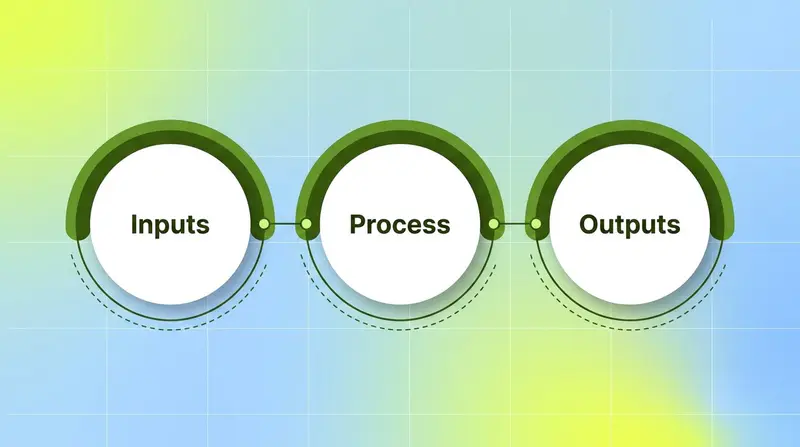
Think of on-brand generation as a pipeline: inputs go in, a process transforms them, outputs come out. You get to install a guardrail at each stage.
Control point 1: inputs (brand assets and winning elements)
Everything downstream inherits the quality of what you feed the model. Two input categories matter most.
Brand assets. Your logos, approved color values, fonts, and a documented voice. Platforms have started building this in. Meta's Advantage+ creative now lets advertisers upload logos, colors, and fonts so the AI holds a unified look across variations, plus a restricted-words setting that blocks language the AI should never generate. Treat these as non-negotiable inputs, not optional enhancements.
Winning elements. This is the input most teams skip. Your best-performing ads already encode your brand voice, your proven hooks, your CTA phrasing, and the visual style your audience responds to. They passed brand review and they won in-market. Feeding those specific elements into generation, rather than a generic brief, is the difference between a remix and a guess.
One prompt-engineering guide from digitalapplied makes a version of this point: in its own testing, it reports that five reference examples achieve "90%+ brand voice consistency." Examples beat adjectives. "Write like these five winning ads" outperforms "write in a fun, energetic voice" every time.
Control point 2: process (prompts, templates, review gates)
Inputs set the ceiling; process determines how much of it you keep.
Lock the reusable parts. Turn your consistent elements into templates rather than re-prompting them each time. Layout, logo placement, safe-zone padding, legal footer, and CTA button style should be fixed scaffolding the AI fills in, not variables it reinvents. Templated generation is why platform tools produce more consistent output than freeform chat prompts.
Constrain the prompt. When you do write prompts, encode brand constraints explicitly: the voice attributes, the vocabulary to use, and the anti-patterns to avoid. The digitalapplied guide structures this as a voice-analysis document plus an adaptation layer, and it is a sound pattern. The weakness it admits is real too: prompt discipline degrades as teams scale and as more people (and agencies) touch the same prompts. Templates and locked assets are more durable than prompt etiquette.
Keep a human review gate. Not every creative needs sign-off, but anything carrying a claim, a price, a legal line, or a regulated message does. AI drafts; a person approves. This is where brand governance stops being a document and becomes a workflow, with approval steps and access control, as Bynder describes.
Control point 3: outputs (QA and tagging)
The last control point is the one that makes the first two measurable.
Automated QA. Before launch, check outputs against hard rules: is the logo present and uncropped, are colors within tolerance, does any restricted word appear, is the aspect ratio correct for the placement. Meta lets you preview AI-generated samples and toggle off enhancement types before a campaign goes live, which is a lightweight version of this gate.
Tagging. After launch, you need to know which elements actually shipped and how they performed. This is where creative tagging earns its place. If every generated creative is automatically tagged for its hook, CTA, visual style, on-screen text, and other elements, "on-brand" becomes a filter you can run, not a vibe you have to assess. Drift shows up as a tag that should not be there, sitting next to its spend and ROAS.
A brand-guardrail checklist you can copy
Steal this. It maps to the three control points and works whether you generate inside a platform tool or a standalone one.
Inputs
- Upload approved logos, color values, and fonts to every generation tool you use.
- Build a restricted-words list (competitor names, off-limits claims, banned phrasing) and load it wherever the tool allows.
- Select 5 to 10 of your actual top-performing ads as reference examples, refreshed quarterly.
- Write a one-page voice doc: three tone attributes, preferred vocabulary, and anti-patterns.
Process
- Template the fixed elements: layout, logo placement, safe zones, legal footer, CTA style.
- Prompt with examples, not adjectives ("like these five", not "energetic").
- Define which creative types require human sign-off (anything with a claim, price, or regulated message).
- Version your prompts and templates so agencies and teammates work from the same source.
Outputs
- Run a pre-launch QA check: logo integrity, color tolerance, restricted words, correct aspect ratio per placement.
- Preview AI samples before spending, and toggle off enhancements that break your look.
- Auto-tag every generated creative for its elements so you can audit on-brand versus off-brand in the data.
- Review tag-level performance weekly to catch drift before it scales.
Tip: If you only do one thing from this list, make it the inputs. A model grounded in your approved assets and your real winners drifts far less than one you try to correct after the fact with prompts and QA.
Why remixing your winners is inherently on-brand

Here is the core argument, and it is worth being blunt about. There are two ways to generate ad creative with AI.
The first is net-new-from-scratch: you describe what you want and the model invents it. Every output is a fresh negotiation with brand consistency, because the model is drawing on its general training, not your brand. You spend your effort steering it back toward yourself.
The second is remix-from-your-winners: you generate new creatives by recombining elements that came from your own top-performing ads. A hook that won on Meta, a CTA that converted on TikTok, a visual style your audience already responded to, recombined into fresh variations. Every output starts inside your brand because every ingredient already cleared brand review and won in-market.
The second approach is on-brand by construction, not by correction. You are not asking the model to imagine your brand. You are asking it to reshuffle proven, approved parts.
This is the model Segwise's creative generation is built on. It does smart element remixing: combining winning hooks, CTAs, visual styles, and characters from across your different top creatives into new high-performing ads, grounded in your tag-to-metric mapping rather than generic AI guesses. It generates across formats (static image, video, and playable ads) and produces video storyboards, all built around your winning creative patterns. Because the raw material is your winners, staying on-brand is the starting condition, not the cleanup job.
Measuring brand drift with creative tagging

You cannot manage what you cannot see, and at 40 variations a week you cannot see much by eye. Tagging is how you make brand consistency measurable.
The idea is simple: every creative gets machine-tagged for its elements, hooks, CTAs, visual styles, on-screen text, colors, characters, audio tone, and each tag is mapped to performance metrics. Once that layer exists, brand drift is a query. You can filter for creatives using an off-approved-list color, spot a hook phrased in a voice you retired last quarter, or see that your highest-spend variations are quietly clustering around a look nobody signed off on.
The payoff compounds when the tagging is automatic and covers generated creatives too. Segwise's multimodal AI tags every creative element across video, audio, image, and text, and crucially, every AI-generated creative is automatically tagged and tracked once live. That closes the loop: the same intelligence that produced the ad measures whether it stayed on-brand and how it performed. Off-brand patterns surface as data, sitting next to their ROAS, instead of waiting for someone to notice.
Manual tagging cannot keep this pace. Teams that try spend upwards of 20 hours a week on it, which is why most skip it and lose the visibility. Automated, tag-level performance review is what turns "keep our AI ads on-brand" from a hope into a weekly operating rhythm.
Bottom line
Keeping AI-generated ads on-brand is not about writing the perfect prompt. It is about governing three control points: the inputs you feed the model, the process that shapes them into ads, and the outputs you check and tag. Get the inputs right, especially by grounding generation in your own proven winners, and consistency becomes the default rather than a fight. Given that consistent presentation is tied to a 10 to 20% revenue lift and that three-quarters of content is already AI-touched, the teams that install these guardrails now are the ones that scale output without scaling risk.
If you want generation that is on-brand by construction and drift you can actually measure, Segwise generates new creatives by remixing your winning elements and auto-tags every output so off-brand patterns show up in your data, not in your CPMs.
Frequently asked questions
How do I keep AI-generated ads on-brand?
Control three points instead of just the prompt. First, feed the model on-brand inputs: approved logos, colors, fonts, a restricted-words list, and your actual top-performing ads as reference examples. Second, lock the process with templates and a human review gate for anything carrying a claim or price. Third, QA outputs before launch and auto-tag them after, so off-brand elements surface in the data. Grounding generation in your own winners, as tools like Segwise do, keeps output on-brand from the start rather than fixing it afterward.
Why do AI ads drift off-brand in the first place?
Because a general-purpose model averages its training data, not your brand. Asked for a generic brief, it produces a statistically plausible ad for your category rather than one that sounds like you. Drift is usually subtle: a slightly-off tone, a stock-photo look, a CTA phrased in a way you never use. It compounds when open-ended prompts invite invention and nobody reviews the batch before launch.
Is it better to generate ads from scratch or remix existing ones for brand consistency?
Remixing your winners is more reliable for brand consistency. When you recombine hooks, CTAs, and visual styles from ads that already cleared brand review and won in-market, every output starts inside your brand. Generating net-new from a blank prompt means correcting the model back toward yourself each time. Segwise's creative generation is built on the remix approach, drawing elements from your top creatives; platform tools like Meta Advantage+ lean more on brand-asset controls layered over broader generation.
What brand controls does Meta Advantage+ offer for AI creative?
Meta Advantage+ creative lets advertisers upload logos, colors, and fonts so the AI keeps a unified look across variations, and it includes a restricted-words setting to block unwanted language. You can also preview AI-generated samples before spending and toggle off specific enhancement types that do not fit your brand. These are useful input and output guardrails, though they govern a broad generation engine rather than remixing your proven winners the way a creative-intelligence tool like Segwise does.
How do I actually measure whether my AI ads stayed on-brand?
Tag them. If every creative is machine-tagged for its elements (hooks, CTAs, colors, visual styles, on-screen text) and each tag maps to performance, brand drift becomes a filter you can run rather than a judgment call. You can spot off-list colors, retired voice patterns, or unapproved looks clustering in high-spend variations. Segwise auto-tags every creative, including AI-generated ones once live, so on-brand versus off-brand is visible next to spend and ROAS. DAM platforms like Bynder and Frontify approach the same goal from the asset-governance side.
Do I still need a human to review AI-generated ads?
Yes, but selectively. Not every variation needs sign-off, but anything with a claim, a price, a legal line, or a regulated message should pass a human review gate before launch. The efficient pattern is AI drafts, a person approves. Automated QA and tagging handle the volume checks (logo integrity, restricted words, aspect ratios) so your reviewers spend their attention only where brand and compliance risk is real.
How many reference examples should I give an AI tool to hold my brand voice?
Around five to ten of your genuine top performers, refreshed quarterly. The digitalapplied prompt guide reports that five reference examples reach 90%+ brand voice consistency, and examples consistently beat adjectives: "write like these five winning ads" outperforms "write in an energetic tone." Tools built on creative intelligence, like Segwise, go further by grounding generation in your full library of tagged winners rather than a handful you paste in manually.