
Most TikTok advertisers know which ads are working. Very few know why.
You can see that one video drove a 4% CTR and another barely moved. But TikTok Ads Manager won't tell you if it was the opening hook, the pacing, the on-screen text, or the CTA format that made the difference. So you brief the next round of creative based on what felt like it worked, and you repeat the cycle.
This is the creative analytics gap - and it's where the bulk of TikTok ad performance gets left behind. Teams optimizing at the campaign level are playing a different game than teams optimizing at the creative element level. This guide is about closing that gap.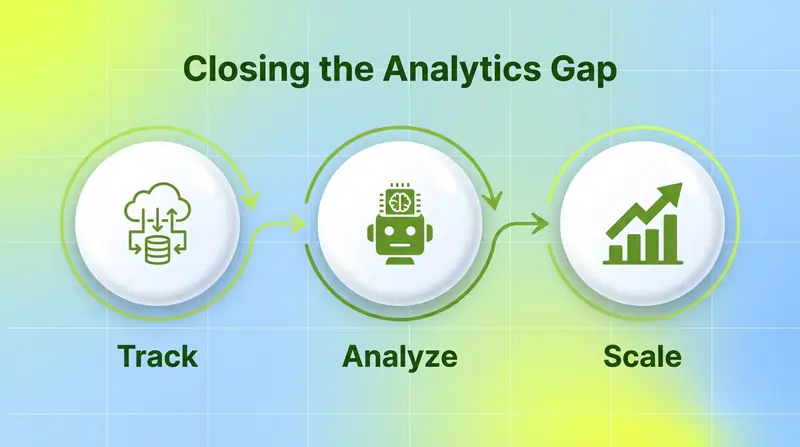
Key takeaways
TikTok Ads Manager reports campaign-level metrics but can't tell you which creative elements drive them
Server-side tracking via TikTok's Events API is now the baseline for accurate iOS conversion measurement
TikTok data sitting in isolation from MMP and revenue data leads to systematic misattribution
The platform only retains data for up to 365 days — long-term trend analysis requires external storage
TikTok Creative Center loses ads after campaigns end, making systematic competitor intelligence nearly impossible with native tools
Manual reporting on TikTok creative performance is a significant time sink that doesn't scale with creative volume
Also read 5 Best TikTok Ads Reporting Tools to Track Performance in 2026
What creative analytics for TikTok actually means
Standard TikTok Ads Manager analytics tell you how a campaign performed. Creative analytics tells you what inside your ad drove those results.
The distinction matters because TikTok is a creative-first platform. Its algorithm is designed to distribute good creative widely, regardless of audience targeting precision. The ceiling on your TikTok performance is almost always your creative — and the only way to raise that ceiling systematically is to understand which elements are working and why.
Creative analytics breaks your ads down into their components: the hook in the first two to three seconds, the visual format, the pacing, the on-screen text, the audio style, the CTA phrasing, the talent or lack of it. Each of those variables maps to performance outcomes. When you have that mapping, your creative briefs stop being guesswork and start being hypothesis-driven.
Where TikTok's native analytics fall short
It's campaign-level, not creative-element-level
TikTok Ads Manager gives you performance data at the ad level. That tells you which ad won, not why. If you're running dynamic creative tests across multiple variables simultaneously, the native interface can't decompose the result by element. You'd need to run fully isolated single-variable tests to get that from native tools — which most teams don't have the budget or runway to do at scale.
Siloed from the rest of your data stack
TikTok data doesn't connect to your MMP, your CRM, or your other ad networks out of the box. If TikTok is running upper-funnel awareness campaigns while Google captures the conversion, your TikTok ROAS looks terrible even when the ads are working. Without cross-channel attribution, you're making budget and creative decisions based on a partial picture.
For mobile apps, the standard is connecting TikTok ad data to MMP data — AppsFlyer, Adjust, Branch, or Singular — to see installs, post-install events, and downstream ROAS from TikTok spend. Without that connection, you're optimizing toward platform metrics that may not align with actual business outcomes.
iOS tracking limitations
Apple's ATT changes significantly reduced the accuracy of browser-based pixel tracking on iOS. TikTok's Events API (server-side tracking) was built to close this gap — conversions are reported directly from your server to TikTok rather than through a browser pixel. For any advertiser with meaningful iOS traffic, server-side tracking is now the minimum viable setup for accurate conversion measurement. Without it, your optimization signals are incomplete and TikTok's algorithm is working with degraded data.
Historical data disappears
TikTok only retains performance data for up to 365 days natively. If you want to analyze what creative approaches worked before your last major strategy shift, or benchmark new creative against historical winners from previous years, that data is gone unless you've stored it externally. Long-term creative pattern analysis requires an external data warehouse or analytics platform.
TikTok Creative Center has no memory
TikTok Creative Center shows you what's currently running. Once a campaign ends, the creative disappears from public view. There's no historical archive, nothing can be saved permanently, and you can't track what competitors were testing across different periods.
This makes systematic competitive intelligence on TikTok significantly harder than on Meta, where the Ad Library retains some historical data. For teams serious about understanding the competitive creative landscape, native TikTok tools simply aren't built for it.
The TikTok metrics that actually signal creative quality
2-second view rate
The first two seconds of a TikTok ad determine whether the rest of it gets seen. A high 2-second view rate means your opening hook is stopping the scroll. A low one means the creative is losing the audience before the message lands. This is the single most important leading indicator of hook effectiveness — and it's separate from CTR, which only captures behavior much further down the funnel.
Video completion rate
How much of your ad is the average viewer actually watching? Completion rate tells you where people are dropping off. An ad with strong early view rates but low completion suggests your hook works but your middle section loses momentum. That points to a specific creative fix — the opening is fine, the story arc needs work.
CTR in context
Click-through rate on TikTok measures the percentage of impressions that resulted in a click. It's an important metric but it needs context. A high CTR on a low spend-share creative tells you something different than the same CTR on a high-budget one that the algorithm has tested at scale. CTR paired with ROAS is the meaningful combination for creative decisions.
ROAS and downstream events
ROAS is the right metric for knowing whether to scale or cut a campaign. But for creative learning, you need downstream data connected to your TikTok spend — installs, purchase events, retention, LTV. Platform metrics tell you the ad worked within TikTok. Connected MMP and revenue data tells you the creative is driving actual business results worth scaling.
Frequency
As an audience segment gets more exposure to the same creative, engagement drops and cost per conversion rises. Frequency is the leading indicator of creative fatigue. Tracking it proactively by creative and audience segment tells you when to rotate before performance deteriorates, rather than after budget has been wasted.
What a proper TikTok creative analytics setup looks like
Accurate conversion tracking as the foundation
Server-side tracking via TikTok's Events API is non-negotiable if you have iOS traffic. This captures conversions that browser pixels miss and feeds clean signal back to TikTok's algorithm — improving targeting and optimization quality downstream.
MMP integration for true attribution
For mobile app advertisers, connecting TikTok spend data to your MMP gives you a unified view of what TikTok traffic actually does after the click. Install rate, cost per install, D1/D7 retention, in-app purchase rate — these are the metrics that tell you whether the creative is attracting the right users, not just users who click.
Automated data pipeline to a central analytics environment
Manual CSV exports from TikTok Ads Manager don't scale. As your creative library grows, manual reporting takes more time without producing better insights. The right infrastructure pulls TikTok data automatically into a central analytics environment where it can be joined with MMP data and analyzed across networks.
Creative-element tagging: the layer most teams are missing
This is where teams that are scaling on TikTok differentiate themselves from teams that are just spending on TikTok.
Knowing Video A beat Video B gives you a ranking. Knowing that problem-first hooks in the first three seconds produce 2.4x higher view rates than product-led intros in your category gives you a brief. That level of insight requires tagging what's inside your creatives and mapping those tags to performance outcomes.
Segwise does this automatically. Its multimodal AI analyzes every TikTok creative across four dimensions: video (visual elements, scene changes, on-screen text, product shots, visual styles), audio (hook lines, voiceover style, background music, audio emotional tone), image elements, and text (headlines, CTAs, benefit statements). Every tag gets mapped to your actual performance metrics — CTR, installs, ROAS, retention, custom events.
The result is a system where you can answer questions like: "which hook formats are producing the highest 2-second view rates this month?" or "are benefit-focused CTAs outperforming urgency-based ones for this audience segment?" Those answers go directly into your next brief.
Segwise connects across 15+ ad networks — TikTok, Meta, Google, Snapchat, AppLovin, Unity Ads, Mintegral, IronSource, and more — plus MMP integrations with AppsFlyer, Adjust, Branch, and Singular. So creative patterns you discover on TikTok can be validated against what's working across your full network mix.
Competitor creative tracking
TikTok Creative Center loses ads after campaigns end. Segwise's competitor tracking fills that gap for Meta (with more platforms in development) — applying the same AI tagging to competitor ads so you can track which creative angles they're testing repeatedly, which formats they're scaling, and where the white space is in your category. Systematic competitive intelligence, not manual browsing.
Creative fatigue detection before the cliff
TikTok creative fatigue is fast. Segwise monitors all running creatives for performance decline patterns and sends alerts before ROAS tanks, not after. You can configure custom fatigue criteria — a 20% ROAS drop over 7 days, a spend share threshold — so the system flags issues aligned to your business logic, not generic rules.
Turning TikTok creative data into better briefs
The point of creative analytics isn't the data. It's the brief quality it produces.
Teams with a proper creative analytics setup brief their creators with specifics: which hook structures are producing the highest view rates right now, which visual formats are correlating with above-benchmark ROAS, which CTA phrasings are converting for which audience segments. Creative teams get actual performance signal, not vague direction.
Segwise's AI-powered creative generation takes this a step further. Once your tag-to-metric mapping identifies your top-performing creative elements, you can generate new variations built around those winning elements directly within the platform — producing 15+ data-backed iterations in the time it previously took to brief one. The feedback loop between what's working and what gets made next compresses from weeks to days.
A few practices that separate teams doing this well from teams still guessing:
Set a creative hypothesis before each test. "Hook style X will outperform hook style Y" is a testable prediction. "Let's see what performs" is a data-collection exercise without a learning objective.
Tag your creatives before launch. Consistent naming conventions encoding key variables — hook type, format, talent, offer — create the data layer you need for analysis. Even basic tagging compounds over time into a meaningful creative intelligence database.
Track 2-second view rate alongside CTR. A high CTR with a poor 2-second view rate means most viewers never reached the part that convinced them to click. Those are different problems requiring different fixes.
Connect TikTok spend to downstream metrics. CTR tells you the creative worked on-platform. Install rate, D7 retention, and purchase ROAS tell you it worked for the business. The creative that wins on both is the one to scale.
Conclusion
TikTok rewards teams that iterate fast and iterate intelligently. The infrastructure for doing that well — accurate tracking, unified attribution, automated data pipelines — handles the input layer. But the intelligence layer, understanding which creative elements are driving results and building those insights into every brief, is what separates compounding creative advantage from endless one-off tests.
Segwise is built for that intelligence layer. Multimodal AI tagging across your full TikTok creative library, cross-network benchmarking against Meta, Google, and your other networks, competitor tracking, and fatigue alerts before performance drops. Teams using Segwise save up to 20 hours per week on creative analysis and achieve up to 50% ROAS improvement by understanding what's working before the budget is wasted. See how Segwise works.
Frequently asked questions
Why can't I just use TikTok Ads Manager for creative analytics?
TikTok Ads Manager reports at the campaign and ad level. It tells you which ad performed better but not which element inside that ad drove the result. It also doesn't connect to your MMP data, doesn't retain data beyond 365 days, and can't track competitor creative strategies. For teams making data-driven creative decisions at scale, native tools cover the basics but leave the most valuable analysis undone.
What is the TikTok Events API and why does it matter?
The Events API is TikTok's server-side conversion tracking mechanism. It reports conversion data directly from your server to TikTok rather than through a browser pixel. Since Apple's ATT changes reduced browser-based tracking accuracy on iOS, the Events API is now necessary for accurate conversion measurement if your audience includes iOS users. Without it, TikTok's optimization algorithm is working with incomplete conversion signals.
How do I track what's driving TikTok creative performance beyond CTR?
You need element-level tagging — systematically labeling what's inside each creative and mapping those labels to performance metrics. This can be done manually (time-intensive and inconsistent at scale) or automatically through AI-powered creative intelligence platforms like Segwise, which analyze every creative across video, audio, image, and text dimensions and map each tag to your actual performance data.
How do I build competitor intelligence on TikTok when Creative Center has no history?
TikTok Creative Center only shows currently-running ads. For historical competitor tracking, you need a dedicated tool that monitors competitor ads over time. Segwise's competitor tracking (currently for Meta, with more platforms in development) applies the same AI tagging to competitor ads so you can analyze creative patterns, identify oversaturated angles, and find white space in your category.
What metrics should I prioritize for TikTok creative decisions?
For creative optimization: 2-second view rate (hook effectiveness), video completion rate (narrative hold), CTR (full creative appeal), and conversion rate (intent alignment). ROAS and downstream MMP metrics (installs, D7 retention, purchase rate) validate that creative performance translates to business outcomes. Frequency monitors fatigue. Using these together gives a complete picture — platform metrics tell you what's happening within TikTok, downstream metrics tell you if it's working for your business.
How does creative fatigue work on TikTok and how do I detect it early?
Creative fatigue on TikTok happens when an audience has seen the same creative enough times that engagement drops and cost per conversion rises. It's visible in declining CTR, rising frequency, and deteriorating ROAS. The challenge is catching it before significant budget is wasted. Segwise monitors all running creatives for decline patterns and sends configurable alerts when fatigue thresholds are hit — so you're rotating creative based on data signals, not after the performance cliff.
Can small teams benefit from TikTok creative analytics?
Yes, though the approach scales differently. At lower volumes, structured creative testing with consistent naming conventions and a focus on tracking 2-second view rate and CTR alongside ROAS creates the data foundation for analysis. As creative volume grows, automated creative tagging becomes more valuable because the manual alternative doesn't scale. The teams that build good analytical habits early compound those advantages as they grow.